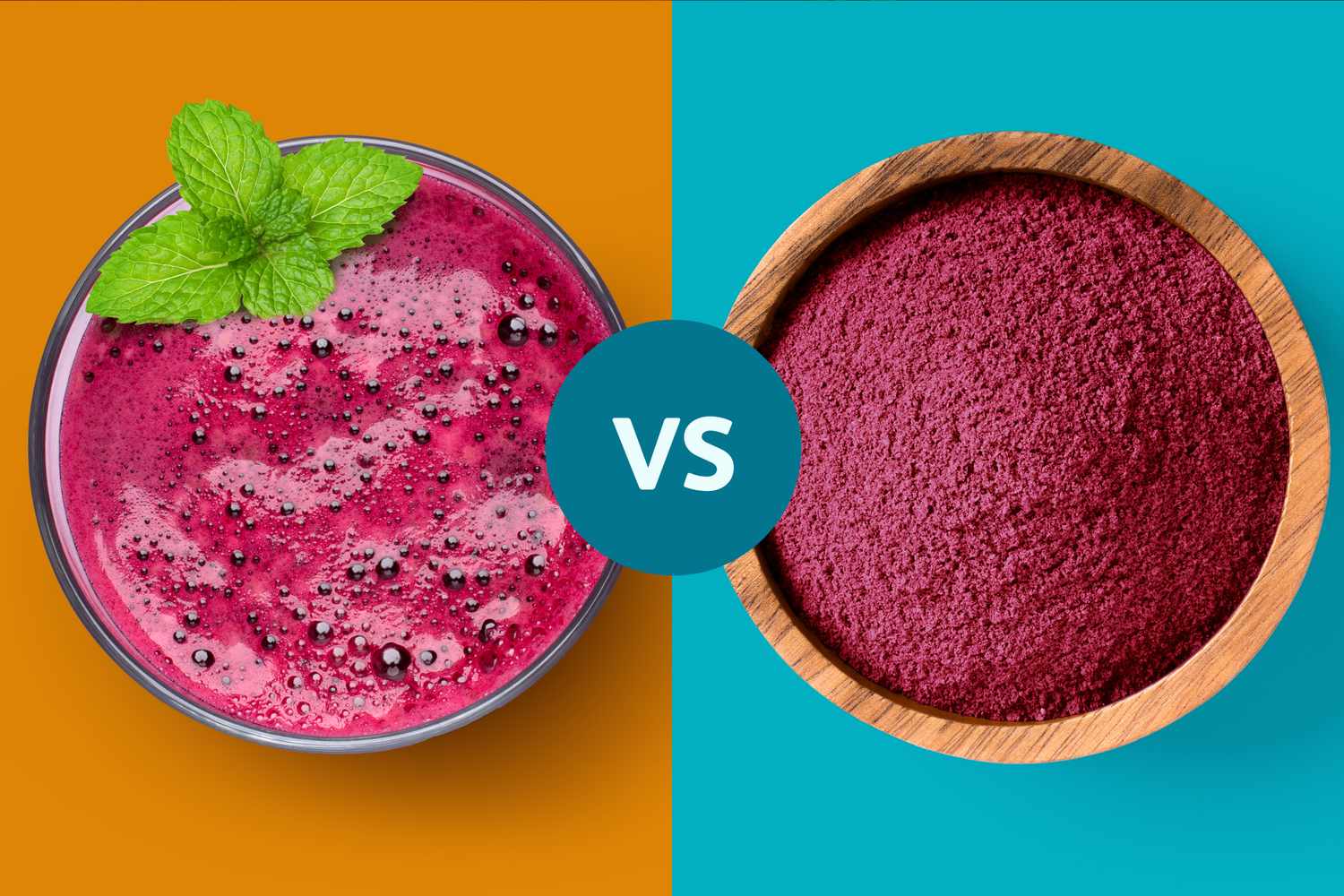
Choosing between beet juice vs powder depends on your health goals. While juice offers whole-food nutrients, powder provides a concentrated, low-sugar alternative. This guide breaks down the nutritional differences between beet juice and powder to help you decide which is best for your daily routine.
Quick Facts
- Best for Athletes: beetroot powder offers a standardized nitrate dose and zero added sugar.
- Best for Whole Nutrition: beet juice provides a profile closer to the whole vegetable, including potassium.
- Nitrate Content: juice concentration varies 200-fold (2mg to 495mg), while high-quality powders are often standardized.
- Sugar Impact: juice contains approximately 25g of sugar per serving compared to only 2g in powder.
- Winner for Convenience: powder is shelf-stable, portable, and easier to store than bottled juice.
Athletes often prefer beetroot powder because it offers a standardized nitrate dose with near-zero sugar, whereas beet juice can contain 20 to 40 grams of sugar per serving. While juice allows for faster absorption, powder is more reliable for consistent performance gains in 2026 and is typically easier on the digestive tract during intense physical activity.
Nutritional Breakdown: Sugar, Fiber, and Bioavailability
When we look at the nutritional differences between beet juice and powder, the most striking gap is the caloric and sugar density. A standard 250ml serving of beetroot juice typically contains between 22 and 25 grams of sugar. In contrast, two teaspoons of beetroot powder contain approximately 2 grams of sugar. For individuals managing blood glucose levels or following a ketogenic diet, the powder is the clear winner.
Fiber is another point of divergence. While whole beets contain about 3.1 grams of fiber, juice often retains only about 1.1 grams, and most powders contain even less unless they are labeled as "whole root" powder rather than "juice" powder. However, what powder lacks in fiber, it makes up for in bioavailability. Modern processing techniques create concentrated crystals that allow for rapid absorption of betalains—the potent antioxidants that give beets their deep crimson color.
The concept of nutrient density is central here. Because powder is essentially dehydrated beet juice or ground root, you are getting a massive dose of phytonutrients in a very small volume. This makes it easier to hit your daily targets for betalains without the digestive volume associated with drinking large quantities of liquid.
Peak Performance: Beet Juice vs Powder for Athletes
The primary reason athletes reach for beets is to harness the power of the nitrate-to-nitric oxide pathway. Once consumed, dietary nitrates are converted into nitric oxide, a molecule that facilitates vasodilation. This process widens blood vessels, improving blood flow and reducing the oxygen cost of exercise. In my experience, this improves exercise economy, meaning you can perform the same amount of work while using less energy.
To get the most out of beet juice benefits for athletic performance 2026, timing and technique are everything.
- The 90-Minute Window: Nitric oxide levels typically peak between 60 and 90 minutes after ingestion. Whether you choose juice or a pre-workout supplement in powder form, consume it about an hour and a half before your hardest effort.
- The Swish Technique: The conversion of nitrate to nitrite happens in the mouth via specific bacteria. Don't just gulp your beet drink. Let it sit in your mouth for 20 to 30 seconds to maximize this bacterial interaction.
- Mouthwash Warning: Avoid using antibacterial mouthwash before or after your beet dose. These products kill the essential bacteria in your oral microbiome required to trigger the benefits of vasodilation.
One significant advantage for athletes is nitrate stability in beet juice vs powder. Powders are often more stable over time, whereas the nitrate levels in pre-packaged juices can degrade if exposed to light or fluctuating temperatures during shipping.

Cardiovascular Wellness: Managing Blood Pressure
For my readers focusing on heart longevity, the beetroot powder vs juice for blood pressure debate is a frequent topic. Both forms are effective because they both utilize dietary nitrates to support cardiovascular wellness. When nitric oxide relaxes the inner muscles of your blood vessels, it makes it easier for the heart to pump blood, which can lead to a measurable drop in systolic blood pressure.
However, consistency is the bottleneck for heart health. For a permanent lifestyle shift, most clinical studies suggest a target dose of 300mg to 350mg of nitrate daily. Because testing by ConsumerLab found that nitrate levels vary more than 200-fold across different beetroot products, ranging from as little as 2.2 mg to 495.6 mg per serving, choosing a standardized powder is often more practical. With powder, you know exactly how much you are getting every day, making it a more reliable tool for clinical management.
Practical Factors: Cost, Shelf Life, and Mixability
When we look at the cost per serving comparison of beet juice and powder, the economics heavily favor the powder. A single bottle of high-quality organic beet juice can cost between $4.00 and $7.00. A high-quality bulk powder can often bring that cost down to less than $0.50 per serving.
There is also the matter of logistics. Beet juice requires constant refrigeration and has a shelf life of only a few weeks once bottled (and just days once opened). Powder is shelf-stable for months and can easily be tossed into a gym bag or a suitcase for travel.
Pro Tip: Improving the Taste If you find the "earthy" taste of beets difficult to handle, try mixing your powder into a smoothie with citrus fruits like lemon or lime. The acidity helps cut through the geosmin—the compound responsible for that dirt-like flavor. Alternatively, mixing it into a protein shake with chocolate can mask the flavor surprisingly well.
Safety and Precautions: Oxalates and FODMAPs
While beets are a superfood, they aren't for everyone. The most common side effect is beeturia—a harmless condition where your urine or stool takes on a pink or red hue. While startling, it is medically insignificant.
A more serious consideration is the oxalate load in beetroot powder vs juice. Beets are very high in oxalates, which can contribute to the formation of kidney stones in susceptible individuals. Because powder is so concentrated, it is easy to accidentally consume a much higher oxalate dose than you would by eating a single whole beet.
Finally, consider the digestive tolerance of raw beet powder vs juice. Beets contain fructans, a type of fermentable carbohydrate (FODMAP). If you have a sensitive gut or Irritable Bowel Syndrome (IBS), large doses of beet juice may cause bloating or gas. In these cases, a fermented beetroot powder might be the best option, as the fermentation process breaks down some of the sugars that cause distress.
FAQ
Is beet powder as effective as beet juice?
Yes, for most health markers, beet powder is just as effective as juice. While juice provides faster liquid absorption, powder provides a more consistent and concentrated dose of nitrates, which are the primary active compound for performance and heart health.
Which is better for lowering blood pressure: beet juice or powder?
Both are effective, but powder is often preferred for long-term management. This is because high-quality powders provide a standardized dose of nitrates, ensuring you get the 300-400mg required to see a significant impact on blood pressure consistently every day.
How much beet powder equals one cup of beet juice?
Generally, one to two teaspoons of highly concentrated beetroot powder is equivalent to one 8-ounce cup of juice in terms of nitrate content. However, always check the label, as concentration levels vary significantly between brands.
Does beet juice have more sugar than beet powder?
Yes, significantly more. Beet juice contains the naturally occurring sugars of several beets in a single glass, usually totaling 22-25 grams. Most powders have the majority of the sugar removed during processing, typically containing only 2 grams per serving.
What are the side effects of taking beet powder daily?
The most common side effect is beeturia (red-tinted urine or stool). More serious concerns include an increased risk of kidney stones for those prone to them due to high oxalate content. Some people may also experience mild digestive upset or bloating if they are sensitive to FODMAPs.
When is the best time to take beet juice for athletic performance?
The optimal time is 60 to 90 minutes before your workout. This allows enough time for the dietary nitrates to be converted into nitric oxide and reach peak levels in your bloodstream, maximizing the benefits of vasodilation and improved oxygen uptake during your session.