
Quick Facts
- Direct Answer: Incorporating brain fog foods like fatty fish (Omega-3s) and leafy greens, combined with vitamins for mental clarity like B12 and D, can significantly reduce cognitive fatigue.
- Top Nutrient: DHA (Omega-3) found in fatty fish, making up 60% of brain fat.
- Fastest Supplement: L-theanine (100.6mg) for immediate reaction time improvements.
- Success Rate: 84% of B12-deficient individuals see cognitive gains after supplementation.
- Daily Target: 2,000 IU of Vitamin D is the optimal 'sweet spot' for memory.
- Key Biomarker: Monitoring HbA1c levels to ensure blood sugar stabilization.
| Food/Vitamin Category | Key Nutrient | Primary Benefit | Recommended Daily Action |
|---|---|---|---|
| Fatty Fish | DHA and EPA | Structural brain support | 2 servings per week |
| B-Complex | Vitamin B12 | Nerve health & energy | Check levels via blood test |
| Leafy Greens | Folate/Lutein | Neuroprotection | 1 cup daily |
| Eggs | Choline | Neurotransmitter production | Breakfast staple |
| Sunshine/Supps | Vitamin D | Cognitive regulation | 2,000 IU (if deficient) |
Incorporating brain fog foods like fatty fish rich in Omega-3s and leafy greens high in B vitamins can significantly improve cognitive function. Essential nutrients such as Vitamin B12 and Vitamin D support nerve health and neurotransmitter production, helping to clear mental fatigue and enhance daily focus.
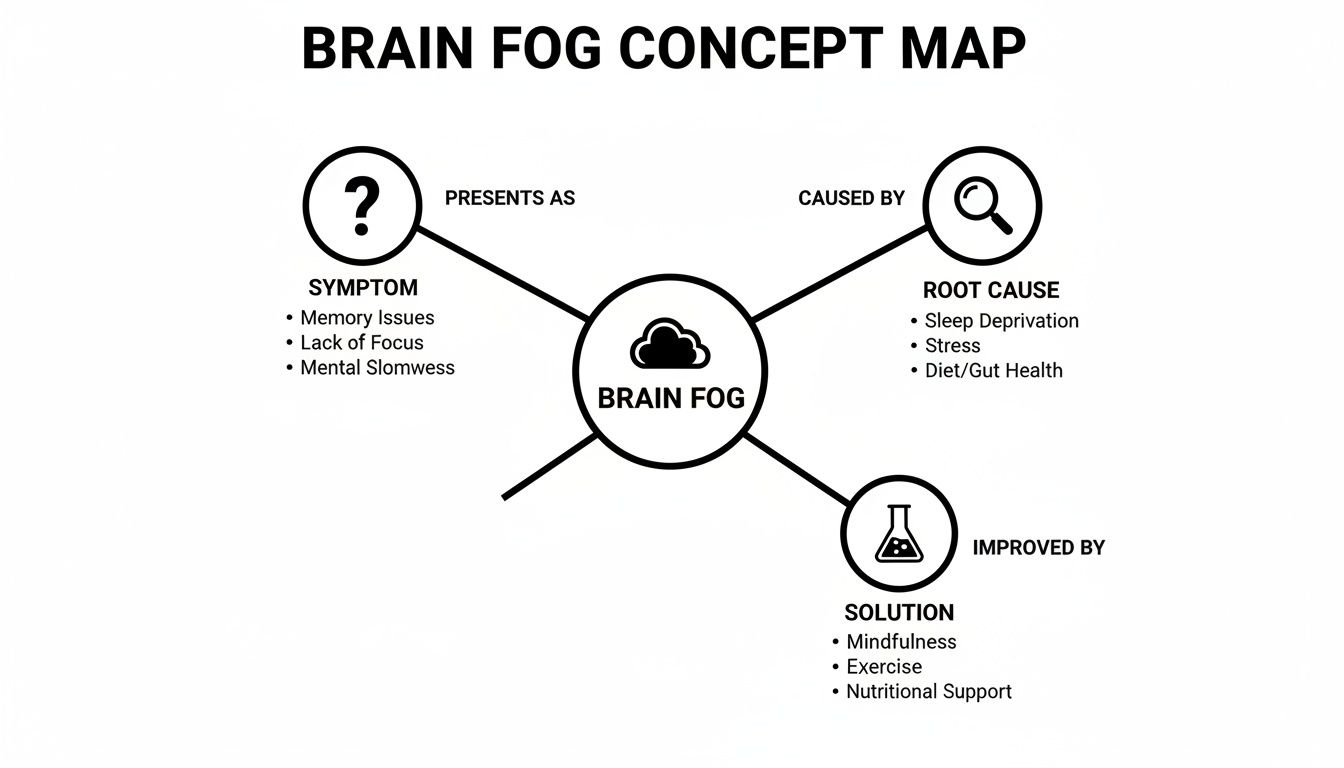
Why Your Brain Feels Foggy: The Biological Engine
Think of your brain as a high-performance engine. When you are operating at peak capacity, the gears turn smoothly, and the fuel burns efficiently. However, when the "Check Engine" light flickers on in the form of mental fatigue, it is often a sign that the biological engine is struggling. The human brain is a metabolically demanding organ, consuming roughly 20% of the body's total energy despite only making up 2% of its weight.
When we experience brain fog symptoms, we are often witnessing the effects of oxidative stress and suboptimal mitochondrial function. Mitochondria are the power plants within your cells; when they lack the necessary nutrients to reduce brain fog, they produce energy less efficiently, leading to that characteristic "spaced out" feeling. This cellular fatigue is often exacerbated by an anti inflammatory diet to reduce brain fog being absent from our daily routine. By understanding that mental clarity is a byproduct of neuroprotection and efficient energy use, we can begin to use food as a precision tool for cognitive performance.
1. Fatty Fish: The DHA Powerhouse for Focus
If you want to understand why brain fog foods are so effective, you have to look at the physical makeup of the brain. Approximately 60% of your brain is made of fat, and a significant portion of that is DHA, a specific type of omega-3 fatty acid. This is why a diet for focus and concentration must prioritize high-quality fats.
Research has shown that consuming omega-3 rich foods for better concentration, such as salmon, mackerel, and sardines, provides the structural building blocks for brain cell membranes. Specifically, aim for a dosage of 1.16g of DHA per day. Studies suggest that consistent intake over six months can noticeably improve working memory and executive function.
Beyond the structure, these fatty acids are essential for the gut-brain axis. A healthy gut environment, supported by DHA and EPA, reduces systemic inflammation that could otherwise travel to the brain and disrupt focus. When you increase your intake of these marine sources, you are essentially "greasing the gears" of your neural pathways.

Keep in Mind: Mercury Content While fatty fish are excellent for focus, choose "SMASH" fish (Sardines, Mackerel, Anchovies, Salmon, Herring) to minimize mercury exposure while maximizing DHA and EPA intake.
2. Vitamin B12 & Magnesium: The Synaptic Spark Plugs
In the world of vitamins for mental clarity, Vitamin B12 and Magnesium act as the spark plugs of the brain. They are responsible for the transmission of signals across synapses—the tiny gaps between your brain cells. Without them, your internal communication network slows down, resulting in memory lapses and difficulty concentrating.
The data here is striking. A study of 202 individuals with cognitive impairment and low vitamin B12 levels found that supplementation enhanced cognition in 84% of participants and improved scores on tests evaluating memory, language, and attention in 78% of participants. Despite its importance, metabolic vitamin B12 deficiency affects between 10% and 40% of the general population.
Magnesium and vitamin b12 for cognitive function work in tandem to protect the myelin sheath, which insulates your nerves. Magnesium, in particular, helps regulate neurotransmitters and ensures high bioavailability of other nutrients. If you find yourself hitting a mid-afternoon wall, it may not be a lack of caffeine, but a deficiency in these critical synaptic spark plugs.

3. Leafy Greens & Berries: Anti-Inflammatory Defense
Inflammation is one of the primary drivers of cognitive decline and daily mental haze. This is where an anti inflammatory diet to reduce brain fog becomes your strongest defense. Leafy greens like spinach and kale, along with vibrant berries, are packed with polyphenols and flavonoids—naturally occurring compounds that provide neuroprotection.
The Mediterranean diet, which is rich in these foods, is consistently associated with an 11% to 30% reduction in the risk of developing age-related cognitive disorders, including dementia and Alzheimer’s disease. These foods work by neutralizing oxidative stress and lowering markers of inflammation like hs-CRP.
- Spinach and Kale: High in folate and lutein, which support brain aging.
- Blueberries: Contain anthocyanins that have been shown to improve signaling between brain cells.
- Broccoli: Rich in Vitamin K, which is essential for forming sphingolipids, a type of fat packed into brain cells.
Integrating these brain fog foods into your daily meals provides a constant stream of antioxidants that keep your neural pathways clear of debris.
4. Vitamin D: The Cognitive Regulator
While often discussed in the context of bone health, Vitamin D is actually a neurosteroid—a hormone that influences over 200 genes in the body, many of which are located in the brain. It is one of the most underrated vitamins for mental clarity and brain fog 2026.
Vitamin D receptors are located throughout the areas of the brain involved in planning, processing memories, and forming new ideas. A deficiency in this "sunshine vitamin" is a common culprit behind persistent mental fatigue. Research indicates that 2,000 IU of Vitamin D is often the "sweet spot" for memory improvement. Because its bioavailability can vary based on sun exposure and skin tone, testing your levels is the first step toward reclaiming your cognitive performance.
5. Choline & Eggs: Building Neurotransmitters
If you are looking for the best brain fog foods for morning focus, look no further than the humble egg. The yolk is one of the richest sources of choline, a precursor to acetylcholine. This is a critical neurotransmitter involved in mood, memory, and intelligence.
A diet for focus and concentration that includes eggs helps ensure that your brain has the raw materials it needs to build these neurotransmitters. Choline is often overlooked, yet it is foundational for memory formation. Making simple dietary changes to improve brain fog symptoms quickly often starts with a high-protein, choline-rich breakfast.
By prioritizing blood sugar stabilization in the morning—pairing your eggs with fiber instead of sugary cereals—you prevent the insulin spikes and subsequent crashes that trigger afternoon brain fog. This steady supply of energy and building blocks ensures your executive function remains sharp from your first meeting to your last.
FAQ
What are the best foods to clear brain fog?
The most effective foods include fatty fish for DHA and EPA, leafy greens for folate, berries for antioxidants, and eggs for choline. These foods work by reducing oxidative stress and providing the structural components necessary for brain health.
What vitamins are best for brain fog and focus?
Vitamin B12, Vitamin D, and Magnesium are the top three. B12 is essential for nerve health, Vitamin D regulates cognitive genes, and Magnesium supports neurotransmitter function. Ensuring you are not deficient in these can improve cognition in up to 84% of cases.
How quickly can changing your diet improve mental clarity?
While some changes like blood sugar stabilization can improve focus within hours, structural changes from nutrients like Omega-3s typically take a few weeks to months. Research on DHA often shows significant results after six months of consistent intake.
Does sugar make brain fog worse?
Yes, high sugar intake leads to rapid spikes and drops in blood glucose. These fluctuations disrupt energy delivery to the brain and can cause inflammation, directly contributing to mental fatigue and poor executive function.
What is the best breakfast to prevent brain fog?
The best breakfast combines high-quality protein and healthy fats with fiber. For example, two eggs (for choline) with avocado (for healthy fats) and a side of spinach (for folate) provides a stable energy source and the building blocks for neurotransmitters.