Quick Facts
- Efficiency: Just 15-20 minutes per session can produce significant physiological changes.
- Frequency Range: Optimal results occur between 5 and 30 Hz depending on your specific fitness goals.
- Muscle Activation: Engages up to 95% of muscle fibers compared to roughly 40-60% in traditional weight training.
- Primary Benefit: Rapid neuromuscular stimulation and enhanced lymphatic drainage.
- Safety: Must be used on a flat surface with a slight bend in the knees to protect joints from G-force intensity.
- Market Trend: Home fitness accounts for approximately 45% of the global market share for vibration technology in 2024.
Vibration plate benefits include improved muscle strength, increased bone mineral density, and accelerated lymphatic drainage by inducing rapid myotatic reflexes. Integrating this into your home gym provides a low-impact way to boost metabolic rate and stability without the need for bulky equipment, making it an essential tool for both high-performance training and injury rehabilitation.
The Science of Whole-Body Vibration (WBV)
To understand why a vibration plate belongs in your training arsenal, we have to look at the mechanics of whole-body vibration or WBV. Most people see a vibrating platform and assume it is a passive tool, but the reality is deeply rooted in physics and neurobiology. When you stand on an oscillating platform, the machine generates vertical or pivotal displacement. This creates a shift in your center of gravity, forcing your body to respond to the mechanical stress.
The primary mechanism at play is the myotatic reflex. This is an involuntary stretch reflex that occurs when your muscles are subjected to rapid changes in length. As the plate moves, your muscles must contract and relax at the same hertz (Hz) frequency as the machine. If the plate is set to 30 Hz, your muscles are essentially performing 30 micro-contractions every single second. This intense neuromuscular stimulation recruits significantly more muscle fibers than a standard squat performed on solid ground.
Furthermore, the vibration amplitude—the distance the plate moves up and down—dictates the G-force intensity applied to the body. High-amplitude vibrations combined with a high hertz (Hz) frequency create a powerful training stimulus that improves proprioception and balance. This is exactly why the home fitness sector has seen such massive growth recently, currently representing 45% of the global vibration plate market. Athletes and home users alike are realizing that they can achieve higher recruitment of deep stabilizer muscles in a fraction of the time.
Targeted Health: Bone Density and Metabolic Health
One of the most profound vibration plate benefits is its impact on skeletal health. For years, medical professionals have utilized vibration therapy for bone density, particularly for individuals at risk of osteoporosis or women navigating postmenopausal health challenges. Bone is a living tissue that responds to mechanical stress. Just as muscles grow stronger under the weight of a barbell, bones increase their mineral density when subjected to the repetitive, low-impact loading provided by a vibration plate.
Research indicates that the mechanical signals sent through the skeletal system during a WBV session stimulate osteoblast activity—the cells responsible for bone formation. This makes the equipment a non-pharmacological powerhouse for maintaining structural integrity as we age. But the benefits do not stop at the bone.
When it comes to your metabolic rate, the increased muscular demand of staying balanced on a moving platform translates to higher energy expenditure. While standing still on the machine is a great start, the real magic happens when you perform active movements. The reflexive contractions increase blood flow and oxygenation, which helps in the reduction of visceral fat. For those looking to optimize their body composition, the vibration plate acts as a metabolic accelerator, making every second of your workout count for more.
Home Gym Routines: Weight Loss and Recovery
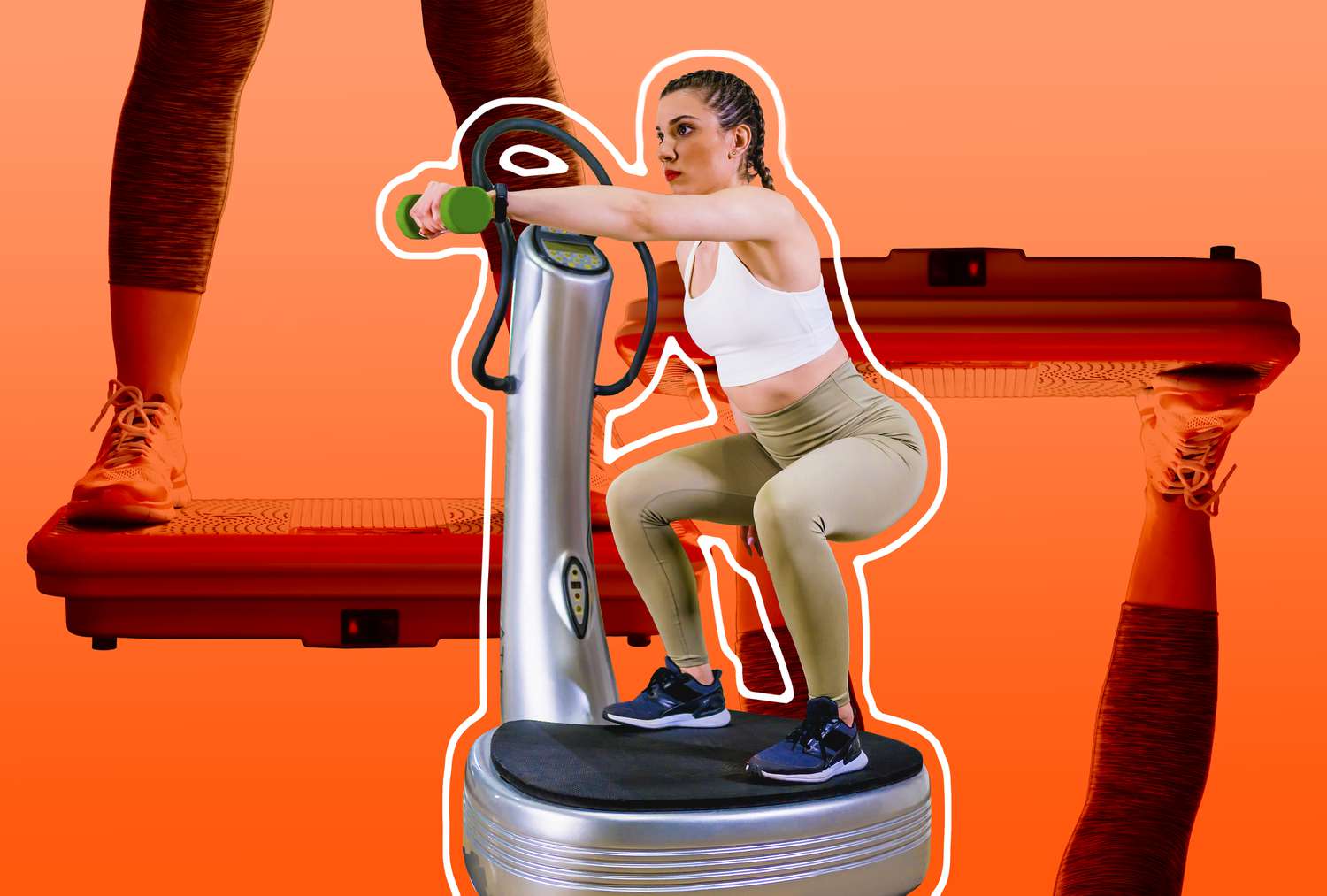
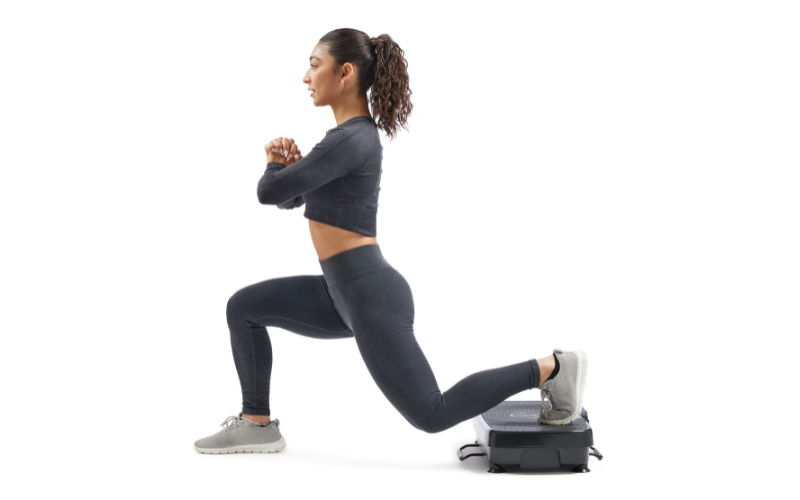
If your goal is shedding fat, you cannot treat the vibration plate like a lounge chair. To truly leverage vibration plate exercises for weight loss at home, you must be dynamic. The platform serves as an unstable base that amplifies the difficulty of standard bodyweight moves. When you perform a squat or a lunge on the plate, your core and stabilizer muscles have to work overtime to keep you upright.
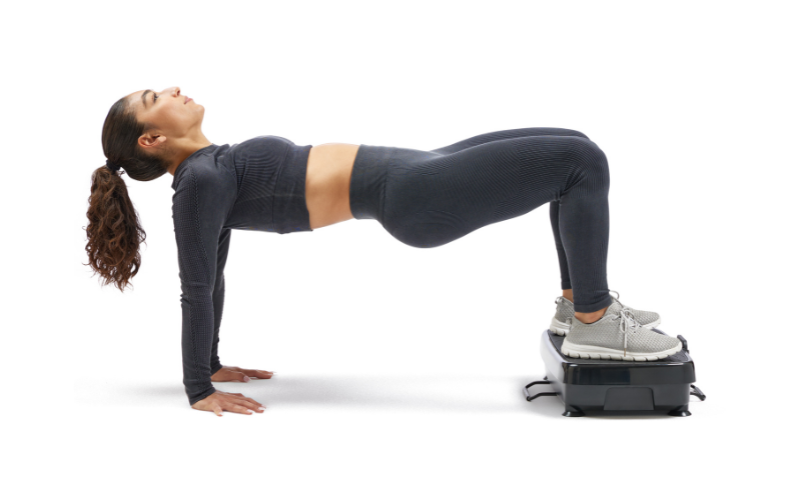
Consider a standard circuit: 45 seconds of squats, 45 seconds of push-ups with your hands on the plate, and a 45-second plank. By the time you finish, your muscles will feel as though they have undergone a much longer, more strenuous lifting session. This is because the vibration plate exercises for weight loss increase the total work done by the muscle fibers.
Beyond the sweat, the machine is an elite tool for recovery. Using vibration plates for post-workout muscle recovery is a game-changer for reducing Delayed Onset Muscle Soreness (DOMS). The high-frequency oscillations encourage lymphatic drainage and improve micro-circulation, which helps flush out metabolic waste products like lactic acid.
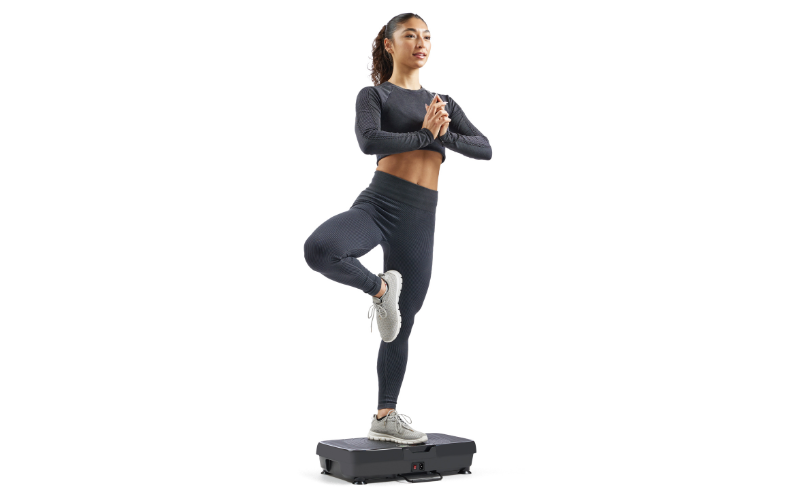
I often recommend my athletes use the plate for "active recovery" sessions. Instead of a high-intensity frequency, you drop the hertz (Hz) frequency to a lower setting (around 8-12 Hz) and perform gentle stretches. This decreases muscle tension and promotes a relaxation response in the nervous system, allowing you to bounce back faster for your next heavy lifting day.
Technical Specs and Goal Setting
To get the most out of your home gym vibration plate setup, you need to understand which settings align with your goals. Not all vibrations are created equal. Use the following table as a guide for your programming:
| Goal | Frequency (Hz) | Amplitude (mm) | Duration |
|---|---|---|---|
| Lymphatic Drainage | 5 - 10 Hz | Low (1-2mm) | 10 Minutes |
| Bone Density | 12 - 20 Hz | Low to Medium | 15 Minutes |
| Muscle Strength | 25 - 35 Hz | High (3-5mm) | 15 - 20 Minutes |
| Weight Loss | 20 - 30 Hz | Medium to High | 15 - 20 Minutes |
| Balance/Proprioception | 5 - 15 Hz | Low | 10 Minutes |
Safety Guidelines and Home Gym Setup
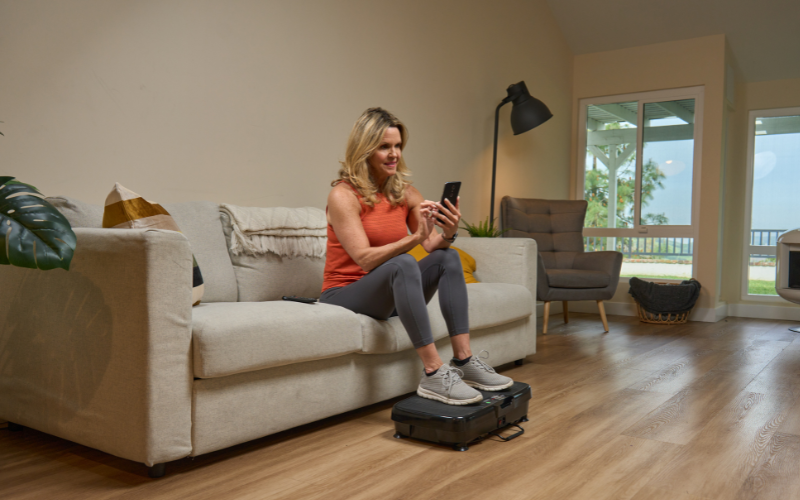
Proper home gym vibration plate setup and placement are critical for both the longevity of the machine and your own physical safety. These machines generate significant force, so they must be placed on a flat, stable surface. If you have hardwood floors, I highly recommend placing a high-density rubber mat underneath the unit to dampen the noise and prevent the machine from "walking" across the room during high-intensity sessions.
Adhering to vibration plate safety guidelines and session duration is non-negotiable. Because the stimulus is so intense at a cellular level, more is not better. Limit your sessions to a 15-minute cap when starting out, and never exceed 20-30 minutes. Using the machine two to three times per week is usually sufficient for most fitness goals.
Expert Alert: Contraindications
Vibration therapy is powerful and should be avoided by individuals with certain medical conditions. Do not use a vibration plate if you have:
- Recent joint replacements or metal pins/plates.
- A history of kidney or gallstones.
- Cardiovascular disease or a pacemaker.
- Pregnancy.
- Acute hernia or disc issues. Always consult a physician before beginning vibration therapy.
One of the most important technical tips I can give you is the "soft knee" rule. Never lock your knees while the machine is running. Maintaining a slight bend allows your muscles to absorb the energy, whereas locked joints send the vibration directly to your spine and head, which can cause dizziness or headaches. Finally, stay hydrated. The increased lymphatic movement and circulation require adequate fluid levels to be effective, so drink 400-600ml of water before you step onto the platform.
FAQ
Do vibration plates really work for weight loss?
Yes, but they are not a magic wand. Vibration plates contribute to weight loss by increasing the metabolic rate and the intensity of dynamic exercises. While standing passively on the plate burns more calories than sitting on a couch, the most significant fat loss occurs when you perform compound movements like squats and lunges on the platform, which increases muscle fiber recruitment and energy expenditure.
What are the health benefits of using a vibration plate?
The primary health benefits include enhanced neuromuscular stimulation, improved lymphatic drainage, and increased circulation. Users often experience better balance, reduced muscle soreness after traditional workouts, and improved muscle tone. Additionally, the mechanical stress provided by the plate supports skeletal health and can aid in hormonal balance through the reduction of cortisol levels.
Is it safe to use a vibration plate every day?
For most healthy individuals, using a vibration plate every day is generally not recommended. Because the machine induces rapid muscle contractions, your body needs time to recover just as it would after a weightlifting session. A frequency of two to three times per week is the industry standard for safe and effective results. Overuse can lead to joint strain or overtaxing the nervous system.
Are vibration plates good for improving bone density?
Yes, vibration therapy for bone density is a well-supported application of this technology. The vertical oscillations create a load on the skeletal system that mimics weight-bearing exercise. This stimulates bone-forming cells and can be particularly beneficial for improving bone mineral density in postmenopausal women or those with limited mobility who cannot perform traditional high-impact exercises.
How long should you use a vibration plate for results?
Consistency is more important than duration. Most users see results by using the plate for 15 to 20 minutes per session, three times a week. Beginners should start with 10-minute sessions at a lower hertz (Hz) frequency to allow their nervous system to adapt to the stimulus before increasing time and intensity.
Elevate Your Home Performance
The modern home gym is no longer just about heavy iron and cardio machines. It is about efficiency, recovery, and scientific precision. Incorporating a vibration plate into your routine offers a multi-dimensional approach to fitness that few other tools can match. Whether you are looking to break through a weight loss plateau, protect your bone health, or simply recover faster from your primary sport, the vibration plate is a high-value investment.
By following the proper home gym vibration plate setup and placement guidelines and staying disciplined with your session duration, you can unlock a new level of athletic performance. Stop looking at the platform as a luxury and start seeing it as a foundational element of your training. It is time to let the science of vibration work for you.