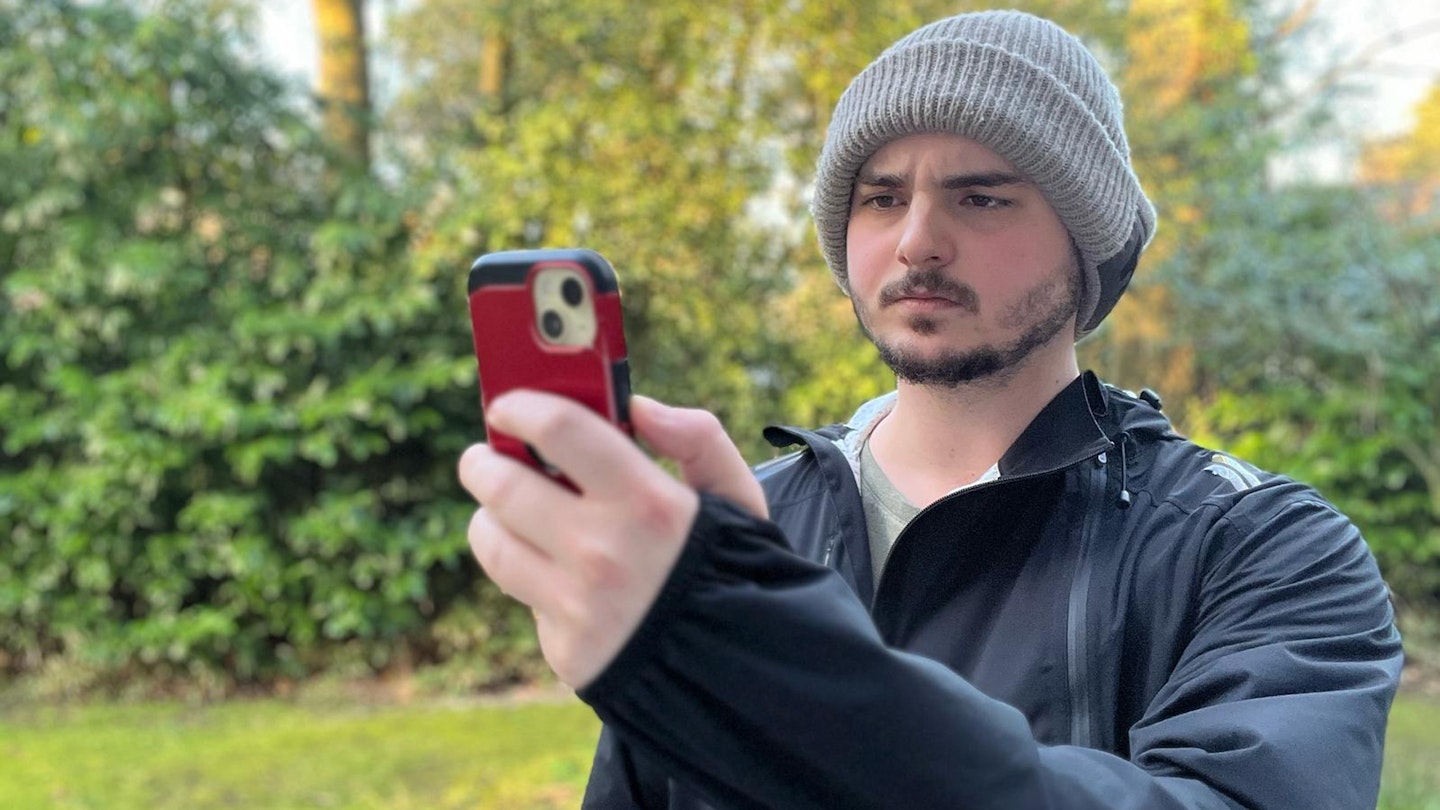
Our Top Picks
- Strava: The industry leader for community challenges and segment hunting, ideal for those who thrive on competition.
- Runna: The premier choice for structured, dynamic coaching that syncs directly to your wrist for real-time guidance.
- Nike Run Club: The best free resource for beginners, featuring high-quality guided audio runs and a clean interface.
- Garmin Connect: Unbeatable for deep biometric analysis and long-term performance tracking without a subscription fee.
Strava, Runna, and Nike Run Club are the best running apps for Apple Watch and Garmin users in 2024, offering seamless data synchronization and advanced performance tracking. Whether you need GPS running apps with route planning or heart rate monitoring, these tools bridge the gap between your wearable and your training goals.
| App | Best For | Hardware Focus | Pricing |
|---|---|---|---|
| Strava | Community & Segments | Apple Watch / Garmin | Free / $11.99/mo |
| Runna | Professional Coaching | Apple Watch / Garmin | $17.99/mo |
| Garmin Connect | Data Analytics | Garmin Only | Free |
| Nike Run Club | Beginners | Apple Watch | Free |

1. Strava: The Best Social Running App for Community Engagement
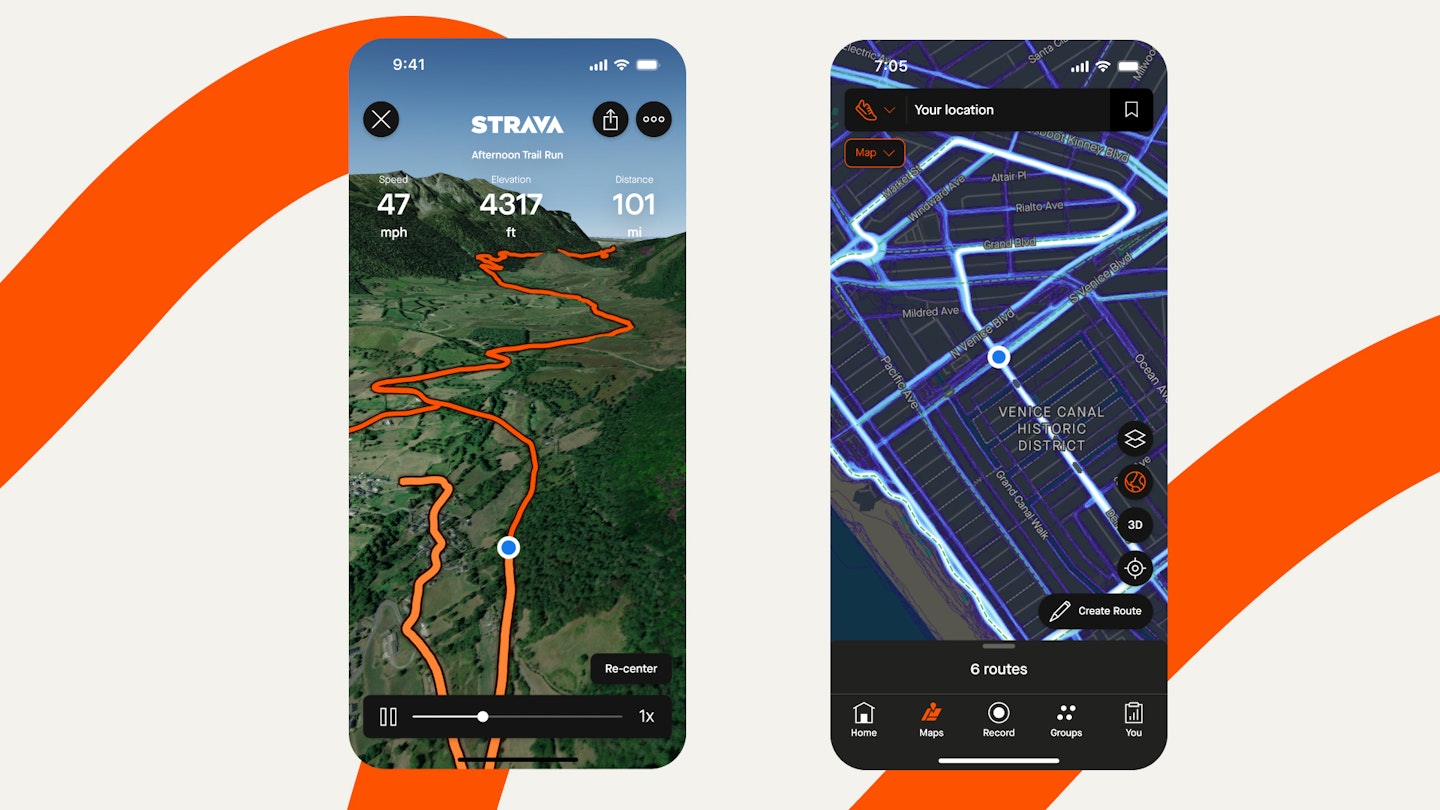
Strava remains the undisputed king of social fitness for a reason. It is more than just a tracking tool; it is a global leaderboard where every run counts toward a larger narrative. For the competitive athlete, Strava’s segment feature allows you to compare your times on specific stretches of road or trail against friends and locals. This gamification turns a standard morning jog into a tactical race for a personal record or a "King of the Mountains" title.
In a significant shift for the industry, Strava's 2024 Year in Sport report revealed that the Apple Watch Series and Apple Watch SE have officially become the most popular devices for tracking runs on the platform. This marks a transition from the traditional dominance of fitness-first brands like Garmin, though the Garmin Forerunner series remains a close second for serious endurance athletes. The cross-platform synchronization is flawless; you can record a run on your Garmin Forerunner 245 and have it appear on your Strava feed before you even finish stretching.
While the free version provides basic tracking, the subscription unlocks the real power of the platform: route discovery and effort analysis. If you are looking for the best social running apps to compete with friends, Strava is the standard. However, some users find the public nature of the app a drawback for privacy, and the growing subscription cost has been a point of contention for casual users.
Hardware Compatibility: Strava
- Apple Watch: Full native app with standalone GPS support.
- Garmin: Deep integration via Garmin Connect; automatic sync of segments and routes.
- Others: Wear OS, Suunto, Coros, and Polar compatible.
2. Runna: Best for Personalized Marathon Training Plans
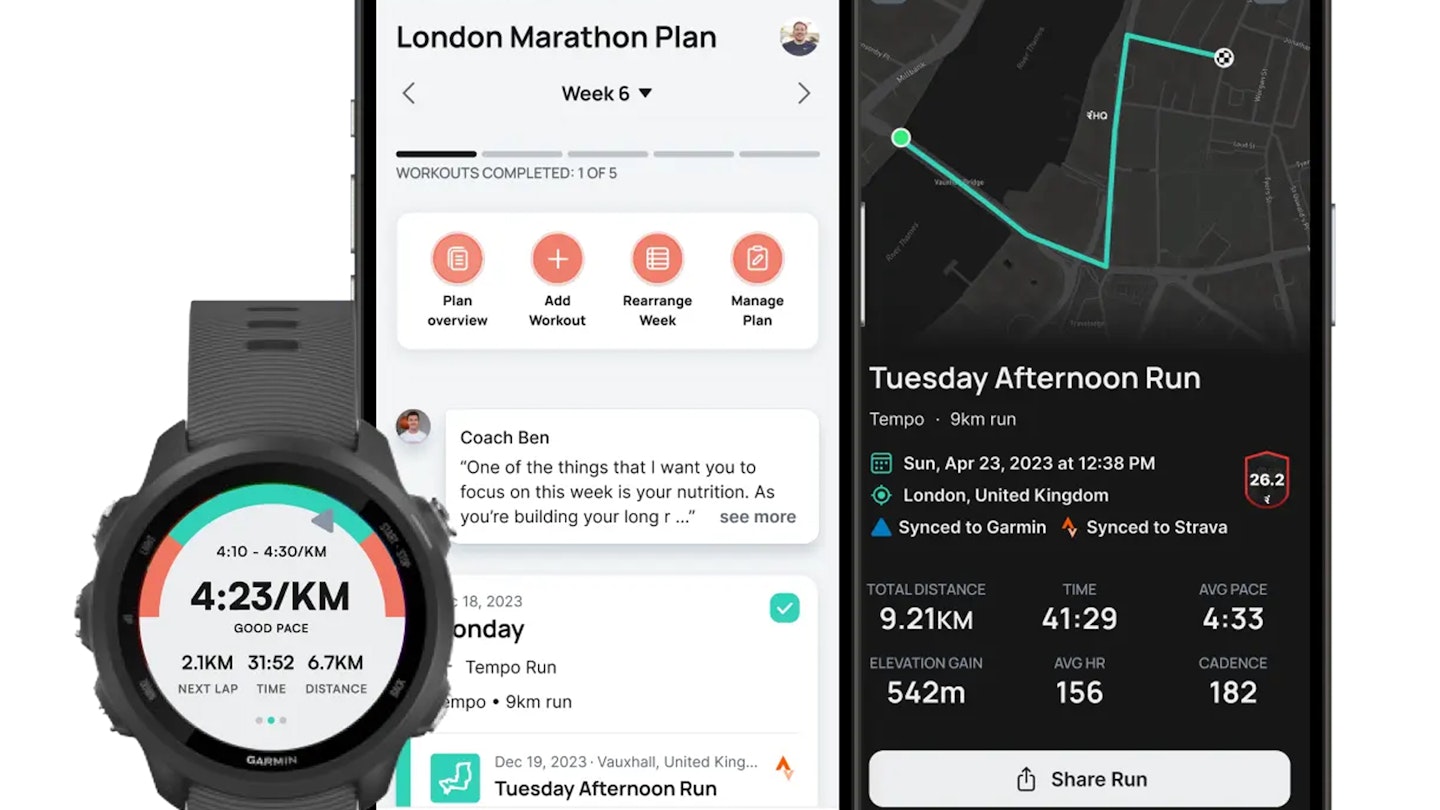
If you are moving beyond casual jogging and aiming for a specific finish time, Runna is the gold standard for coaching. Unlike static PDF plans, Runna creates personalized running training plans app for beginners and elites alike, adjusting your paces based on your current fitness and goal race date. The interface is sleek, but the real value lies in how it handles interval training.
When you start a session, Runna sends the exact workout steps—including warm-ups, specific pace targets, and recovery periods—directly to your Apple Watch or Garmin. Your watch will buzz if you are running too fast or too slow, acting as a digital coach on your wrist. This level of integration is why Runna is often cited as the top choice among marathon training apps compatible with fitness trackers.
The subscription is priced at £15.99 per month, which may seem steep, but it includes strength training routines and injury management advice from physiotherapists. It effectively replaces a human coach for a fraction of the cost. The only limitation is the lack of a free tier for long-term use, but for anyone serious about a 5k or a full marathon preparation, the investment is justified by the results.
Hardware Compatibility: Runna
- Apple Watch: Direct workout sync; no phone required during the run.
- Garmin: Plans sync to the Garmin Calendar and appear as "Daily Suggested Workouts."
- Others: Coros and Suunto support recently added.
3. Nike Run Club (NRC): Best Free Option for Apple Watch Users
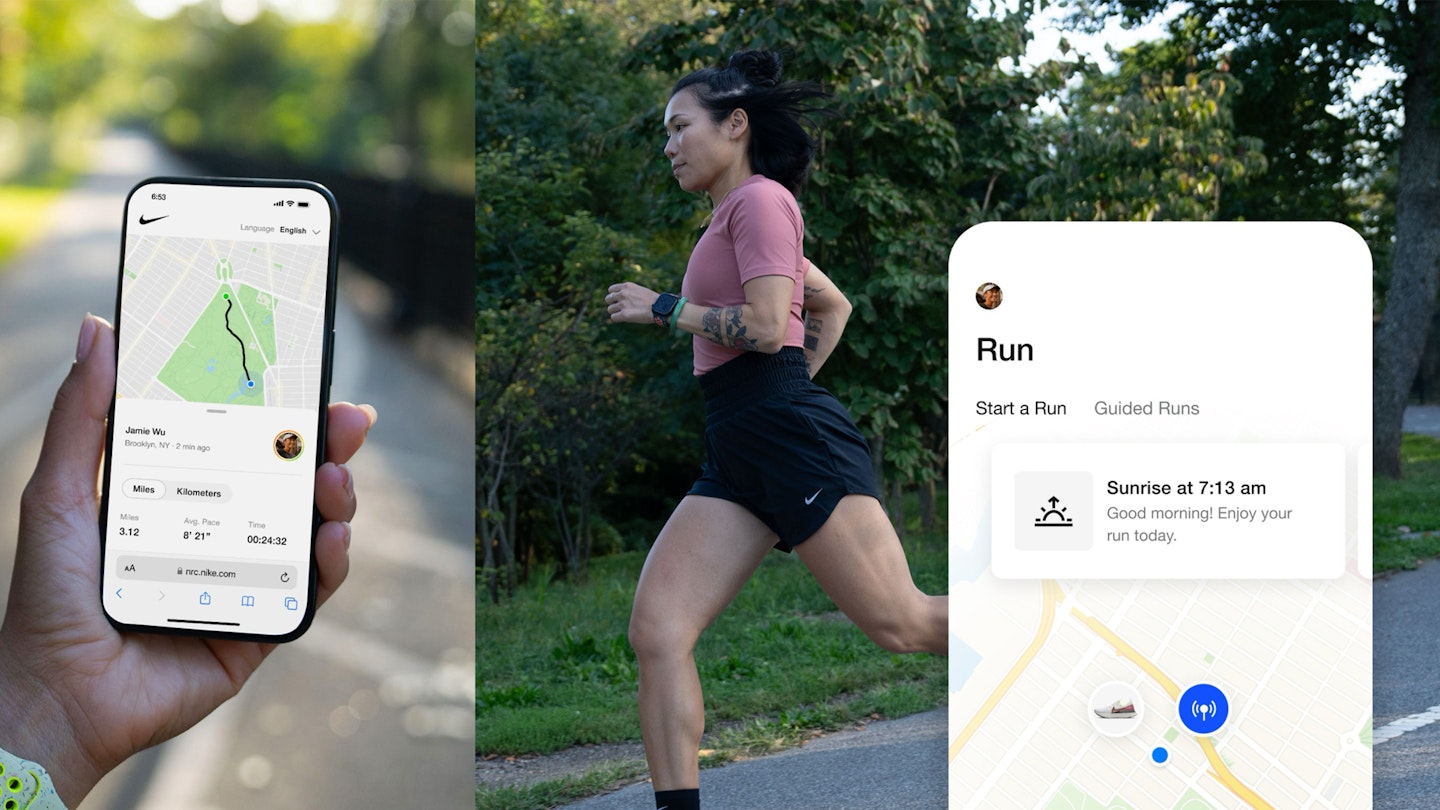
Nike Run Club remains a phenomenon in the fitness world because it provides high-quality content at zero cost. For those just starting their journey, it is arguably the best running apps for beginners. The standout feature is the Guided Runs library, where professional coaches and athletes like Eliud Kipchoge provide real-time audio cues and motivation through your headphones while you run.
The Apple Watch integration is particularly polished. The NRC watch face is highly customizable, and the app utilizes the watch's biometric sensors to track heart rate and pace with high accuracy. While it lacks the advanced marathon training apps compatible with fitness trackers features found in Runna, its simplicity is its strength.
One major drawback is the difficulty in exporting your data to other platforms. Nike prefers to keep your data within its ecosystem. However, for a user who wants a beautiful interface and expert guidance without a monthly fee, NRC is unbeatable.
Hardware Compatibility: NRC
- Apple Watch: Optimized native app; one of the best "standalone" experiences.
- Garmin: Limited. You can sync runs from Garmin to NRC, but you cannot send NRC workouts to a Garmin watch.
- Others: Limited Wear OS support.
Progression Guide: From NRC to Runna
- Phase 1 (The Start): Use Nike Run Club for its free guided runs to build a habit and learn basic pacing.
- Phase 2 (The 5K Goal): Stick with NRC or use Strava to track your first milestones and join local clubs.
- Phase 3 (The Serious Goal): Transition to Runna when you decide to train for a specific race time. The structured interval training will take you to the next level of athletic performance.
4. Garmin Connect: Best for Data Nerds and Biometrics
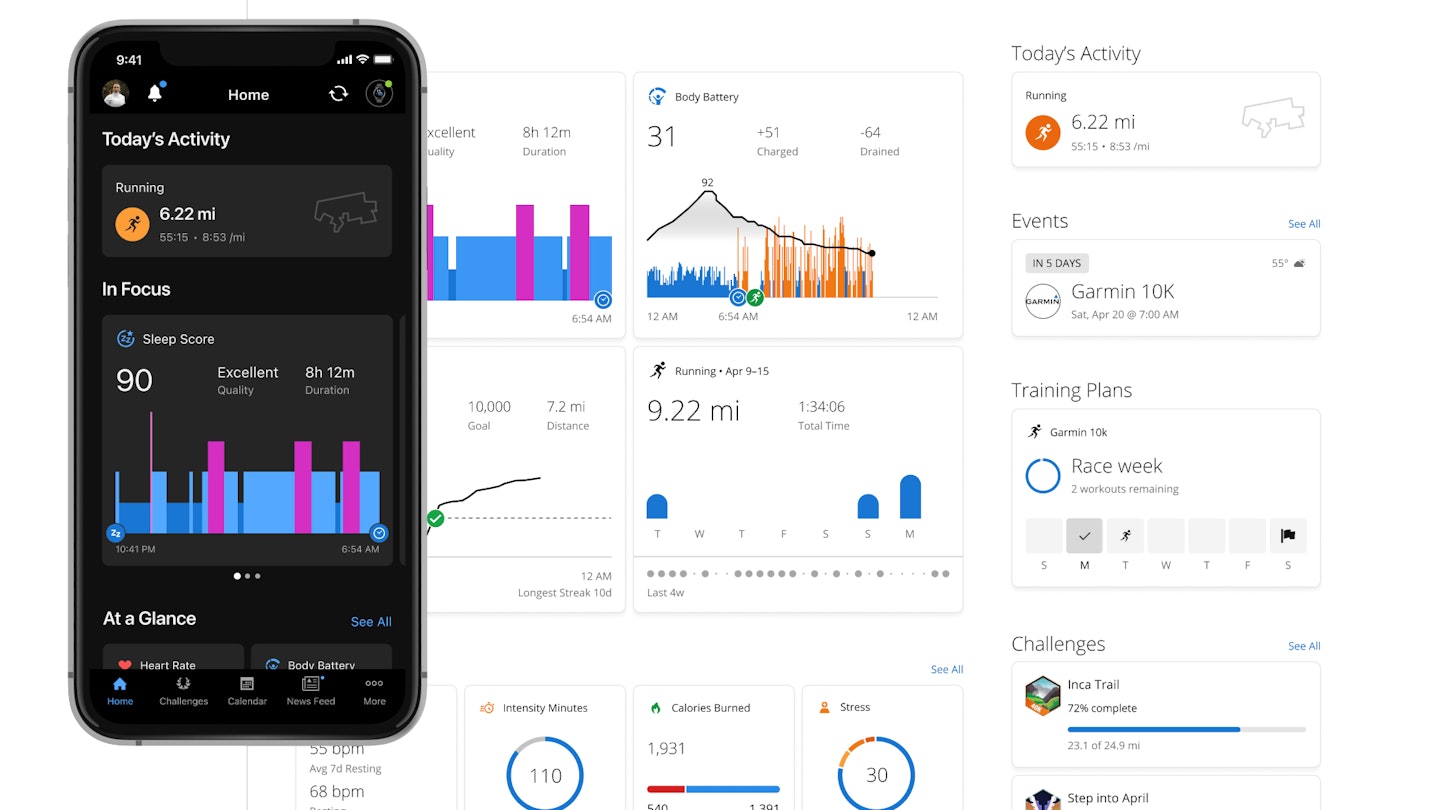
For the data-driven athlete, Garmin Connect isn't just an app; it is a full-scale laboratory. It is designed to maximize the hardware of the Garmin ecosystem. While other apps focus on the "social" or "coaching" side, Garmin Connect dives deep into the science of training load and recovery time.
The statistics show that serious runners prefer dedicated hardware. In 2024, data indicates that while 72% of general fitness activities are uploaded via mobile apps, 92% of marathon activities are recorded using dedicated GPS watches. Garmin Connect is the reason why. It tracks advanced metrics like VO2 max, ground contact time, and heart rate zones to provide a comprehensive picture of your fitness.
The "Training Readiness" score is a game-changer, combining your sleep quality, recent workout intensity, and heart rate variability to tell you if you should push hard or take a rest day. The app is free with any Garmin device, making it a powerful long-term tool for anyone who owns a Forerunner or Fenix. The interface can be overwhelming for beginners, but for those who want to optimize every mile, it is the best training apps for runners.
Hardware Compatibility: Garmin Connect
- Apple Watch: No. This is a proprietary ecosystem for Garmin hardware.
- Garmin: Native and essential.
- Others: Can receive data from Strava or MyFitnessPal, but best used with Garmin sensors.
5. Footpath: Best GPS Running App for Custom Route Planning
If you are tired of running the same three-mile loop around your neighborhood, Footpath is the solution. It is a specialized tool that focuses on GPS running apps with route planning. The standout feature is the "snap-to-path" drawing tool; you simply trace a rough shape on the map with your finger, and the app snaps it to the nearest roads or trails, providing an instant elevation profile and distance measurement.
For trail runners and explorers, Footpath is invaluable. You can create a complex route on your phone and then export the GPX file directly to your Garmin watch or follow the turn-by-turn navigation on your Apple Watch. In an era where 45 percent of all tracked running sessions globally now involve wearable integration, having a tool that makes route navigation easy on the wrist is essential for safety and variety.
The app offers offline navigation, which is critical for trail runners who venture into areas with poor cell service. While it doesn't offer coaching or social feeds, its utility as a navigation tool is second to none.
Hardware Compatibility: Footpath
- Apple Watch: Turn-by-turn navigation on the wrist with haptic alerts.
- Garmin: Export routes via GPX directly to Garmin Connect.
- Others: Standard GPX export for Suunto and Coros.
6. WHOOP: Best for Recovery and Injury Prevention
WHOOP takes a different approach to running. It doesn't have a GPS sensor itself, but it is one of the best running apps that track heart rate and recovery metrics to complement your GPS watch. By monitoring heart rate variability (HRV) and sleep patterns 24/7, WHOOP tells you how much "strain" your body can handle each day.
This is vital for injury prevention. Many runners fail because they overtrain when their body is compromised. WHOOP provides a daily recovery score that tells you when to back off. It integrates seamlessly with Apple Health, meaning your runs recorded on an Apple Watch will automatically flow into WHOOP to calculate your daily strain.
The "Hybrid Athlete" trend has made WHOOP incredibly popular. It doesn't just look at your run; it looks at your entire life—stress, sleep, and nutrition—to help you perform better during your training sessions. The subscription-based model includes the wearable strap for free, making it a unique entry in this list.
Hardware Compatibility: WHOOP
- Apple Watch: Syncs via Apple Health to combine GPS data with recovery metrics.
- Garmin: Can broadcast heart rate to Garmin watches via Bluetooth.
- Others: Full integration with Strava.
7. MapMyRun: Best for Smart Shoe Integration
Owned by Under Armour, MapMyRun has a unique niche: it connects directly to smart running shoes. If you own Under Armour Hovr shoes, you can track your run without carrying a phone or wearing a watch. The shoes contain a sensor that tracks cadence tracking, stride length, and distance, syncing the data to the app once you return home.
For those who prefer a more traditional setup, the app also has a robust Apple Watch and Garmin presence. It offers personalized training plans and a massive community of users. While it may feel a bit more "corporate" than Strava, its integration with fitness trackers and smart apparel makes it a versatile choice for runners who want to minimize the number of devices they wear.
Hardware Compatibility: MapMyRun
- Apple Watch: Standalone app with coaching cues.
- Garmin: Easy sync via Garmin Connect.
- Smart Shoes: Exclusive integration with Under Armour Connected Footwear.
FAQ
Which running app is best for beginners?
Nike Run Club is the best choice for beginners due to its completely free access and expert-led guided runs. The audio coaching helps new runners learn how to pace themselves and understand the importance of recovery, which is crucial for building a sustainable habit.
Is a paid running app subscription worth it?
A paid subscription is worth it if you are training for a specific goal, such as a marathon preparation or a personal best. Apps like Runna or the premium version of Strava provide structured interval training and deep data analysis that free versions lack, helping you improve faster and stay injury-free.
Which app is best for marathon training?
Runna is currently the best app for marathon training because it creates a dynamic, personalized plan that syncs directly to your Apple Watch or Garmin. It manages your weekly mileage and workout intensity based on your actual performance, which is more effective than following a static plan.
Can running apps track my heart rate?
Yes, most top-tier running apps track heart rate by utilizing the optical heart rate sensors on your Apple Watch or Garmin. For even more accuracy, many of these apps can also connect to external Bluetooth chest straps to provide precise heart rate zones data during high-intensity workouts.
How accurate is the GPS on running apps?
GPS accuracy depends more on your hardware than the app itself. Dedicated GPS watches from Garmin generally offer better accuracy in dense forests or cities than older smartphones. However, modern wearables paired with apps like Footpath now use multi-band GPS, which provides precision within a few meters.