Quick Facts
- Scientific Name: Bullosis diabeticorum
- Incidence Rate: 0.16% to 0.5% among individuals with diabetes
- Gender Ratio: Men are twice as likely as women to develop these lesions
- Common Locations: Feet, legs, hands, and fingers
- Sensory Profile: Typically painless and spontaneous
- Recovery Window: 2 to 6 weeks for spontaneous resolution
- Critical Protocol: Never pop or drain the blisters at home
Diabetic blisters, scientifically termed bullosis diabeticorum, are painless, clear-fluid-filled lesions that typically appear spontaneously on the feet, legs, hands, or forearms. Unlike friction blisters or burns, they develop on non-inflammatory skin and are often a sign of uncontrolled blood sugar and long-standing diabetes.
As a men's health editor, I often see guys ignore small skin changes until they become major medical hurdles. When it comes to diabetes, your skin is a window into your internal metabolic health. While a blister might seem like a minor annoyance, in the context of diabetes, it is a clinical marker that requires immediate attention and a specific care protocol. These lesions often appear overnight without any history of trauma or heat exposure, signaling that the body’s small blood vessels or nerves may be under significant stress.
Understanding bullosis diabeticorum symptoms is the first step in preventing the cascading complications that can arise from impaired wound healing. In this guide, we will break down how to identify these blisters, the red flags of infection you cannot afford to ignore, and the research-backed steps for safe management.
Identification: What Do Diabetic Blisters Look Like?
The primary challenge for most men is distinguishing a diabetic blister from a standard friction blister caused by new gym shoes or a long hike. The diabetic blister appearance is unique because it lacks the typical signs of trauma. These bullae are often tense and firm to the touch, containing a sterile fluid that is clear and thin.
One of the most defining characteristics is the state of the surrounding skin. In a typical burn or friction injury, the skin around the blister is red, angry, and inflamed. With diabetic blisters, the surrounding tissue usually remains non-inflammatory skin—meaning it looks perfectly normal, without redness or warmth. They can range significantly in size, from tiny vesicles to large bullae that may span several inches.
If you are wondering what do diabetic blisters look like on feet, they often appear on the tops or sides of the toes and the backs of the heels. Because many men with diabetes also suffer from peripheral neuropathy, these lesions are frequently discovered during a routine foot check rather than felt through pain. In fact, are diabetic blisters painful to the touch is one of the most common questions I get, and the answer is usually no. This lack of pain is exactly why they are so dangerous; if you can't feel them, you might not notice when they become compromised or infected.
Diabetic Blister vs. Friction Blister
| Feature | Diabetic Blisters (Bullosis Diabeticorum) | Friction Blisters |
|---|---|---|
| Cause | Uncontrolled blood sugar and microvascular issues | Mechanical rubbing or pressure |
| Pain Level | Usually painless | Often painful or tender |
| Surrounding Skin | Normal, non-red, non-inflamed | Red, swollen, and irritated |
| Fluid Type | Clear, sterile fluid | Clear fluid (may be bloody if deep) |
| Location | Extremities (feet, hands, forearms) | Specific sites of friction (heels, palms) |
| Symmetry | Can be bilateral (both sides of the body) | Usually unilateral (where the friction occurred) |
Warning Signs: Recognizing Infected Bullosis Diabeticorum
While the initial blister is sterile and painless, the risk of a secondary bacterial infection is the real threat to your longevity and limb health. For a person with diabetes, a minor skin breach can quickly escalate into cellulitis or even osteomyelitis (a bone infection) due to reduced blood flow and a suppressed immune response.
You must be vigilant in monitoring the site daily. Even though the blister itself may be numb due to nerve damage, the warning signs of infected bullosis diabeticorum are usually visible. If you notice the clear fluid turning cloudy, opaque, or purulent (filled with pus), this is an immediate indicator that bacteria have entered the lesion.
Here is a checklist of "Red Flag" symptoms that require a call to your doctor:
- Increased Temperature: The skin around the blister feels hot to the touch.
- Expanding Redness: Red streaks or a spreading "halo" of pink skin around the site.
- Swelling: The area around the blister becomes puffy or tight.
- Change in Fluid: Drainage that is foul-smelling or looks like yellow/green pus.
- Systemic Symptoms: Developing a fever, chills, or sudden unexplained fatigue.
Research shows that warning signs that a diabetic blister has become infected including surrounding redness, swelling, warmth, pain, or a fever, are often the precursors to more severe diabetic foot ulcers. Ignoring these signs can lead to chronic wounds that are notoriously difficult to heal.
Safe Home Care and Diabetic Bullae Treatment
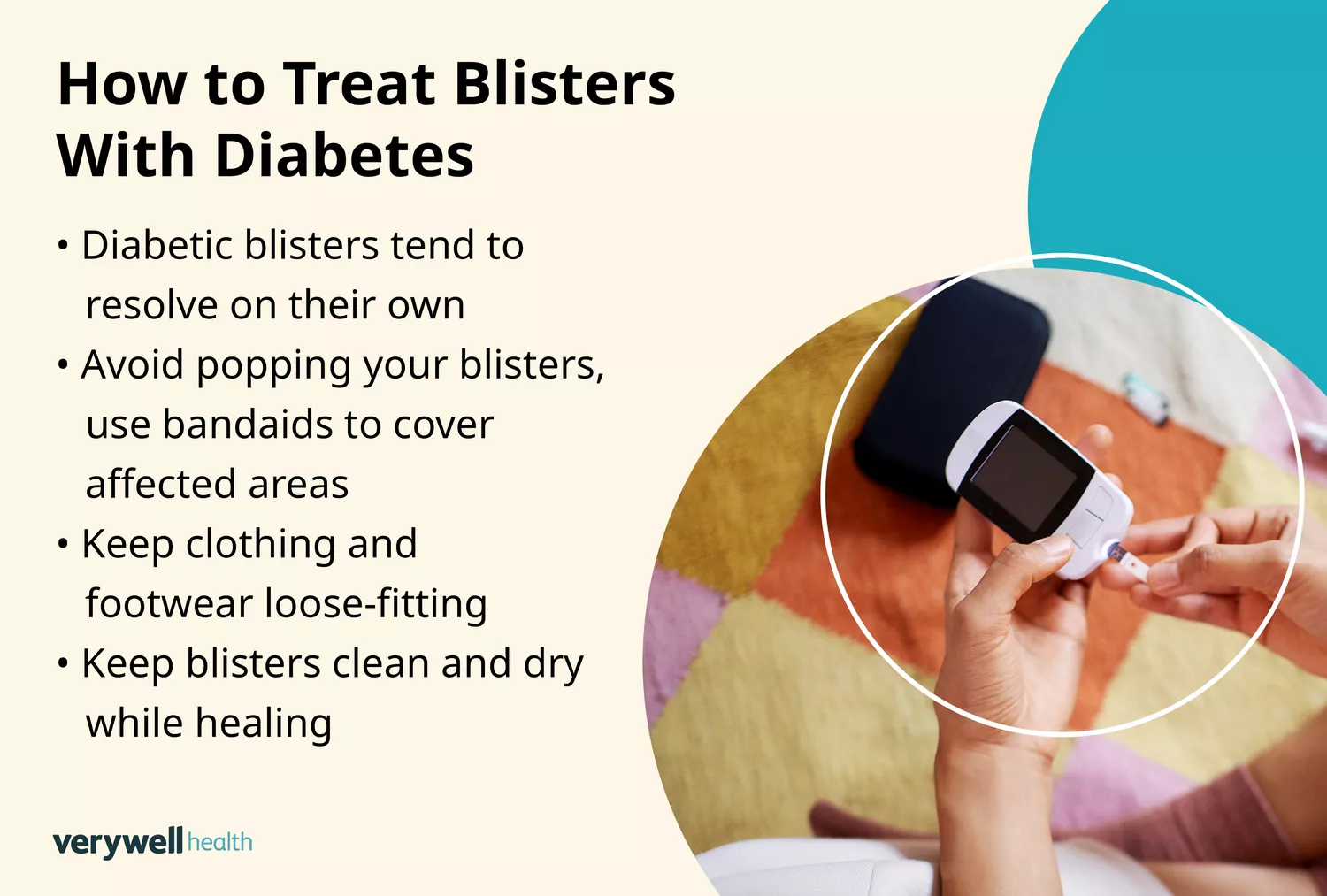
The most important rule in diabetic bullae treatment is one that goes against most guys' instincts: Do not pop the blister. In a healthy individual, popping a blister might speed up the drying process, but for someone with diabetes, that skin is a biological dressing. It is a natural, sterile barrier that protects the underlying raw tissue from the millions of bacteria living on your skin and in your environment.
Safe home care for diabetic bullae starts with protection. If the blister is in an area where it might rub against clothing or shoes, loosely cover it with a sterile, non-stick bandage. Do not wrap it so tightly that you restrict circulation. The goal is to create a "shield" so the blister can undergo spontaneous resolution.
The healing process is not overnight. If you are wondering how long do diabetic blisters take to heal, the typical timeframe is between 2 and 6 weeks. During this period, the fluid will gradually be reabsorbed by the body, and the top layer of skin will flatten and eventually peel off once new skin has formed underneath.
Beyond local care, your internal environment is the biggest factor in recovery. High glucose levels impair the function of white blood cells and slow down the collagen production necessary for skin repair. Improving your glycemic control is the most effective way to ensure the blister heals without complication and to prevent new ones from forming.
When to Consult a Podiatrist or Doctor
While many diabetic blisters heal on their own, you should never manage them in a vacuum. A podiatrist or a dermatologist should be part of your care team to confirm the diagnosis and rule out more serious conditions like bullous pemphigoid or porphyria cutanea tarda, which can look similar but require different treatments.
Professional intervention is necessary if the blister is exceptionally large—some can grow to several centimeters—or if it is located on a weight-bearing surface like the sole of the foot, where it is almost guaranteed to rupture during walking. In these cases, a doctor may perform a controlled drainage using a sterile needle, leaving the roof of the blister intact to maintain the protective seal.
Furthermore, a doctor can assess the degree of peripheral neuropathy you are experiencing. If you are developing blisters, it is often a sign that your microcirculation is compromised. A medical professional can perform a monofilament test to check your sensation levels and suggest specialized footwear to reduce the risk of future dermatologic manifestation.
Prevention Strategies for Diabetic Skin Health
In the world of longevity, prevention is always more efficient than a cure. Keeping your skin intact is a fundamental part of maintaining your mobility as you age. Since diabetic blisters are often linked to uncontrolled blood sugar and skin blisters, the foundation of prevention is rigorous glucose monitoring.
- Daily Foot Exams: Use a mirror to check the soles of your feet every single night. Look for any new vesicles, redness, or calluses.
- Proper Footwear: Avoid shoes that are too tight or have internal seams that rub. Always wear moisture-wicking socks to reduce friction and keep the skin dry.
- Moisturize Carefully: Keep your skin hydrated to prevent cracking, but never apply lotion between the toes, as the moisture trapped there can promote fungal infections.
- UV Protection: Interestingly, some cases of bullosis diabeticorum are triggered by intense sun exposure on the lower extremities. If you are spending time outdoors, ensure your legs and feet are protected.
- Manage Peripheral Neuropathy: Work with your healthcare provider to stabilize blood sugar levels, which can help slow the progression of nerve damage and improve overall skin resilience.
By taking these actionable steps, you are not just treating a symptom—you are protecting your body's largest organ and ensuring you stay active and healthy for the long haul.
FAQ
What do diabetic blisters look like?
Diabetic blisters appear as clear, fluid-filled sacs that look similar to a burn blister but without the surrounding redness or pain. They can range from the size of a pinhead to several inches across and usually show up on the feet, legs, or hands. The skin around the blister typically looks normal and healthy, not inflamed.
Should you pop a diabetic blister?
No, you should never pop a diabetic blister. The skin covering the blister acts as a natural sterile barrier that protects you from infection. Breaking the skin creates an open door for bacteria, which is particularly dangerous for people with diabetes who may have slower healing times. If a blister is very large or painful, see a healthcare professional to have it drained safely.
Are diabetic blisters a sign of high blood sugar?
Yes, while the exact cause isn't always clear, these blisters are strongly associated with long-standing diabetes and periods of uncontrolled blood sugar. They are often considered a clinical sign that your diabetes management plan may need adjustment to better regulate your glucose levels and protect your vascular health.
When should I see a doctor for a diabetic blister?
You should see a doctor as soon as you notice a blister to confirm it is bullosis diabeticorum and not another condition. Immediate medical attention is required if you see signs of infection, such as the fluid turning yellow or cloudy, the surrounding skin becoming red and warm, or if you develop a fever. A podiatrist is often the best specialist for blisters located on the feet.