Quick Facts
- Primary Test: The DEXA scan is the gold standard for measuring bone mineral density and diagnosing bone loss.
- Risk Factors: Women can lose up to 20% of their bone mass in the first five to seven years following menopause.
- Critical Stats: Approximately 21% to 30% of patients who suffer an osteoporotic hip fracture die within one year of the injury.
- Preventive Power: Using risk assessment tools to guide bone density testing can reduce the incidence of hip fractures by as much as 28%.
- Preparation: Patients should stop taking calcium supplements 24 to 48 hours before the procedure and wear comfortable, metal-free clothing.
- Radiation Safety: A standard scan involves extremely low radiation levels, often cited as less than the exposure received during a cross-country flight.
- Diagnostic Impact: Clinical data shows that the number of patients receiving appropriate medical therapy for bone loss increases from 15.2% to 63.3% once scan results are provided.
A bone density test, specifically a DEXA scan, measures bone mineral density to diagnose osteoporosis before fractures happen. It is a critical tool in preventive healthcare that helps identify bone loss early, assess the risk of future breaks, and monitor the success of bone-strengthening treatments. Understanding the importance of bone density testing in early diagnosis is the first step toward protecting your mobility and independence as you age.
Understanding Osteoporosis Screening Guidelines for Older Adults
As women, we spend much of our lives nurturing others, but there is a silent transition happening within our own bodies that often goes unnoticed until a crisis occurs. Osteoporosis is frequently called a silent disease because bone loss happens without symptoms. We don’t feel our bones becoming porous; we only feel the pain when a bone finally breaks. This is why following established osteoporosis screening guidelines is one of the most proactive things we can do for our long-term wellness.
The current osteoporosis screening guidelines for older adults generally recommend that all women aged 65 and older receive a bone density test. However, for many of us, the conversation should start much earlier. If you have reached menopause and have additional risk factors—such as a family history of hip fractures, a small body frame, or a history of smoking—your healthcare provider may suggest earlier screening. Clinical research emphasizes that utilizing these risk assessment tools to determine the need for testing can reduce the incidence of hip fractures by up to 28%.
In our post-menopausal health journey, the drop in estrogen levels significantly accelerates bone loss. For some, this results in osteopenia, a condition where bone mineral density is lower than normal but not yet in the osteoporosis range. By identifying this middle ground through preventive healthcare, we can implement lifestyle changes or treatments to prevent the progression to full-scale osteoporosis and avoid the life-altering impact of fragility fractures.
Preparation Checklist: How to Prepare for a Bone Density Test
Preparing for a bone density test is remarkably simple, but there are a few specific steps you need to take to ensure the most accurate results. Because the DEXA scan for bone health relies on precise radiographic imaging, even small amounts of external calcium or metal can interfere with the scanner's ability to read your bone mineral density (BMD) accurately.
When considering how to prepare for a bone density test, keep the following checklist in mind:
- Calcium Supplements: Stop taking any calcium supplements, including multivitamins containing calcium, at least 24 to 48 hours before your appointment.
- Clothing: Wear comfortable, loose-fitting clothing. Avoid items with metal zippers, buttons, snaps, or underwires. Many patients choose to wear leggings and a simple t-shirt to avoid having to change into a hospital gown.
- Recent Scans: Inform your doctor if you have recently had a barium exam or been injected with contrast dye for a CT scan or MRI. These substances can interfere with the bone density test results, and you may need to wait 7 to 14 days before your DEXA scan.
- Physical Comfort: You will be asked to lie still on a padded table for about 10 to 20 minutes, so make sure you are in a comfortable physical state before the scan begins.
Accuracy is paramount because these results will dictate your treatment plan. We know that once a diagnosis is confirmed, the likelihood of a patient receiving appropriate medical therapy increases from 15.2% to 63.3%. Taking these preparation steps seriously ensures your clinical team has the best possible data to work with.
Safety and Procedure: What to Expect During a DEXA Scan
The phrase "bone density test" can sound intimidating, but the actual procedure is non-invasive, painless, and relatively quick. The most common method used is Dual-Energy X-ray Absorptiometry, or a DEXA scan. Unlike a traditional X-ray or a claustrophobic MRI, a DEXA scan for bone health involves lying on an open table while a mechanical arm passes slowly over your body.
One of the most frequent concerns I hear from women involves safety and radiation levels of bone density tests. It is important to put these fears into perspective. The radiation used in a DEXA scan is extremely low—about one-tenth of the radiation you would receive from a standard chest X-ray. In fact, it is comparable to the natural background radiation you are exposed to during a cross-country flight. The benefit of identifying bone loss prevention strategies far outweighs the negligible risk associated with the scan.
During what to expect during a DEXA scan procedure, the technician will usually focus on two key areas: the lower spine and the hip, specifically the femoral neck. These are the areas most prone to fragility fractures. You will hear the machine hum quietly as it captures images, but you won't feel a thing. There are no needles, no injections, and no "closed-in" feeling. You simply breathe normally and stay still for a few minutes while the technology maps the strength of your skeleton.
Decoding Your Score: Interpreting Bone Mineral Density Results
Once the scan is complete, you will receive a report that can look like a collection of confusing numbers and charts. Interpreting bone mineral density results is where we truly begin to understand our personal risk and the steps needed for bone loss prevention. The two most important numbers you will see are the T-score and the Z-score.
Understanding bone density T-score and Z-score is vital for your peace of mind. Your T-score compares your bone density to that of a healthy 30-year-old of the same sex (when bone mass is at its peak). Your Z-score compares your bone density to the average bone density of people your own age, sex, and ethnicity. A Z-score that is significantly high or low may indicate that something other than aging—such as a vitamin D deficiency or a specific medical condition—is causing bone loss.
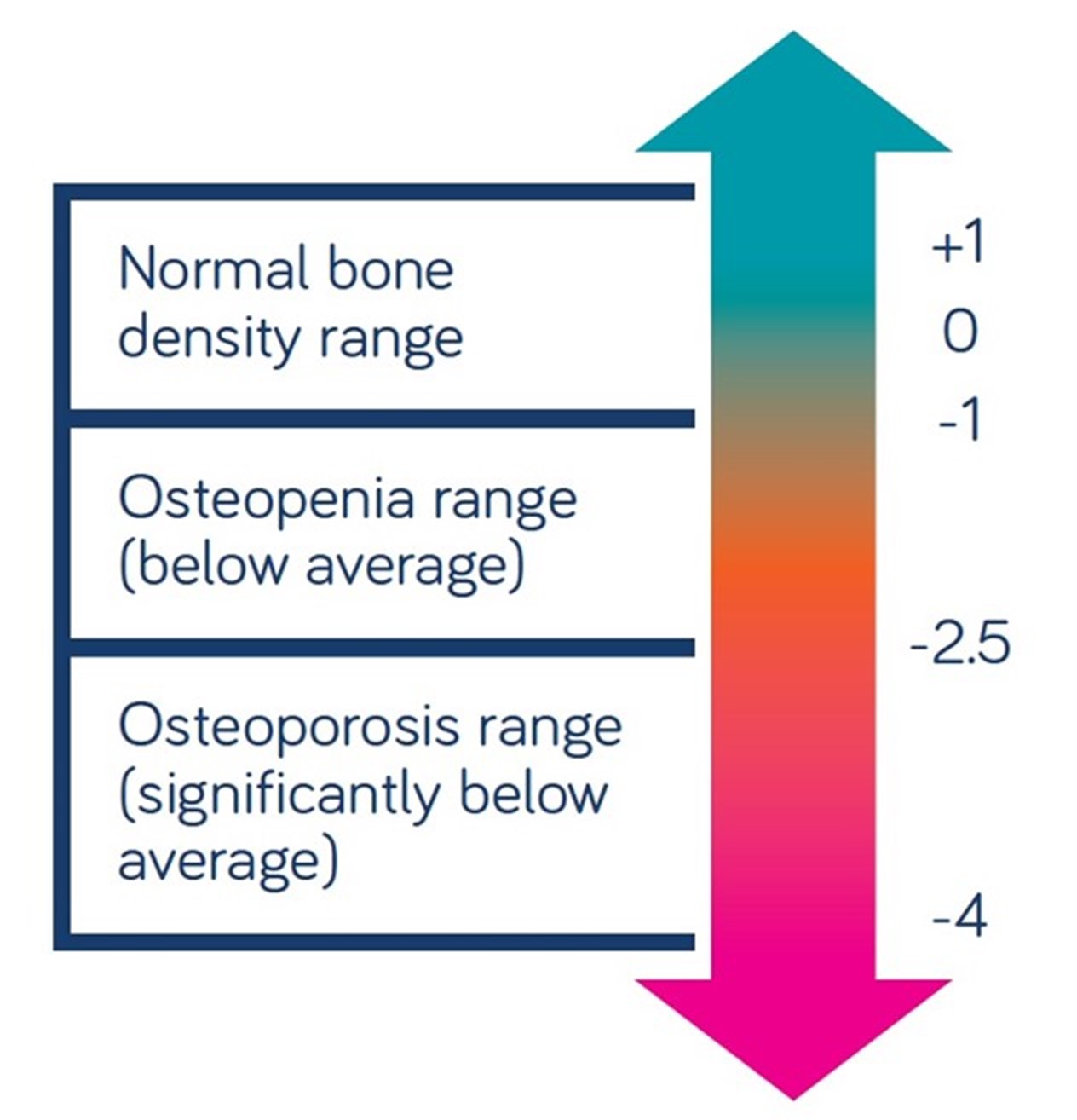
To help you navigate your results, clinicians use the following standardized thresholds for T-scores:
| T-Score Range | Diagnosis | What it Means |
|---|---|---|
| -1.0 or higher | Normal | Your bone density is considered healthy. |
| -1.0 to -2.5 | Osteopenia | You have low bone mass, increasing the risk of osteoporosis. |
| -2.5 or lower | Osteoporosis | You have significant bone loss and a high risk of fractures. |
In addition to these scores, your doctor may use the FRAX assessment tool. This tool combines your bone mineral density results with other clinical risk factors (like age, weight, and history of fractures) to calculate your 10-year probability of suffering a major osteoporotic fracture. This comprehensive view allows for a more personalized approach to treatment.
The stakes are high. Research indicates that 21% to 30% of patients who experience an osteoporotic hip fracture die within one year. When we look at interpreting bone mineral density results for diagnosis, we aren't just looking at numbers on a page—we are looking at a roadmap for saving lives and maintaining a high quality of life.
FAQ
What is a bone density test and why is it done?
A bone density test is a specialized scan that measures the amount of calcium and other minerals in a specific segment of bone. It is primarily done to identify bone loss early, diagnose osteoporosis, and predict your future risk of breaking a bone. By identifying low density before a fracture occurs, you and your doctor can take steps to strengthen your bones.
At what age should a woman have a bone density test?
General guidelines recommend that all women age 65 and older have a bone density test. However, you should consider screening earlier if you have reached menopause and have additional risk factors such as a history of smoking, long-term steroid use, a very low body weight, or a parent who suffered a hip fracture.
What should you not do before a bone density test?
You should not take calcium supplements or multivitamins containing calcium for at least 24 hours before your test. Additionally, you should avoid wearing clothing with metal parts like zippers, belts, or metal buttons. You should also wait at least seven days if you have recently had an imaging test that required contrast dye or barium.
What is a good T-score for bone density?
A good or "normal" T-score is -1.0 or higher. This indicates that your bone density is close to the peak bone mass of a healthy young adult. If your score falls between -1.0 and -2.5, it is classified as osteopenia, and anything -2.5 or lower is classified as osteoporosis.
How long does a bone density test take?
A standard DEXA scan is a very quick procedure, usually lasting between 10 and 20 minutes. It is a non-invasive outpatient procedure, meaning you can return to your normal daily activities immediately after the scan is finished.