Quick Facts
- Primary Metric: Maximal oxygen consumption measured in ml/kg/min.
- Lab Cost: Typically ranges from $135 to $150 per session.
- Test Duration: Requires 8 to 14 minutes of maximal effort until exhaustion.
- At-Home Accuracy: Generally carries a 7% to 15% margin of error compared to lab standards.
- Retest Frequency: Recommended every 4 to 6 weeks to monitor physiological adaptation.
- Longevity Link: VO2 max is a primary longevity marker and critical metabolic health indicator.
VO2 max is the gold standard for cardiorespiratory endurance. Whether you are using a clinical VO2 Max test or at home vo2 max test methods, understanding your aerobic capacity is vital for longevity. Submaximal VO2 max test methods allow individuals to estimate aerobic capacity at home using protocols like the Cooper 12-minute run, the Harvard step test, or the Rockport walking test. These assessments track distance, time, or heart rate response during controlled exercises to establish a fitness baseline. For accuracy, it is essential to follow specific test stages and repeat the same protocol during subsequent evaluations to monitor progress.
Understanding Your Aerobic Capacity: The Science
As a trainer, I often tell my athletes that if you aren't measuring, you’re just guessing. To truly master your fitness, you need to understand your cardiovascular fitness measurement. In the world of sports science, a VO2 Max test is a cardiovascular fitness measurement that quantifies your aerobic capacity by measuring the milliliters of oxygen consumed per kilogram of body weight per minute. It serves as the ultimate benchmark for cardiorespiratory endurance and sports science application.
Think of your body as an engine. Your VO2 max represents the size of that engine and its ability to take in oxygen from the air, transport it via the bloodstream, and utilize it in the muscles to create energy. When you hit your maximal effort, you reach a ceiling where your body can no longer increase its oxygen consumption regardless of how much harder you push. This ceiling is your score.
Understanding this metric is about more than just knowing how fast you can run; it is a vital longevity marker. Recent research indicates that VO2 max naturally declines by approximately 10 percent per decade after the age of 30, though physically active individuals can reduce this rate of decline to about 0.25 ml/kg/min per year. By keeping this number high, you are essentially slowing down the physiological clock on your metabolic health.
The Clinical Gold Standard: Lab-Based Assessments
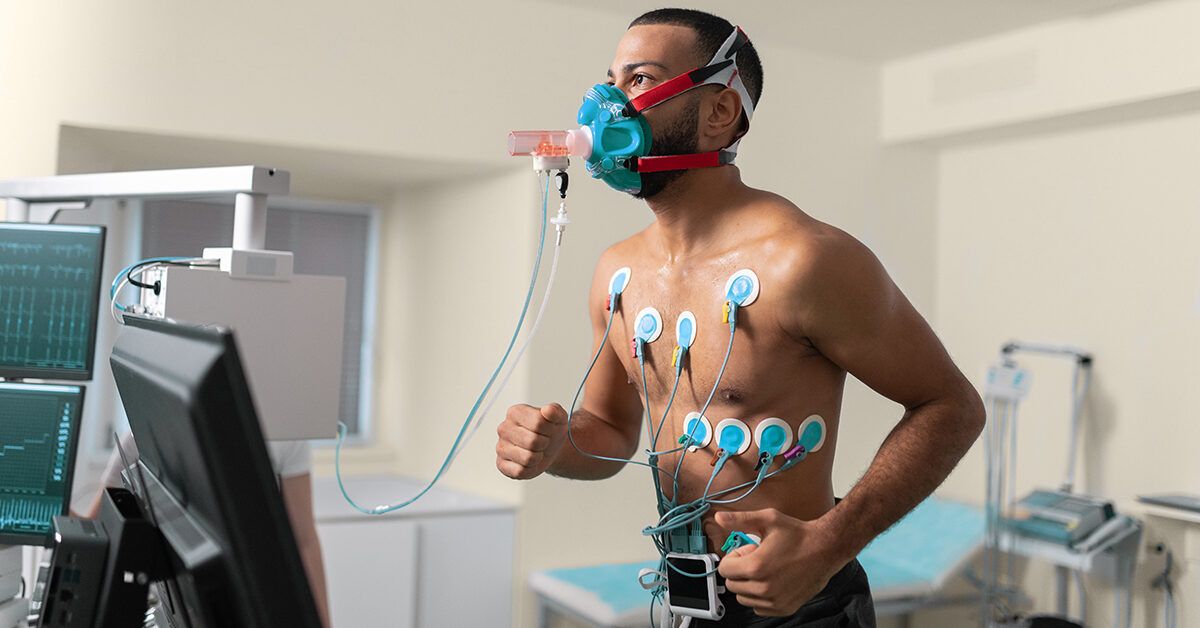
If you are serious about precision, a lab-based VO2 Max test is the only way to go. These tests are usually conducted in performance centers or university labs. When preparing for a lab-based vo2 max test, you should treat it like a race day. Wear your most comfortable running gear, ensure you are well-hydrated, and avoid heavy meals or stimulants like caffeine for at least three to four hours before the appointment.
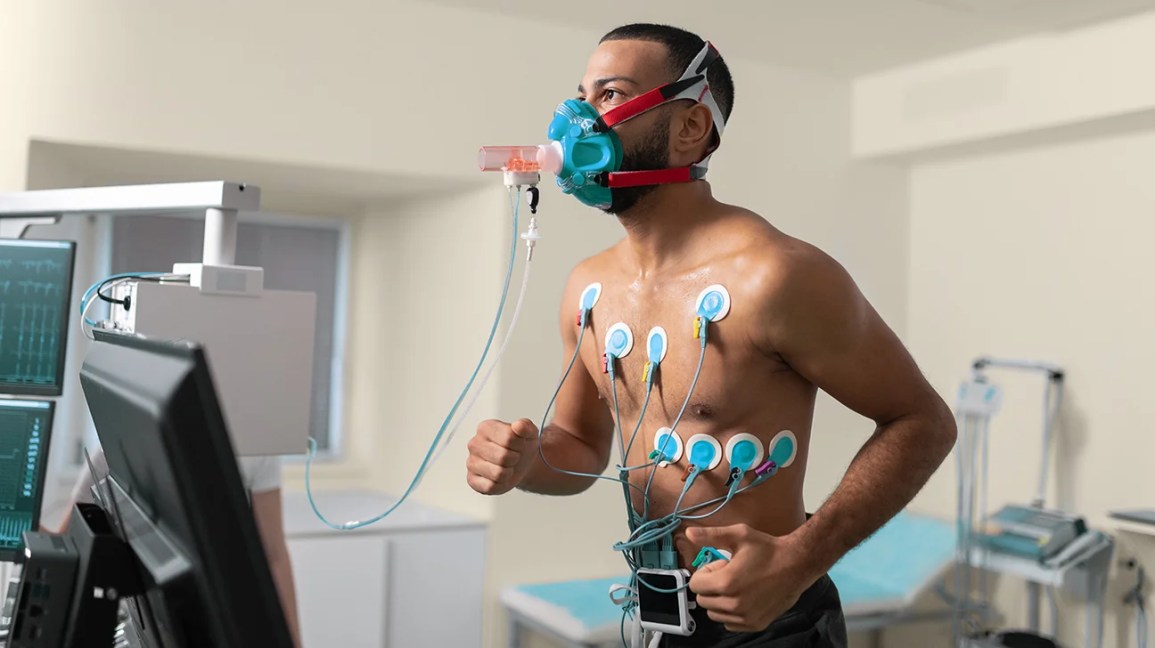
The process typically involves a metabolic cart, which is a specialized piece of equipment that uses a breathing mask to capture every breath you take. Through gas exchange analysis, the technicians can see exactly how much oxygen you are inhaling and how much carbon dioxide you are exhaling.
The most common protocol used in these settings is the bruce protocol treadmill test stages explained below:
- Stage 1: The treadmill starts at a 10% grade and 1.7 mph.
- Stage 2: Every three minutes, both the incline and the speed increase.
- Stage 3 and Beyond: The incline increases by 2% each stage, and speed increases significantly.
- Conclusion: The test continues until you reach volitional exhaustion or your oxygen consumption plateaus.
Unlike simple formulas that estimate your limit, this method identifies your actual maximal heart rate and provides data on heart rate variability during stress. It is the most accurate way to define your training intensity zones because it identifies your specific metabolic thresholds.
DIY Testing: How to Test VO2 Max at Home
While a lab is ideal, I realize not everyone has $150 and a local university lab at their disposal. This is where at home vo2 max test methods become invaluable. These field tests provide a solid estimate, provided you follow the instructions to the letter. Keep in mind that consumer wearable-based estimates compared to metabolic cart testing show an error range of 7% to 15%, so use these results as a baseline rather than absolute truth.
The Cooper 12-Minute Run
The Cooper test is the most popular aerobic capacity assessment for runners. It is simple: find a flat 400-meter track and see how much distance you can cover in exactly 12 minutes.
- Execution: Warm up for 10 minutes. Start your timer and run as hard as you can sustain for 12 minutes.
- The Formula: (Distance in meters - 504.9) / 44.73.
- Why it works: It forces you into a state of near-maximal effort, testing your cardiorespiratory endurance.
The Rockport Walking Test
For those who are just starting out or may have joint concerns, the rockport walking test for vo2 max estimation is a safer alternative.
- Execution: Walk one mile as fast as possible on a flat surface. Record your time and your heart rate immediately upon finishing.
- The Formula: This calculation factors in your weight, age, gender, time, and finishing heart rate to estimate your score.
Comparison: Lab vs. DIY
| Feature | Lab-Based Test | At-Home Field Test |
|---|---|---|
| Accuracy | High (Gold Standard) | Moderate (7-15% Error) |
| Equipment | Metabolic Cart, Treadmill | Track, Stopwatch, HR Monitor |
| Cost | $135 - $150 | Free to $20 |
| Data Provided | Gas exchange, Thresholds | Estimated Score |
| Ideal For | Professional Athletes, Biohackers | Fitness Beginners, Recreational Runners |
Interpreting Your Scores and Norms
Once you have your number, the next step is interpreting vo2 max results by age and sex. A score of 45 might be "Elite" for a 60-year-old woman, but only "Average" for a 25-year-old man. We use normative data to see where you stand compared to the general population.
| Age Group | Men (Excellent) | Women (Excellent) |
|---|---|---|
| 20–29 | 52.5+ | 41.1+ |
| 30–39 | 49.5+ | 39.6+ |
| 40–49 | 46.4+ | 36.8+ |
| 50–59 | 43.4+ | 33.6+ |
| 60+ | 39.6+ | 30.3+ |
Don't be discouraged if your initial score is lower than you'd like. The beauty of the human body is its capacity for physiological adaptation. By consistently applying the right stress to your cardiovascular system, you can see significant improvements in your aerobic capacity assessment over time.
From Data to Training: Using Your Results
Data is useless if you don't act on it. Once you know your VO2 max, you should use it to calibrate your training intensity zones. For example, if your test revealed a maximal heart rate of 190, your "Zone 2" endurance rides should be strictly maintained between 60% and 70% of that number.
To see real improvement, you need a mix of steady-state base building and high-intensity interval training (HIIT). Research shows that working at 90-95% of your VO2 max for short intervals is the most effective way to "raise the roof" of your aerobic capacity.
Finally, you must decide how often to retest aerobic capacity for progress. I recommend my clients retest every 4 to 6 weeks. This timeframe is long enough for the body to create more mitochondria and increase capillary density, but short enough to keep you motivated and ensure your training remains calibrated to your current fitness level.
FAQ
What is a good VO2 Max for my age?
A good score depends entirely on your demographic. For men in their 30s, a score above 45 ml/kg/min is considered good, while for women in the same age group, a score above 35 ml/kg/min is the benchmark for good fitness. High-level endurance athletes often see scores in the 70s or 80s.
How is a VO2 Max test performed?
A VO2 Max test is performed by having the participant engage in an aerobic activity—usually running or cycling—at increasing levels of intensity until they can no longer continue. In a lab, you wear a mask connected to a metabolic cart to measure gas exchange. In the field, you measure distance or time over a set protocol.
How much does a VO2 Max test cost?
A professional lab-based VO2 Max test typically costs between $135 and $150. Some high-end sports clinics or university research departments may charge more if the test is bundled with blood lactate testing or a full metabolic profile.
Can I do a VO2 Max test at home?
Yes, you can use at home vo2 max test methods like the Cooper 12-minute run or the Rockport walking test. While these lack the precision of a metabolic cart, they provide a consistent baseline that you can use to track your cardiovascular fitness measurement over time without specialized equipment.
How often should I get a VO2 Max test?
For the best results, you should consider how often to retest aerobic capacity for progress based on your goals. Most athletes find that retesting every 4 to 6 weeks provides the best data to adjust training intensity zones and ensure they are on the right track toward peak performance.