
Quick Facts
- Structural Role: The midfoot acts as the keystone of the foot's arch, providing the rigid lever needed for athletic propulsion.
- Signature Sign: Plantar ecchymosis, or bruising on the sole of the foot, is a major red flag that separates this from a common sprain.
- Misdiagnosis Risk: Up to 30% of these injuries are missed on initial non-weight-bearing X-rays, leading to delayed treatment.
- Surgical Threshold: Any displacement greater than 2mm typically requires internal fixation ORIF to restore joint alignment.
- Athlete Impact: Professional players often experience a 21% performance decline during their first season back after recovery.
- Recovery Timeline: Return to play for high-impact sports like basketball or football often takes nearly a full year.
A lisfranc injury is a serious condition affecting the tarsometatarsal joint complex in the midfoot. Unlike a simple sprain, it involves structural instability that can lead to permanent disability if missed, as the ligaments are torn or bones are fractured in the foot's most critical mechanical junction.
The Roman Arch: Understanding Midfoot Anatomy
In the world of high-performance training, we often focus on the power of the glutes or the explosiveness of the calves, but the midfoot is the unsung hero of every sprint and jump. To understand why a lisfranc injury is so devastating, you have to look at the foot as an architectural feat. Surgeons often compare the midfoot to a Roman Arch. In this structure, the bones are wedged together to provide incredible stability without needing a massive amount of muscular support.
The second metatarsal base serves as the keystone of this arch. It is recessed into a socket formed by the medial cuneiform bone and the lateral cuneiform, locking the entire tarsometatarsal joint complex in place. When you are in a plantarflexion force position—think of a sprinter in the blocks or a football lineman pushing off—your midfoot is absorbing two to three times your body weight.
Because there is no transverse ligament between the first and second metatarsals, the structural integrity of the entire foot relies on the Lisfranc ligament. If this ligament fails, the arch collapses. For an athlete, this isn't just a matter of pain; it is a mechanical failure of the lever system required to generate force. Without midfoot arch stability, you lose the ability to "push off," effectively ending your ability to compete at a high level.
Sprain or Lisfranc? Symptoms and Signs
One of the most dangerous aspects of this injury is how easily it can be mistaken for a garden-variety midfoot sprain. I have seen countless athletes try to "tough it out," thinking they just rolled their foot, only to find out weeks later that they have a structural void in their arch.
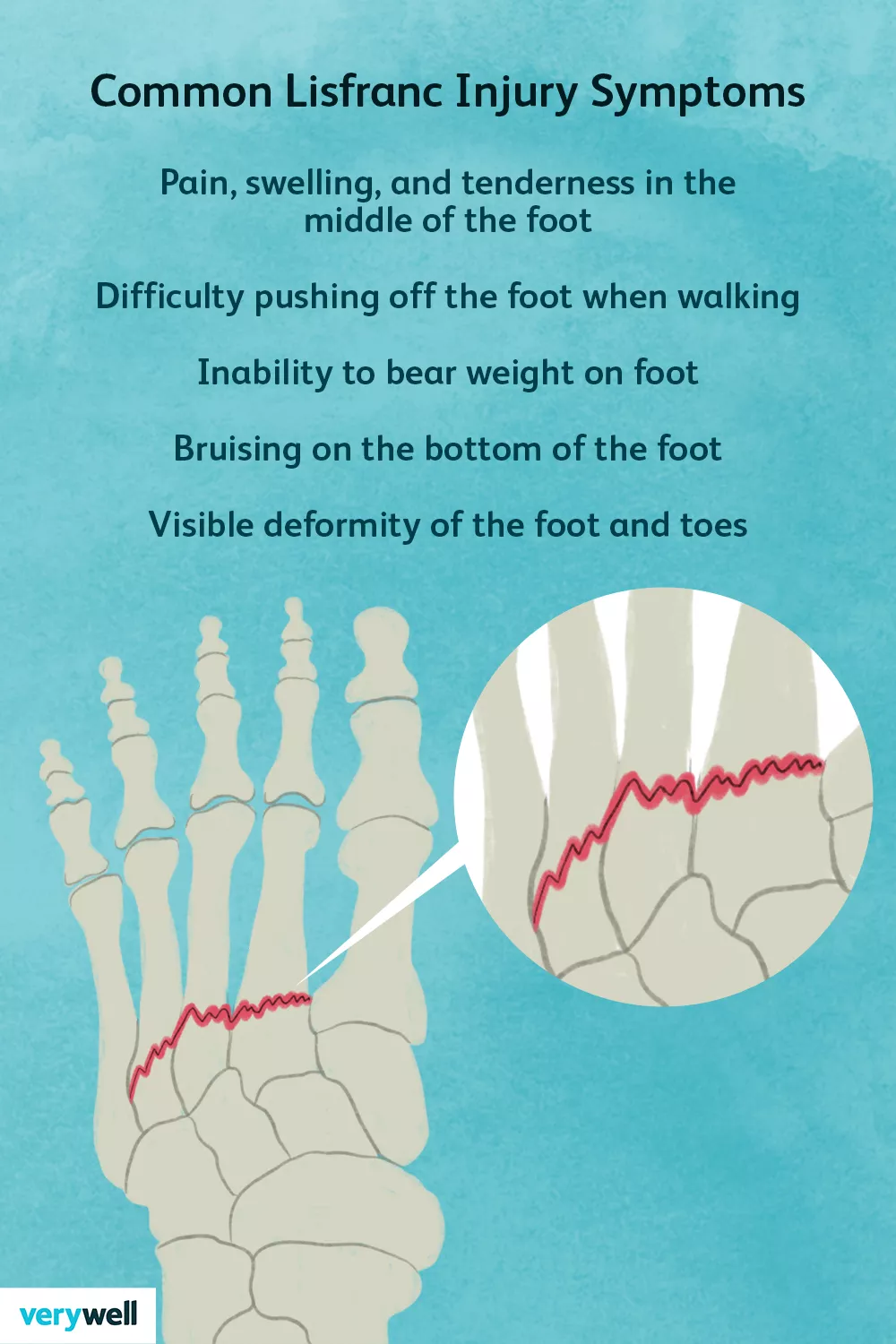
When assessing midfoot sprain vs lisfranc injury signs, there are a few clinical "must-knows." A standard sprain involves the stretching of ligaments, which usually allows for some level of weight-bearing, albeit with discomfort. A true lisfranc injury involves ligamentous diastasis—a widening of the space between the bones—which makes the foot structurally unsound.
The most reliable lisfranc injury symptoms and signs include:
- Plantar ecchymosis: This is a deep bruising on the bottom of the foot. It is almost pathognomonic for a Lisfranc disruption because the ligament tear causes bleeding that settles in the sole.
- Midfoot Swelling: Unlike an ankle sprain where the swelling is lateral, this occurs directly over the top of the foot.
- The Piano Key Test: If moving the toes up and down causes sharp pain in the midfoot, the joint complex is likely compromised.
- Inability to Heel Raise: If you cannot stand on your tiptoes on the affected side, your midfoot arch is likely unstable.
| Feature | Midfoot Sprain | Lisfranc Injury |
|---|---|---|
| Bruising Location | Top or sides of the foot | Bottom of the foot (Plantar) |
| Weight Bearing | Possible, though painful | Often impossible |
| Stability | Arch remains intact | Arch may collapse or widen |
| Heel Raise | Generally possible | Inability to perform |
| Recovery | 2-6 weeks | 6-12 months |
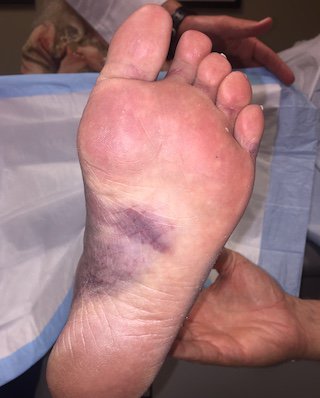
If you notice lisfranc injury bruising on bottom of foot after a fall or a twisting injury, stop all activity immediately. This is not an injury you can walk off.
The Diagnostic Trap: Weight-Bearing vs Non-Weight-Bearing X-rays
The biggest mistake a sports medicine podiatrist or ER physician can make is relying solely on a standard X-ray while the patient is sitting on a table. In many cases, the bones of the midfoot may "snap back" into place when the foot is not under load, showing a normal alignment. This leads to a high rate of misdiagnosis.
To truly see the damage, you must request a weight bearing vs non weight bearing lisfranc x-ray. By placing the foot under the stress of the body's weight, the weakened ligaments will allow the bones to shift, revealing the ligamentous diastasis that was previously hidden.
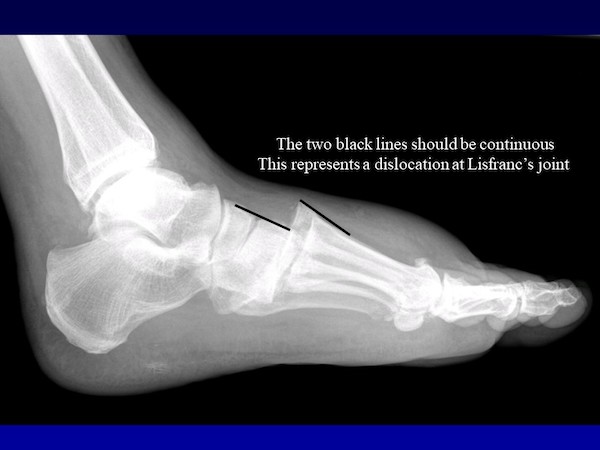
Radiologists look for the fleck sign during these scans. This is a tiny avulsion fracture where a small piece of the bone has been pulled away by the Lisfranc ligament. While it looks minor on film, the presence of a fleck sign is a massive indicator of total midfoot instability and often serves as one of the definitive signs a lisfranc injury requires surgery.
Why Athletes Face Long Odds: Complications and Long-Term Effects
The data on athletes returning from this injury is sobering. Because the midfoot is a low-blood-flow area and high-stress environment, healing is slow and complications of untreated lisfranc injury are frequent. If the alignment is not restored to within 2mm of its original position, the joint surfaces will wear down rapidly.
The most common long term effects of untreated lisfranc fracture include post-traumatic arthritis. Because the midfoot joints are meant to be rigid, any excess movement creates friction that destroys cartilage. This leads to chronic pain that can make even walking—let alone running—unbearable. Furthermore, a permanent collapse of the arch can lead to secondary issues like tendonitis and stress fractures in the rest of the foot.
The statistical impact on professional athletes is significant. A study of NFL players who returned to competition following a lisfranc injury found they experienced a significant 21% decline in performance during their first season back compared to pre-injury levels. The road back is even tougher for basketball players who rely on explosive verticality. In a retrospective analysis of advanced basketball athletes, 27% retired from the sport after sustaining a lisfranc injury, and those who did return required an average of 307 days to get back on the court.
For the everyday athlete, the lisfranc injury recovery timeline for runners is equally daunting. Even with perfect treatment, you are looking at months of non-weight bearing before you can even begin the "return to run" progression.
"The midfoot is the foundation of your athletic house. If the foundation is cracked, the rest of the structure will eventually fail. You cannot rush the biology of ligament healing in the tarsometatarsal joint." — David Park
Treatment Paths: When Is Surgery Necessary?
The decision between conservative treatment and surgical intervention comes down to stability. If the injury is a stable sprain with no displacement on weight-bearing films, you may be able to avoid the operating room. However, this still requires a strict period of 6 to 10 weeks of non-weight bearing in a cam walker immobilization boot to allow the ligaments to scar down.
If there is any shift in the bones, internal fixation ORIF (Open Reduction Internal Fixation) is the gold standard. During this procedure, the surgeon uses orthopedic hardware—screws, plates, or sometimes a "tightrope" suture system—to pull the bones back together and hold them in place while the ligaments heal.
In severe cases where the joint is shattered or the arthritis is already present, the surgeon may opt for arthrodesis surgery. This involves fusing the midfoot bones together permanently. While this sounds extreme, remember that the midfoot is supposed to be rigid. Fusing these joints can actually provide a more stable, pain-free platform for an athlete than a hyper-mobile, damaged joint.
FAQ
What is a Lisfranc injury?
A lisfranc injury is a traumatic disruption of the midfoot where the ligaments that support the tarsometatarsal joints are torn or the bones are fractured. This area is crucial for maintaining the foot's arch and providing stability during movement.
Can you walk with a Lisfranc injury?
While some athletes with minor ligamentous tears may be able to limp, walking is usually extremely painful and ill-advised. Attempting to walk on an unstable midfoot can worsen the displacement and turn a manageable injury into a surgical emergency.
Is surgery necessary for a Lisfranc injury?
Surgery is typically necessary if there is more than 2mm of displacement between the bones or if the midfoot arch is unstable. If the injury is a "stable" sprain, conservative treatment with a long period of non-weight bearing may be sufficient.
What happens if a Lisfranc injury is left untreated?
Leaving this injury untreated almost always leads to a permanent collapse of the foot's arch and the rapid development of post-traumatic arthritis. This results in chronic, lifelong pain and a significant loss of athletic function.
What is the recovery timeline for Lisfranc surgery?
The recovery is a long-haul process. Expect 6 to 12 weeks of strictly no weight-bearing, followed by several months of physical therapy. Most athletes do not return to full competitive play until 10 to 12 months post-surgery.