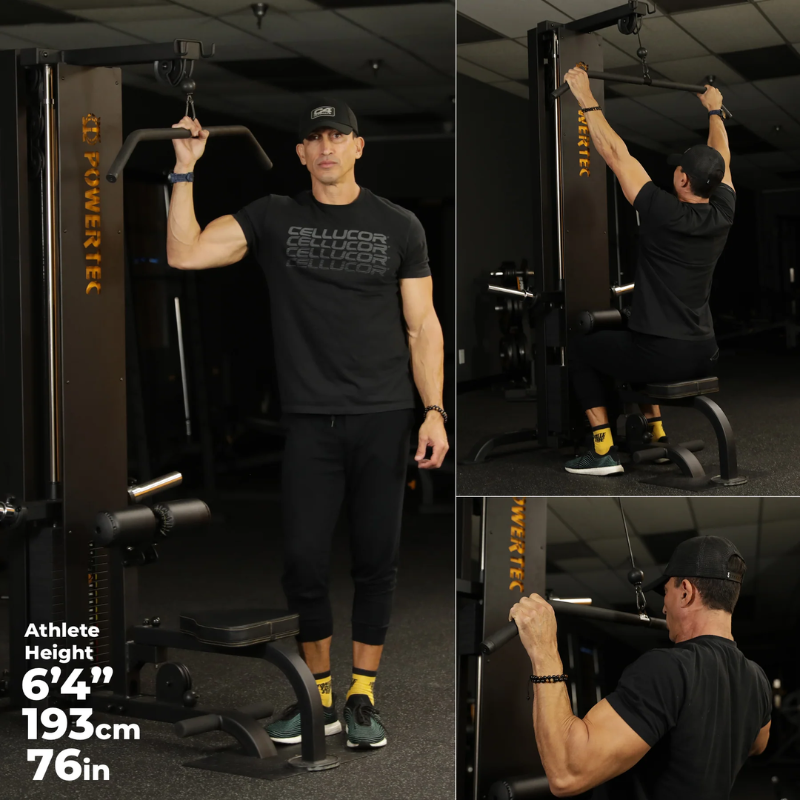
Quick Facts
- Primary Mover: Latissimus dorsi
- Optimal Lean: 20-30 degrees for maximal fiber recruitment
- Best Grip for Lats: Medium-width (measured at 1.5x biacromial distance)
- Safety: Front-of-neck pulls significantly reduce rotator cuff injury risk
- Hypertrophy Range: 8-12 repetitions with controlled eccentric phases
- Key Movement: Initiate every rep with scapular depression
Lat pulldown tips are essential for anyone looking to build a wider, stronger back. While it seems simple, mastering the lat pulldown mind-muscle connection and making specific lat pulldown form adjustments can be the difference between bicep fatigue and massive latissimus dorsi hypertrophy. To maximize lat activation, initiate the movement with scapular depression, pulling the shoulders down before the elbows follow. Maintain a proud chest and a 20-30 degree lean to match the lat's line of pull, avoiding momentum to ensure high time under tension.
Biomechanics: The 30-Degree Secret to Lat Activation
When we talk about back development, we are primarily discussing the latissimus dorsi. This muscle is the largest in the upper body, but it is often neglected because people pull with their arms rather than their back. To fix this, you need to understand the line of pull. The fibers of the lats do not run vertically; they run at a diagonal angle from the humerus down to the spine and pelvis.
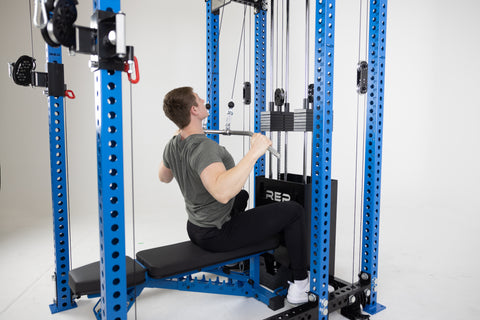
By incorporating specific lat pulldown form adjustments for better lat activation, you can align the resistance of the cable with these muscle fibers. A slight torso lean of approximately 20 to 30 degrees allows the bar to travel in a path that keeps constant tension on the lats. If you sit perfectly upright, the bar often clears the face but limits the range of motion at the bottom. Conversely, leaning back too far turns the movement into a seated row, shifting the focus to the rhomboids and middle trapezius.
Research into the biomechanics of the back reveals that lat activation remains remarkably stable across various widths if the technical execution is sound. However, the angle of your torso determines which muscle fiber recruitment patterns are most active. Staying in that 30-degree sweet spot ensures the posterior deltoid and teres major assist the lats without taking over the movement. Furthermore, the lat pulldown is an open-chain exercise, meaning the weight moves toward you. This allows for specific mechanical advantages in isolation that you cannot always get from closed-chain movements like pull-ups.
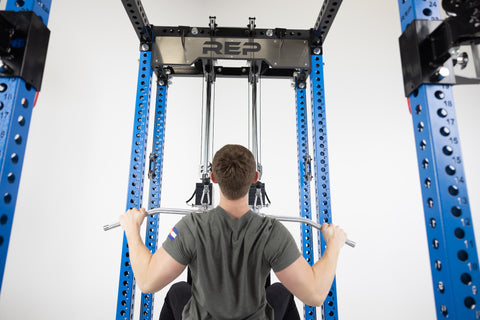
Scientific investigation has also confirmed that performing the lat pulldown to the front of the neck produces the greatest activation of the latissimus dorsi while minimizing the risk of shoulder impingement. Pulling behind the neck forces the shoulder into extreme external rotation, which can destabilize the joint and lead to long-term injury.
The Grip Debate: Finding Your Perfect Width for V-Taper
One of the most common questions I get as an editor is whether a wide grip is truly the best way to build back width. The traditional gym wisdom says "wide grip equals wide back," but the science tells a slightly different story. While a wide grip does emphasize the upper lats and the teres major, it often sacrifices range of motion.
A study published in the Journal of Strength and Conditioning Research found that a medium-width grip, measured at 1.5 times the biacromial distance, allows for higher six-repetition maximum loads compared to a wide grip of 2.0 times the distance. In simple terms, a medium grip allows you to lift heavier weight through a better range of motion, which is a recipe for superior hypertrophy training.

Analyzing Lat Pulldown Grip Variations
Different lat pulldown grip variations change the orientation of the humerus, which affects muscle recruitment.
| Grip Style | Primary Target | Main Benefit |
|---|---|---|
| Wide Grip (Overhand) | Upper Lats / Teres Major | Emphasizes the V-taper aesthetic |
| Medium Grip (Overhand) | Overall Latissimus Dorsi | Best for mechanical load and strength |
| Close Neutral Grip | Lower Lats / Middle Back | Increased range of motion and joint comfort |
| Underhand (Supinated) | Lower Lats / Biceps | Higher bicep involvement but great for lower lat stretch |
When using a wide grip vs close grip lat pulldown for back width, the best lat pulldown grip variations for V-taper usually involve a pronated, overhand grip. Electromyographical studies have shown that a pronated grip results in significantly higher activation of the latissimus dorsi compared to a supinated grip. While the underhand grip allows for a strong concentric contraction, it often leads to the biceps doing the majority of the work.

For those with wrist or shoulder discomfort, using a V-bar attachment for a neutral grip is a fantastic alternative. This position places the wrists in a safer alignment and allows you to drive the elbows further down, targeting the lower insertions of the lats.
Mastering the Mind-Muscle Connection
The back is one of the hardest muscle groups to "feel" because we cannot see it working in the mirror. Developing a strong lat pulldown mind-muscle connection is the key to moving past a plateau. Most lifters fail because they think about pulling the bar down with their hands. Instead, you should visualize your hands merely as hooks.
The real work happens at the elbow. Focus on driving your elbows down toward your hips. If you can master this cue, you will notice a massive shift in tension from your forearms and biceps into your back. Another technique to try is the "thumbless grip." By placing your thumb over the bar rather than around it, you decrease the ability of the forearm muscles to dominate the pull.
Control is equally important during the eccentric control phase. Hypertrophy training is not just about the pull; it is about the stretch. When you let the bar go back up, do it slowly. Resist the weight for a count of three seconds. This increases the time under tension and creates more micro-trauma in the muscle fibers, leading to better growth. Many advanced athletes use the lat pulldown as a pre-activation tool before deadlifts or heavy rows to ensure their lats are firing correctly before moving to compound lifts.
Common Mistakes to Avoid for Back Growth
Even with the right intentions, certain common lat pulldown mistakes to avoid for back growth can halt your progress. The most frequent error is using excessive momentum. If you are swinging your torso back and forth to get the weight down, you are using physics, not your muscles. This reduces the effective load on the lats and increases the risk of lower back strain.
Another technical flaw is the lack of scapular depression. Many people start the pull with their arms. You must first depress your shoulder blades—pull them down and away from your ears—before the elbows begin to bend. If your shoulders are shrugging up toward your ears at the bottom of the movement, you have lost tension in the lats.
Finally, watch your range of motion. You do not need to touch the bar to your stomach. For most people, the optimal end point is just below the chin or at the upper chest. Pulling lower than that usually causes the shoulders to roll forward into internal rotation, which can irritate the rotator cuff and shift the work away from the back.
The Perfect Rep Checklist
- Sit down and secure your thighs firmly under the pads.
- Grasp the bar with a medium, pronated grip.
- Lean back 20 degrees and look slightly upward.
- Depress your shoulder blades first.
- Drive your elbows toward your hips until the bar reaches your upper chest.
- Squeeze the lats at the bottom for one second.
- Return the bar slowly over a three-second count, maintaining tension.
Hypertrophy Programming: Sets, Reps, and Progression
To see real changes in your physique, you need to apply progressive overload. This doesn't always mean adding more weight. You can progress by increasing the volume, slowing down the tempo, or shortening the rest periods.
For those focusing on lat pulldown sets and reps for hypertrophy, I recommend staying in the 8 to 12 repetition range. This provides a balance of mechanical tension and metabolic stress. Perform 3 to 4 sets as part of your pull-day or back routine. If your goal is pure strength, you can occasionally dip into the 4 to 6 rep range with heavier loads, but ensure your form doesn't break down.
Rotating your grips every 4 to 6 weeks is another expert strategy. Moving from a wide grip to a neutral V-bar grip provides a fresh stimulus to the muscle fibers and prevents repetitive stress injuries on the elbow and shoulder joints. You can also implement pause reps, where you hold the bar at the chest for two seconds, to further enhance the mind-muscle connection and eliminate any remaining momentum.
FAQ
How can I improve my lat pulldown form?
Improving your form starts with the setup. Ensure your legs are locked tight under the pads so you don't lift off the seat. Focus on the initial movement being a shoulder blade tuck (scapular depression) rather than an arm pull. Keep a proud chest throughout the entire range of motion and avoid any swinging of the torso.
Where should the bar touch during a lat pulldown?
The bar should ideally reach the level of your upper chest or just below the chin. Touching the bar to your chest is fine as long as your elbows stay pointed down and your shoulders don't roll forward. You should avoid pulling the bar down to your stomach, as this usually involves excessive leaning and takes the tension off the lats.
Is it better to do lat pulldowns with a wide or narrow grip?
Both have their place, but a medium grip (about 1.5 times shoulder width) is often superior for overall growth because it allows for the greatest weight to be moved through a full range of motion. Use a wide grip specifically to target the upper lats for width, and use a narrow or neutral grip to focus on the lower lats and middle back thickness.
How do I engage my lats and not my biceps?
To reduce bicep involvement, use a thumbless "suicide" grip and focus entirely on the elbows. Imagine your arms are just cables and your lats are the motor doing the pulling. Concentrating on driving the elbows down and back, rather than pulling the bar down, will shift the focus to the back.
Is it safe to do behind-the-neck lat pulldowns?
Generally, no. For the majority of lifters, the behind-the-neck variation places the shoulder joint in a compromised, unstable position. It provides no additional muscle-building benefit over the front-of-neck version and significantly increases the risk of rotator cuff issues and neck strain.

In your next session, try focusing on that 30-degree lean and driving with your elbows. You’ll find that the lat pulldown is one of the most effective tools in your arsenal when executed with precision and scientific intent. Consistency in form is the quickest path to a powerful, V-tapered back.