
Quick Facts
- The 80/20 Rule: 80% of your training should be low-intensity Zone 2 work, while the remaining 20% consists of high-intensity intervals.
- Progression Limit: Never increase your total weekly training volume by more than 10% to prevent overuse injuries and overtraining.
- Recovery Protocol: Schedule a dedicated deload week every 4 to 8 weeks, reducing volume by 30-50% while maintaining some intensity.
- Primary Metric: Use the HRmax formula (220 minus your age) to define your specific heart rate zones for accurate training intensity.
- Key Distinction: Endurance is your metaphorical fuel tank (how long you can go), while stamina is your horsepower (the intensity you can sustain).
Endurance training is a multi-faceted approach combining cardiovascular efficiency and muscular capacity. It requires a balance of low intensity steady state cardio to build an aerobic base and high-intensity intervals to improve VO2 max and lactate threshold. Effective endurance consists of cardiovascular and muscular components, where cardiovascular endurance involves the heart and lungs' ability to supply oxygen, and muscular endurance is the capacity of muscles to sustain repeated contractions.

Defining the Engine: Endurance vs. Stamina
In the world of high-performance athletics, we often use the terms endurance and stamina interchangeably, but for an editor focused on results, the distinction is vital. Think of endurance as your total capacity—the size of your fuel tank. It is the ability of your body to keep moving for hours on end, relying heavily on your aerobic system. Stamina, on the other hand, is like your engine's horsepower. it represents how long you can perform at or near your maximum capacity.
To build a complete athlete, we must address three physiological systems: the cardiovascular system (heart), the respiratory system (lungs), and the muscular system (local muscle fibers). While cardiovascular endurance keeps the lights on by pumping oxygenated blood, muscular endurance ensures your legs don't buckle under the weight of a long-distance effort.
| Feature | Endurance | Stamina |
|---|---|---|
| Focus | Duration and longevity | Intensity and peak output |
| Primary System | Aerobic (oxygen-reliant) | Anaerobic/Aerobic hybrid |
| Goal | To keep going at a steady pace | To resist fatigue at a high pace |
| Analogy | The size of the fuel tank | The efficiency of the horsepower |
Understanding cardiovascular vs muscular endurance training differences is the first step in designing a program that actually works. If you only focus on the lungs but ignore the local fatigue in the quadriceps, you will hit a wall long before your heart is tired.
The Two Pillars: Cardiovascular vs. Muscular Endurance
The foundation of endurance training rests on two pillars. Cardiovascular endurance is about the "pump." It measures how efficiently your heart, lungs, and blood vessels deliver oxygen to working tissues. When you engage in activities like long-distance cycling or swimming, you are primarily training this central system.
On the other side, we have muscular endurance. This is the ability of a specific muscle group, like your calves or shoulders, to perform repeated contractions without failing. This relies heavily on slow-twitch muscle fibers, which are packed with mitochondria and are highly resistant to fatigue. To sharpen this pillar, athletes should incorporate high-repetition resistance work, typically in the range of 12 to 20 or even 30 repetitions per set.

Strength training for endurance isn't about getting "bulky." It is about structural integrity. Incorporating core strength training and reducing rest intervals between sets improves physical stability and the body's ability to perform under sustained stress. A strong core acts as a stabilizer, preventing energy leaks that lead to premature fatigue during the latter stages of a race or match.

The 80/20 Framework: Building Your Aerobic Base
If you want to move faster, you ironically have to spend a lot of time moving slowly. This is the core of polarized training. Research into polarized training indicates that elite endurance athletes typically perform approximately 80% of their training volume at low intensities and 20% at high intensities to optimize performance gains.
The "80" in this rule refers to Zone 2 training, which is roughly 60% to 70% of your maximum heart rate. This low intensity steady state cardio for building base fitness is essential because it increases mitochondrial density and metabolic efficiency. It teaches your body to burn fat more efficiently as a primary fuel source, sparing your limited glycogen stores for the finish line.
The "20" represents interval training for stamina, where you push into Zone 4 and 5. These sessions are designed to improve your lactate threshold—the point at which your body produces lactic acid faster than it can clear it. A common protocol is the 20/60 method: 20 seconds of all-out effort followed by 60 seconds of active recovery. Pushing these limits is what allows a meta-analysis of endurance training studies to find a mean increase in maximal oxygen consumption (VO2 max) of approximately 0.51 liters per minute in healthy adults.
Sample Training Week (80/20 Split)
- Monday: Active Recovery (Yoga or light walking)
- Tuesday: High-Intensity Interval Training (20% intensity block)
- Wednesday: Zone 2 Aerobic Base Run (45-60 mins)
- Thursday: Muscular Endurance (High-rep strength circuit)
- Friday: Zone 2 Aerobic Base Cycle (45-60 mins)
- Saturday: Long Duration Steady-State (The weekly "Big" session)
- Sunday: Rest
The Progression Framework: Safely Increasing Volume
The biggest mistake I see as an editor is the "too much, too soon" syndrome. To increase endurance safely, you must apply progressive overload strategies. The gold standard for volume management is the 10% Rule, which dictates that you should never increase your total weekly mileage or duration by more than 10% from the previous week.
When you are in the weight room focusing on muscular endurance, we use the 2-for-2 Rule. If you can perform two additional repetitions beyond your target on a specific exercise for two consecutive training sessions, it is time to increase the resistance. This ensures the muscles are constantly challenged to adapt without being overwhelmed.
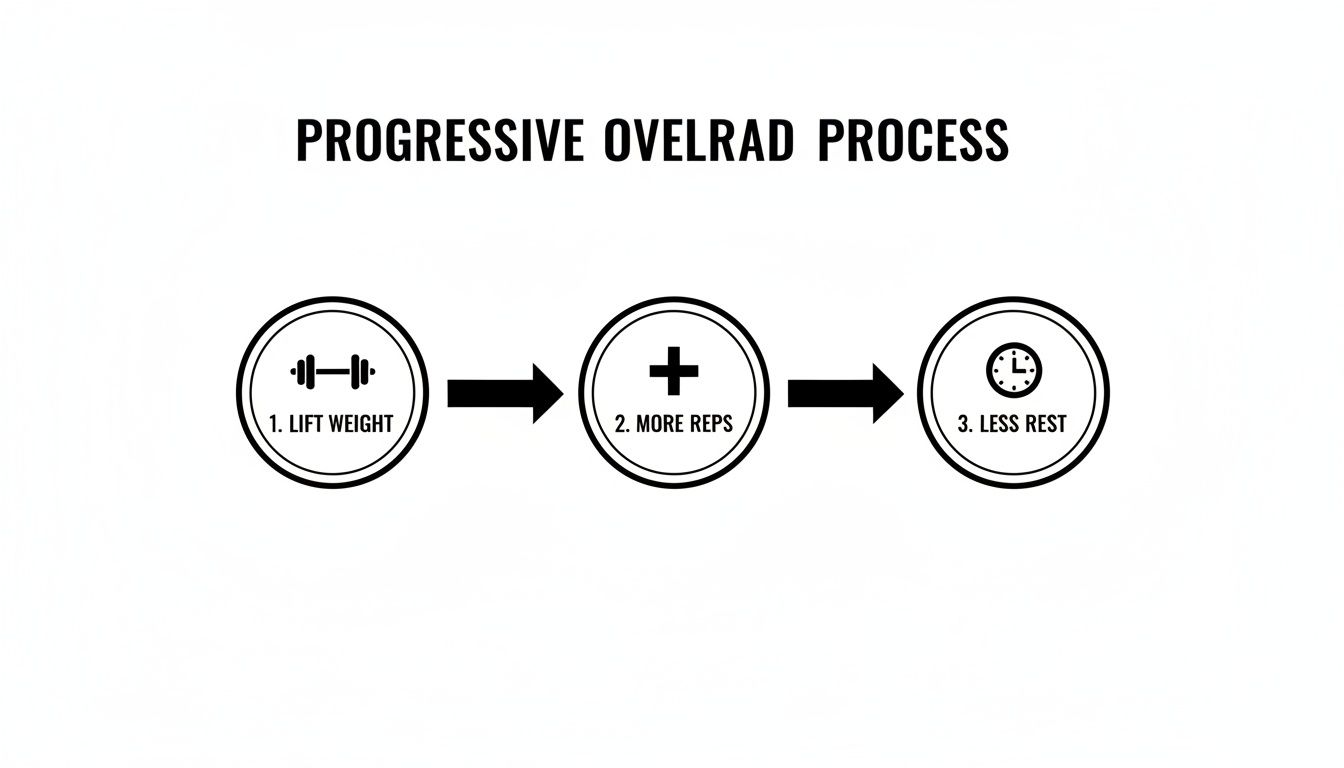
Monitoring your load is crucial for any serious athlete. Senior elite distance runners aiming for international levels of performance often maintain training volumes between 150 and 200 kilometers per week. While you may not be aiming for Olympic gold, the principle remains: you must know how to measure endurance training progress. Whether it is through tracking your resting heart rate, performing a monthly Cooper Test, or analyzing heart rate variability (HRV), data is your best defense against overtraining.

Support Systems: Nutrition, Recovery, and Tapering
You can't out-train a poor recovery system. Endurance training places massive demands on your glycogen stores. To perform at your peak, aim for a daily protein intake of 1.2 to 1.7 grams per kilogram of body weight to support muscle repair. Hydration is equally critical; drinking 500ml of water two hours before a workout and focusing on electrolyte replenishment during long sessions prevents the drop in blood volume that can stall performance.
Periodization is the final piece of the puzzle. You cannot train at 100% year-round. An effective program includes a tapering phase—a period where you reduce volume but maintain intensity in the 7 to 14 days leading up to a major event. This allows glycogen depletion to reverse and your nervous system to fully recover.

Active recovery sessions, such as swimming or light cycling, are better than total rest for clearing metabolic waste and keeping the blood flowing. Remember, you don't get stronger during the workout; you get stronger during the recovery that follows it.
FAQ
What is the difference between stamina and endurance?
Endurance refers to the body's physical ability to sustain an activity for an extended period, focusing on the aerobic system and total duration. Stamina is more focused on the ability to sustain a high level of intensity or effort for a period of time, often bridging the gap between aerobic and anaerobic performance.
What are the four types of endurance training?
The four primary types include Long Slow Distance (LSD) for aerobic base building, Tempo training to improve lactate threshold, Interval training for peak aerobic capacity (VO2 max), and Fartlek training, which mixes various speeds and intensities in a single session.
How do I improve my muscular endurance?
To improve muscular endurance, you should perform resistance exercises with lower weight and higher repetitions, typically 15 or more reps per set. Reducing rest intervals between sets to 30-60 seconds also forces the muscles to adapt to operating under accumulated fatigue.
How long does it take to build endurance?
Initial cardiovascular improvements can be felt within 2 to 4 weeks of consistent training. However, building a significant aerobic base and making structural changes to muscle fibers and mitochondrial density typically takes 8 to 12 weeks of structured, progressive work.
Can you do endurance training every day?
While it is possible to perform some form of endurance activity daily, it is not recommended for most athletes. High-intensity sessions require at least 48 hours of recovery for the central nervous system. Most successful programs incorporate at least one full rest day and several active recovery days to prevent burnout and injury.