Quick Facts
- Recovery Time: More than 90% of individuals suffering from lower back strains recover fully within one month.
- Recurrence Risk: Statistics indicate that 44% of people experience a re-injury within a year if movement patterns remain uncorrected.
- Ice vs. Heat: Use ice for the first 24 to 48 hours to manage inflammation; transition to heat later to relax muscles.
- The Golden Rule: Use the nose between toes principle to ensure your head and feet stay aligned, preventing dangerous trunk twisting.
- Movement Interval: Avoid static loading by changing your physical position every 20 to 30 minutes to encourage blood flow.
- Active Healing: A study found that 83% of research subjects reported significant pain reduction through active interventions like walking and yoga.
Recovering from a back strain requires more than just rest; it demands a shift in how you move. Most back strains heal within a month, but proper back strain recovery depends on early mobilization and posture alignment. To support the healing process, you must focus on maintaining a neutral spine during daily activities and gradually reintroducing low-impact movement to strengthen the supporting tissues of the lumbar spine.
Phase 1: Acute Relief and Sleep Ergonomics
When you first experience a back strain, your body often responds with intense muscle spasms. These are protective mechanisms, but they can be incredibly uncomfortable. The first 48 hours of back strain recovery should focus on what we call relative rest. This does not mean lying in bed all day—which can actually stiffen the muscles and slow down soft tissue healing—but rather avoiding heavy lifting or strenuous activity while maintaining gentle mobility.
During this initial phase, managing inflammation is a priority. Using ice for 15 to 20 minutes several times a day can help calm the area. However, your posture while resting is just as important as your treatment. Many people inadvertently strain their lumbar spine while sleeping because they allow their lower back to arch or twist.
To achieve proper posture alignment for back strain while resting, you must prioritize the neutral spine. This is the position where the three natural curves of the back are in balance. If you are a back sleeper, the most effective way to flatten the lumbar spine and reduce pressure is to place a pillow under your knees. This small adjustment tilts the pelvis slightly and takes the tension off the lower back muscles.
For side sleepers, the goal is to keep the hips, pelvis, and spine in a straight line. Placing a firm pillow between your knees prevents the top leg from pulling your spine into a rotation. These sleeping positions for lower back strain relief are essential because they allow the soft tissues to recover without being stretched or compressed overnight. As you begin to feel more comfortable, you can introduce gentle stretches for acute back strain recovery, such as very small pelvic tilts performed while lying on your back to mobilize the vertebrae without overexertion.
Phase 2: Mastering Safe Movement and The 4-Stage Lift
As you move out of the acute pain phase, the focus shifts toward how you interact with your environment. Re-injury often occurs during simple daily tasks, like picking up a laundry basket or reaching for a grocery bag. This is why mastering safe lifting and movement techniques is the most critical part of long-term back health.
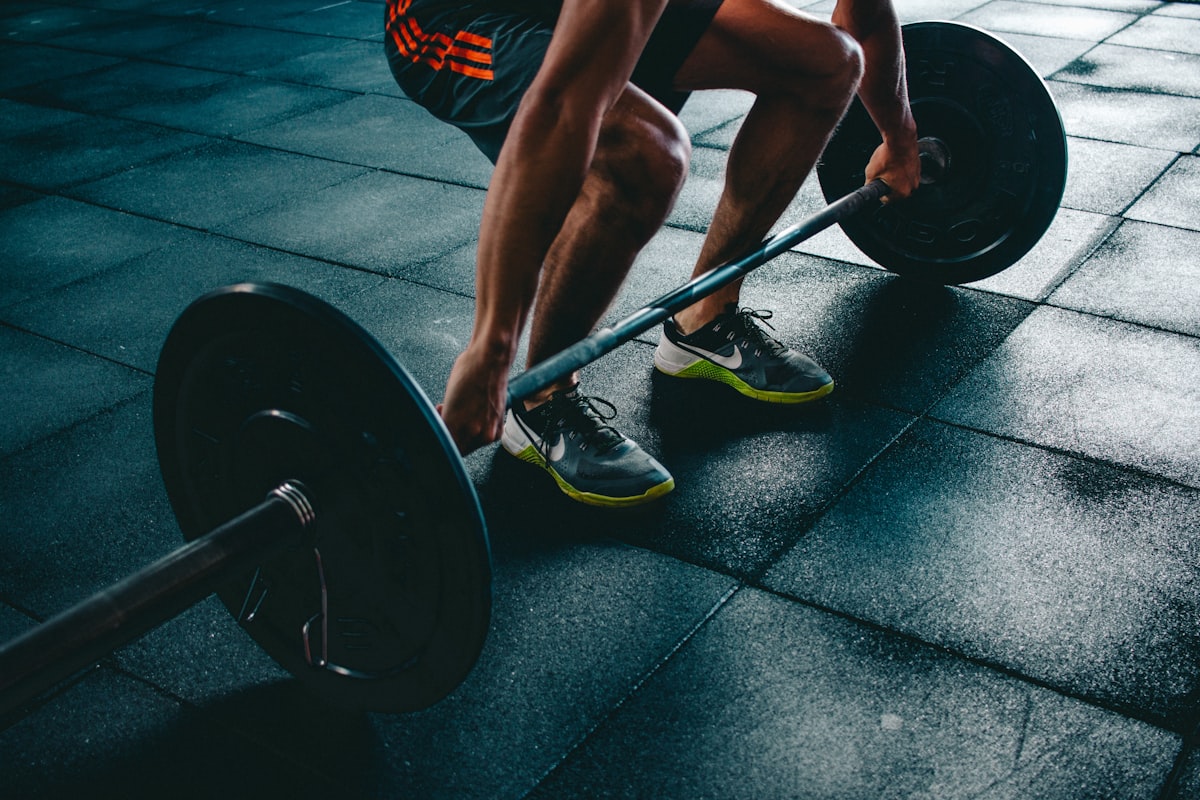
The fundamental movement pattern you must learn is the hip hinge. Most people tend to bend at the waist, which puts an enormous amount of stress on the lumbar spine. In contrast, a hip hinge involves pushing your hips back and bending at the joints while keeping your back straight. This shift distributes the weight through your powerful glute and leg muscles rather than the delicate structures of your lower back.
To ensure safe lifting techniques to prevent re-injuring back, I recommend following a strict 4-stage process for any object heavier than a gallon of milk:
- Preparation: Stand as close to the object as possible with your feet shoulder-width apart. Assess the weight before you commit to the lift.
- Lifting: Squat by bending at the hips and knees. Keep your head up and your back straight. Before you lift, engage in abdominal bracing—this means tightening your stomach muscles as if someone is about to poke you. This creates a natural corset of internal support.
- Carrying: Hold the load at waist height, close to your center of gravity. Never twist your torso while carrying something; if you need to turn, move your feet. Remember the nose between toes rule: your nose should always be pointing in the same direction as your toes.
- Setting Down: Reverse the lifting process. Use your legs to lower the object, maintaining that neutral spine until the task is complete.
This approach relies on sound biomechanics to protect the soft tissue healing that has occurred. By using abdominal bracing and the hip hinge, you provide the spinal decompression and stability needed to move confidently.
| Movement Habit | Do This | Avoid This |
|---|---|---|
| Lifting | Bend at the hips and knees (hip hinge) | Bend at the waist with straight legs |
| Turning | Pivot with your feet | Twist your torso |
| Sitting | Use a lumbar roll to support the curve | Slouch or lean forward |
| Standing | Shift weight frequently | Stand still for long periods |
| Reaching | Step closer to the object | Overextend your arms and back |
Phase 3: Building Long-Term Resilience
True back strain recovery isn't finished just because the pain has subsided. To prevent the 44% recurrence rate, you need to integrate ergonomic habits for back recovery into your permanent lifestyle. According to data from the Global Burden of Disease study, addressing modifiable risk factors like workplace ergonomics could reduce the overall health burden of low back pain by 39%.
The modern workplace is a significant challenge for the back because of static loading. When you sit in one position for hours, the tissues in your back lose their elasticity and blood flow decreases. I advocate for movement snacks—short, 30-second breaks every 30 to 45 minutes. During these breaks, simply standing up, walking a few steps, or performing a gentle standing back extension can reset your posture and encourage blood flow to the lumbar spine.
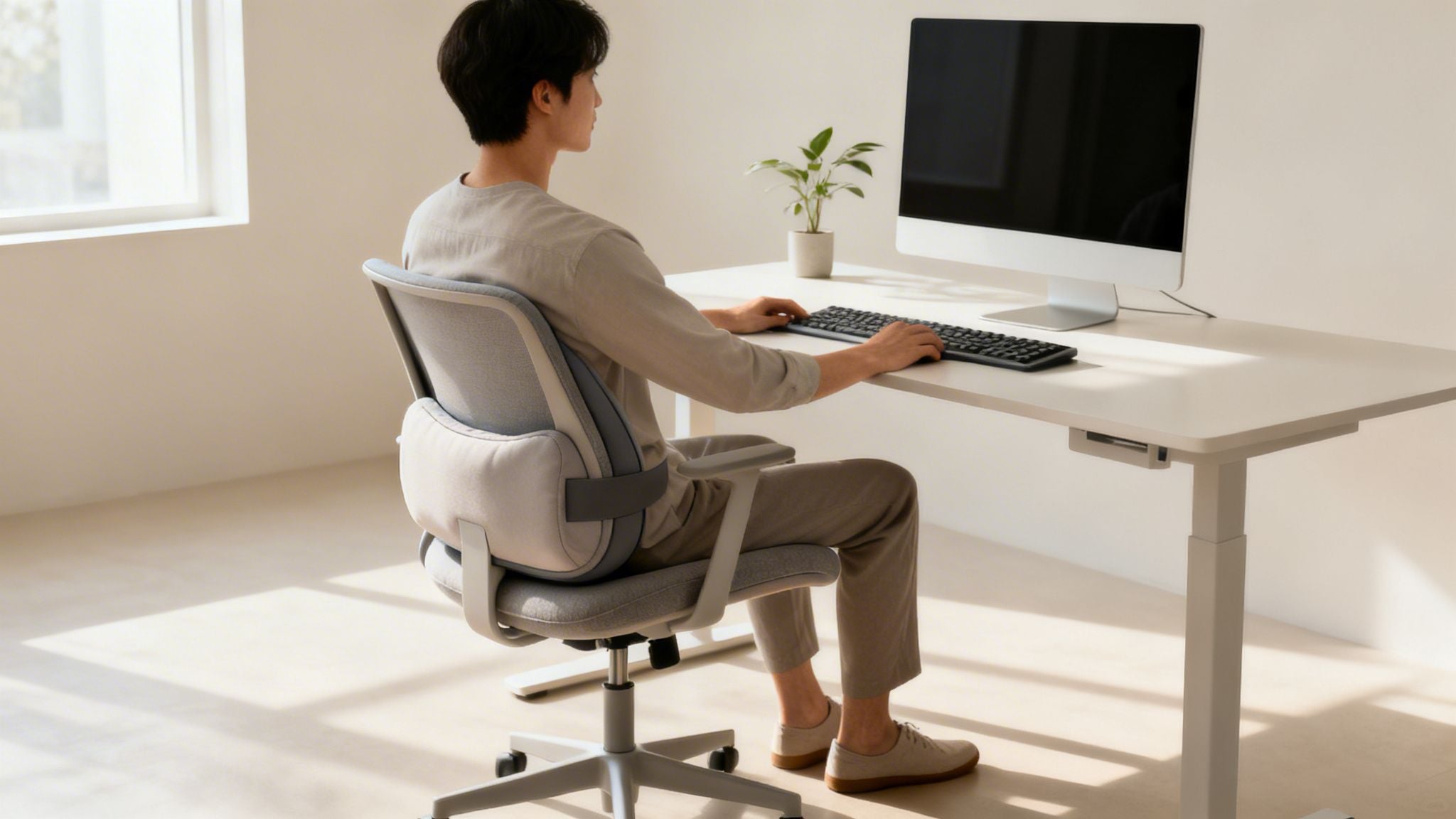
For those who work at a desk, desk ergonomics for lower back pain prevention are non-negotiable. Follow the 90-degree rule: your elbows, hips, and knees should all be bent at approximately 90 degrees. Your monitor should be at eye level so your head isn't tilted down, which can pull on the muscles all the way down to your lower back.
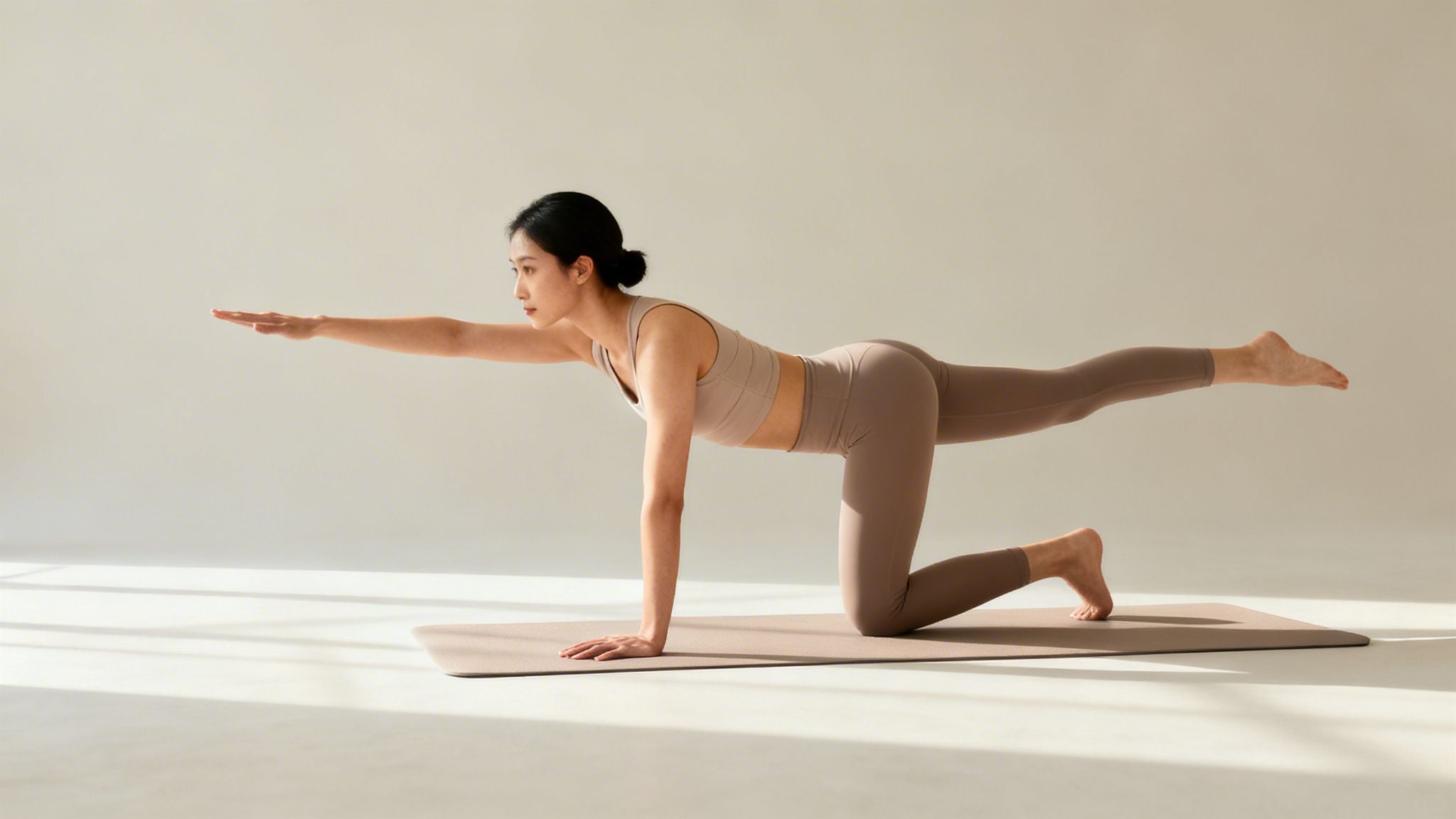
Another key to long-term resilience is activating core muscles for lower back support. This goes beyond doing "crunches." It involves strengthening the deep stabilizers like the multifidus and transverse abdominis. These muscles act as a natural corset, stabilizing the vertebrae during movement. Integrating daily movement habits for faster back recovery, such as brisk walking or a dedicated yoga practice, helps maintain this strength. A systematic review of exercise therapy found that 83% of studies reported significant pain reduction with these types of specific interventions.
As you gradually increase your range of motion, stay mindful of how your body feels. Recovery is a progressive journey of retraining your nervous system to move safely and efficiently.
Red Flags: When to Consult a Professional While most strains heal with time and proper movement, some symptoms require immediate medical attention. If you experience any of the following, consult a doctor or physical therapist:
- Numbness or tingling in the legs or groin area.
- Sudden weakness in the legs that makes standing difficult.
- Loss of bladder or bowel control.
- Pain that does not improve after 72 hours of self-care.
- Pain that was caused by a high-impact fall or accident.
FAQ
How long does it take for a back strain to heal?
According to the American Association of Neurological Surgeons, more than 90% of individuals suffering from lower back strains and sprains recover fully within one month. Minor strains may feel better within a few days, while more significant soft tissue injuries can take the full four weeks for complete cellular repair.
What is the fastest way to recover from a strained back?
The fastest way to recover is through a combination of relative rest and early mobilization. Avoid total bed rest, as it causes muscle atrophy. Instead, use ice to manage initial inflammation, practice neutral spine posture, and begin low-impact movements like walking as soon as the acute pain allows to keep blood flowing to the injured tissues.
Should I use heat or ice for back strain recovery?
In the first 24 to 48 hours, ice is the best choice because it constricts blood vessels and reduces the swelling associated with muscle spasms. After the initial inflammation has subsided, you can switch to heat therapy. Heat increases blood flow to the area and helps to relax tight muscles and improve flexibility.
What is the best sleeping position for a strained back?
The best position is one that maintains a neutral spine. If you sleep on your back, place a pillow under your knees to support the natural curve of your lower back. If you prefer sleeping on your side, place a pillow between your knees to keep your hips and spine properly aligned and prevent twisting.
When should I see a doctor for back pain?
You should see a doctor if the pain is the result of a severe trauma, if it radiates down your leg toward your foot, or if it is accompanied by numbness or weakness. Immediate medical attention is required if you experience any loss of bowel or bladder control, as this could indicate a more serious neurological issue rather than a simple muscle strain.