Quick Facts
- Primary Drivers: The finger flexors and latissimus dorsi are the primary force producers for vertical progress and technical holds.
- Stabilizer Hub: A 3D core cylinder comprising the diaphragm, paraspinals, and pelvic floor maintains necessary body tension.
- Endurance Benchmark: Elite mountaineers should aim to gain 4000ft of elevation in under 4 hours while carrying a 40lb pack.
- Injury Prevention: Training antagonist muscle groups, specifically the finger extensors and rear deltoids, is essential to avoid common physical imbalances.
- Training Focus: Success relies on a mix of balanced isometric holds and consistent attention to scapular stability and tendon health.
The primary climbing muscles every mountaineer must train include the finger flexors and forearms for grip strength, the latissimus dorsi and shoulder girdle for pulling power, and the core for maintaining body tension. Additionally, the posterior chain and leg muscles provide the explosive power and stabilization required for navigating steep, technical, and uneven terrain.
The Foundation of Grip: Finger Flexors and Forearms
When you are hanging off a granite crimp or gripping a cold ice tool, your world narrows down to your contact points. In the realm of climbing muscles, the finger flexors are the undisputed kings of performance. These muscles, specifically the flexor digitorum profundus and superficialis, are located in the forearm and control the closing of your hand.
Research published in the Journal of Strength and Conditioning Research indicates that finger flexors are the most critical muscle group for climbing performance, as fatigue in these muscles can reduce the number of successful moves by approximately 50%. This isn't just about raw strength; it is about local muscular endurance and the ability to maintain isometric contractions under duress.
To build the necessary grip strength, your training must go beyond simple pull-ups. You need targeted forearm strengthening exercises for climbing muscles that stress the tendons as much as the muscle belly. Hangboard sessions are the gold standard here. By performing max hangs—short bursts of high-intensity hanging on small edges—you trigger neurological adaptations and increase tendon stiffness, which allows for better force transmission.
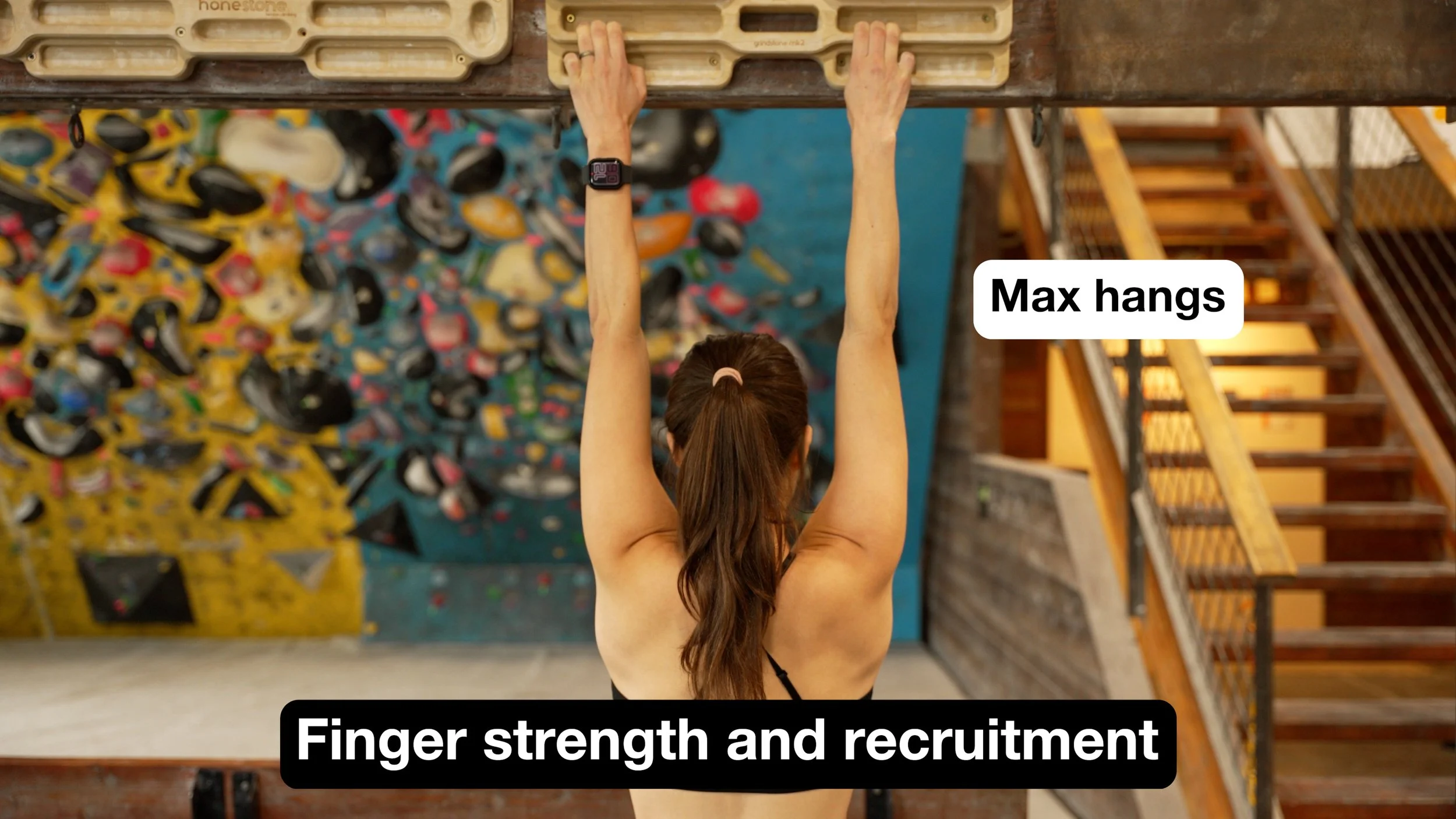
Consistency is vital. Tendon health takes longer to develop than muscle mass, so a slow, progressive approach is necessary to avoid the dreaded A2 pulley strain. Focus on "open hand" grips rather than "full crimps" during your initial training phases to build a safer foundation for your climbing muscles.
The Pulling Powerhouse: Latissimus Dorsi and Upper Body
While your fingers hold you to the rock, your upper body conditioning for vertical climbing dictates how high you can pull. The latissimus dorsi, or "lats," are the massive, wing-shaped muscles of your back that drive your vertical displacement. These work in tandem with the shoulder girdle to create the pulling power needed for steep sections and mantle moves.
A physiological study on climbing found that elbow flexor endurance is a primary determinant of success, with pre-fatigue in this muscle group resulting in a 22% reduction in completed climbing moves. This highlights the need for a robust upper body climbing conditioning program.
Your training should be split between on-the-wall movement and off-the-wall strength work.
- On-the-wall: Practice "lock-offs," where you hold a pulling position with one arm while reaching for the next hold with the other. This builds functional isometric strength.
- Off-the-wall: Implement weighted pull-ups and rows. Aim for low-repetition, high-intensity sets to build maximum force production without necessarily adding excessive bulk that could hinder your power-to-weight ratio.
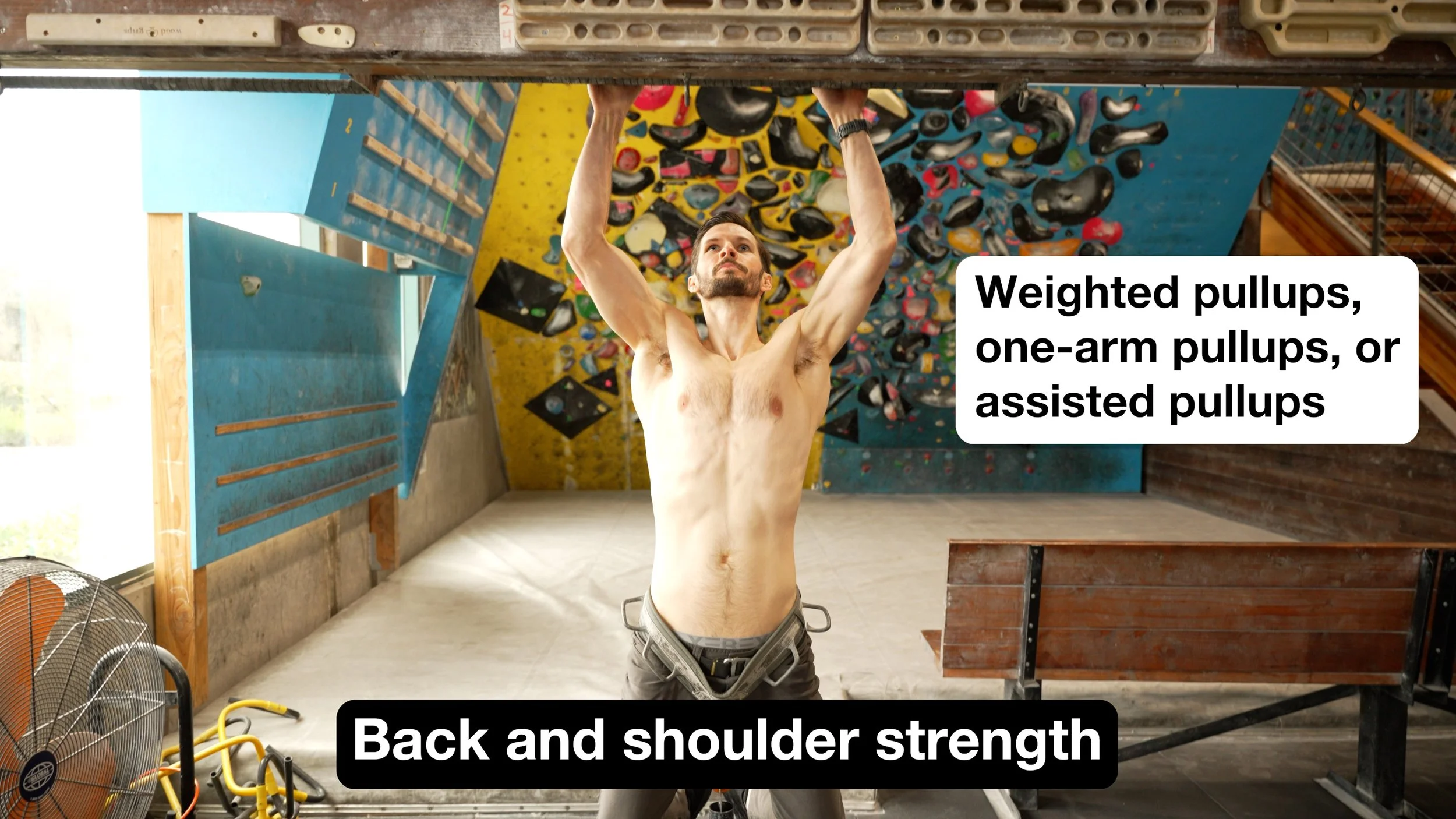
Furthermore, shoulder power and endurance, typically measured through maximum pull-ups and bent-arm hangs, have been identified as major physical predictors of maximal climbing ability in both male and female athletes. Neglecting the explosive power of the shoulder girdle often leads to a plateau in technical ability.
The 3D Cylinder: Core Stability and Body Tension
In the gym, people often mistake core strength for having visible abdominal muscles. For a mountaineer, the core is a functional 3D cylinder. It involves the diaphragm, the paraspinals of the back, the obliques, and the pelvic floor. This unit is responsible for core stability for climbing, which is the bridge that connects your upper body pulling to your lower body pushing.
Core stability is critical for climbers because it facilitates efficient movement and balance on vertical surfaces. A strong core enables the transfer of force between the upper and lower body, keeps the center of gravity close to the climbing surface, and supports isometric contractions during difficult holds. This structural integrity minimizes energy expenditure and reduces the risk of fatigue.
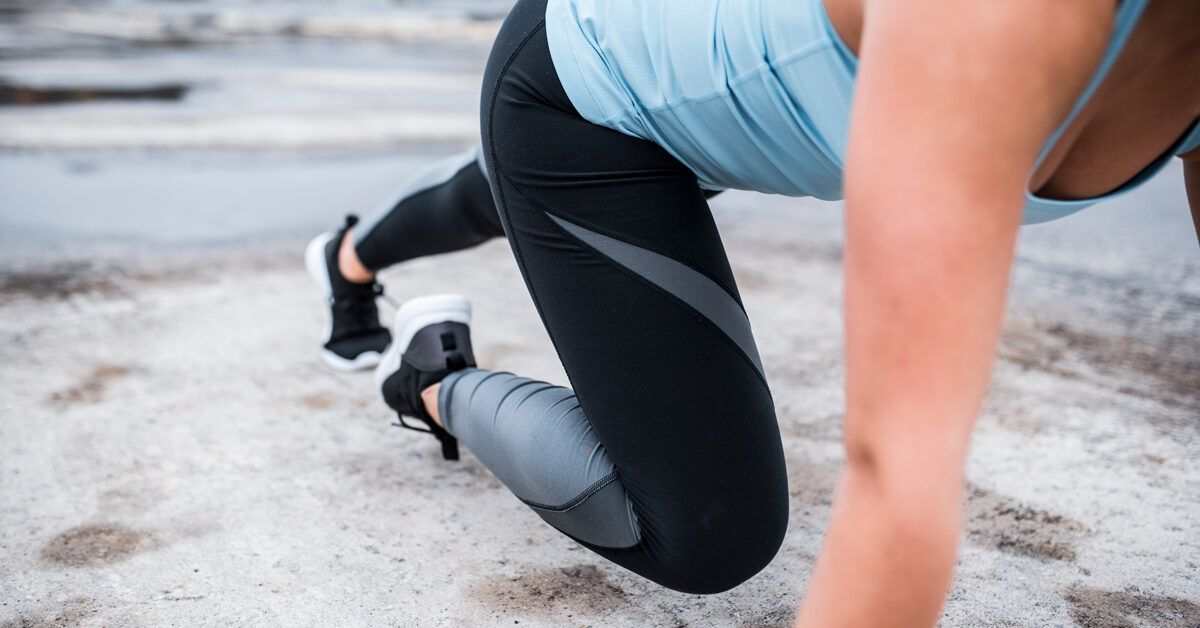
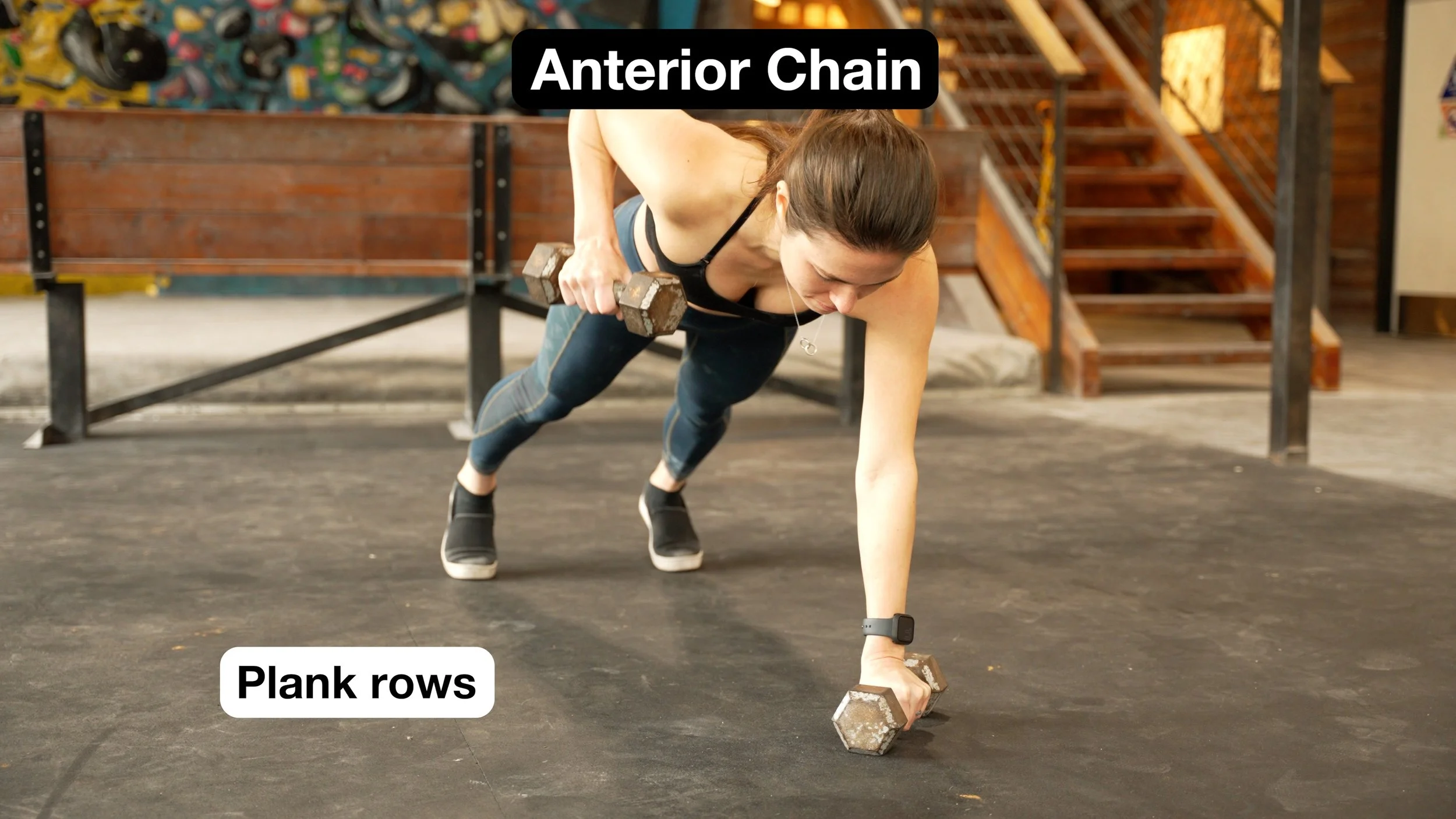
When you lose body tension, your feet "pop" off the wall, and your upper body has to work twice as hard to compensate. This is where core stability workouts for mountain climbers become essential. Instead of traditional crunches, focus on movements that require you to resist rotation and maintain a rigid torso while your limbs move.
Pro Tip: The Dynamic Strength Index (DSI) Serious athletes should monitor their DSI, which is the ratio between their peak ballistic force and peak isometric force. If your isometric holds are strong but you can't make explosive moves, your training should shift toward plyometrics. If you are explosive but can't hold a position, focus on isometric contractions and core stability.
The Engine: Legs and the Posterior Chain
Mountaineering isn't just about the vertical wall; it is about the miles of steep, technical terrain you must navigate to get there. This requires a different kind of strength training for climbers—one focused on the posterior chain (glutes, hamstrings, and lower back) and the quadriceps. These muscles are the engine that drives you up the mountain, especially when carrying a heavy pack.
For an expedition like Denali, a climber might need to haul a 50lb pack while simultaneously pulling an 80lb sled. This requires massive lower body endurance and explosive power for technical steps. Functional movements like the deadlift and weighted step-ups are non-negotiable.
If you are looking for home exercises for climbing muscles without a gym, focus on:
- Pistol Squats: These build incredible single-leg stability and mimic high-step moves on the rock.
- Bulgarian Split Squats: Excellent for targeting the glutes and improving hip mobility.
- Glute Bridges: Crucial for posterior chain activation to protect the lower back during long approaches.
Hip mobility is often the silent partner of leg strength. High-stepping onto a ledge requires significant range of motion. If your hips are tight, your center of gravity moves away from the wall, placing extra stress on your climbing muscles in the upper body.
Injury Prevention: Scapular Stability and Antagonist Training
Climbing is a pull-dominant sport. Over time, the constant engagement of the lats and finger flexors can lead to a "climber’s hunch" and chronic shoulder impingement. Training antagonist muscle groups and focusing on scapular stability are key strategies for preventing climbing-related injuries.
By strengthening the muscles that oppose primary climbing movements, such as the finger extensors (the muscles that open your hand) and the rear deltoids, climbers can avoid common physical imbalances. Antagonist muscle training for climbers to avoid imbalance should be a regular part of your "pre-hab" routine.
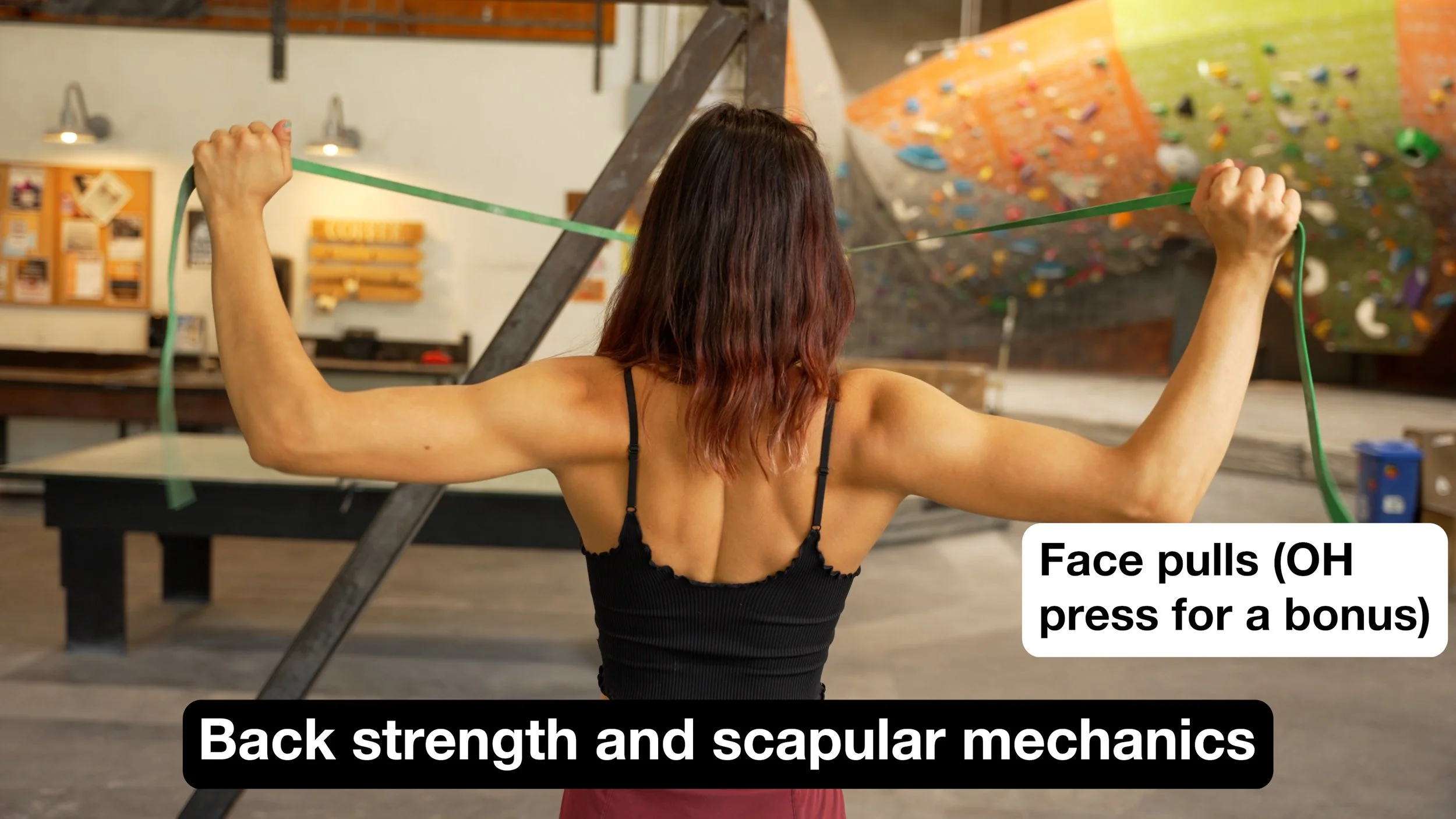
Scapular stability is equally important. Your shoulder blade (scapula) must rotate upward and remain stable to provide a solid base for your arms to pull against. Exercises like I-Y-T raises and face pulls help maintain this stability.
Consistent attention to climbing muscle groups for injury prevention ensures that you spend more time on the mountain and less time in physical therapy. Focus on the quality of movement rather than the amount of weight. When your stabilizers are weak, your primary movers cannot work at 100% capacity because the nervous system will "down-regulate" power to protect the joint.
Establishing a routine that balances these five muscle groups will transform your performance from the trailhead to the summit. It is about building a body that is as resilient as it is powerful.
FAQ
What muscles are used most in rock climbing?
The most used muscles are the finger flexors and forearms for grip, the latissimus dorsi and biceps for pulling, and the core for maintaining body tension. The legs, specifically the calves and quads, are also heavily engaged for pushing off footholds and maintaining balance on vertical surfaces.
Is rock climbing considered a full-body workout?
Yes, rock climbing is an intensive full-body workout. It requires synchronized effort between the upper body for pulling, the core for stabilization and force transfer, and the lower body for driving upward movement. It also challenges smaller stabilizer muscles that are often neglected in traditional weightlifting.
How do climbers develop such strong finger and forearm muscles?
Climbers develop exceptional grip strength through progressive loading on specialized equipment like hangboards and through the repetitive isometric contractions required during climbing. This training increases both the neural drive to the muscles and the thickness and stiffness of the tendons in the fingers and forearms.
Does climbing work your abdominal and core muscles?
Absolutely. Climbing requires constant engagement of the entire core unit to keep the body close to the wall and to transfer power between the hands and feet. This involves not just the rectus abdominis but also the deeper transverse abdominis, obliques, and lower back muscles.
Why do climbers have such well-developed back muscles?
The "V-taper" common in climbers is a result of the extreme demands placed on the latissimus dorsi and surrounding shoulder girdle muscles. Vertical movement is essentially a series of vertical pulls, which leads to significant hypertrophy and definition in the back as these muscles adapt to lifting the climber's body weight repeatedly.
Success on the mountain requires a commitment to a phased training cycle. Start focusing on these core areas today to ensure you have the strength and durability for your next big expedition. Engaging in a structured approach to strength training for climbers is the most effective way to reach your peak performance.