
Quick Facts
- Primary Solution: Seated piriformis stretch and nerve glides are the gold standard for nerve mobility.
- Recovery Timeline: Most acute episodes resolve in four to eight weeks with consistent conservative care.
- Recommended Frequency: Perform your chosen routine 2-3 times per day, holding each static stretch for 20-30 seconds.
- Conservative Success Rate: Approximately 80% to 90% of cases improve without surgery through movement and rest.
- Safety Protocol: Avoid heavy lifting and high-impact twisting for at least 6 weeks following a painful flare-up.
- Thermal Therapy: Use ice for the first 48-72 hours to manage inflammation, then transition to heat for muscle relaxation.
Effective sciatica stretches include the pelvic tilt, knee-to-chest stretch, and the seated piriformis stretch. These movements help decompress the lumbar spine and reduce pressure on the sciatic nerve. Consistent practice of gentle exercises like glute bridges and cat-cow stretches can also improve core stability and flexibility, providing significant relief from chronic lower back discomfort.
Understanding Sciatica: Why These Exercises Work
If you have ever felt a sharp, searing pain radiating from your lower back down through your leg, you are likely dealing with the sciatic nerve. As the largest nerve in the human body, it governs the muscles in your lower legs and provides sensation to your thighs, legs, and feet. When this nerve becomes irritated—often due to a herniated disc or a narrowing of the spine known as spinal stenosis—the result is radiculopathy.
The goal of specialized sciatic nerve exercises is to create space and reduce nerve compression. When a disc protrudes, it can physically pinch the nerve root. By utilizing specific movements designed for spinal decompression, we can encourage the disc material to move away from the nerve. Furthermore, improving your overall biomechanics and postural alignment ensures that the lumbar spine is not bearing uneven loads, which is the primary cause of long-term inflammation and chronic discomfort.
The lifetime prevalence of sciatica is estimated to be between 10% and 40% of the global population, making it one of the most common reasons people seek physical therapy. The good news is that movement is medicine. Research shows that 80% to 90% of sciatica cases improve with conservative treatments, such as targeted stretching and rest. By focusing on low-impact movement, you can facilitate inflammation reduction and restore your full range of motion.
5 Best Sciatica Stretches for Every Mobility Level
When you are in the middle of a flare-up, the idea of moving might seem counterintuitive. However, staying sedentary can actually stiffen the muscles surrounding the lumbar spine, making the pain worse. The following sciatica stretches for immediate relief are categorized to help you find movement regardless of where you are.
1. Knee-to-Chest Stretch (In Bed)
This is one of the best sciatica stretches to do in bed because it uses the mattress for support, making it accessible even during acute pain. This movement targets the lower back muscles and provides a gentle opening of the vertebral space.
- Lie flat on your back with your legs straight or knees slightly bent.
- Slowly pull one knee toward your chest, grasping your shin or the back of your thigh.
- Hold the position for 30 seconds while focusing on deep, diaphragmatic breathing.
- Repeat 3 times on each side.
2. Seated Piriformis Stretch
The piriformis is a small muscle located deep in the buttock. When it becomes tight or spasms, it can compress the sciatic nerve. This is a vital entry in our list of seated sciatica stretches for office workers because it can be done right at your desk.
- Sit upright in a chair with your feet flat on the floor.
- Cross your affected leg over the opposite knee, resting your ankle just above the knee.
- Keeping your back straight, gently lean forward until you feel a stretch in the glute area.
- Hold for 20-30 seconds and repeat on both sides.
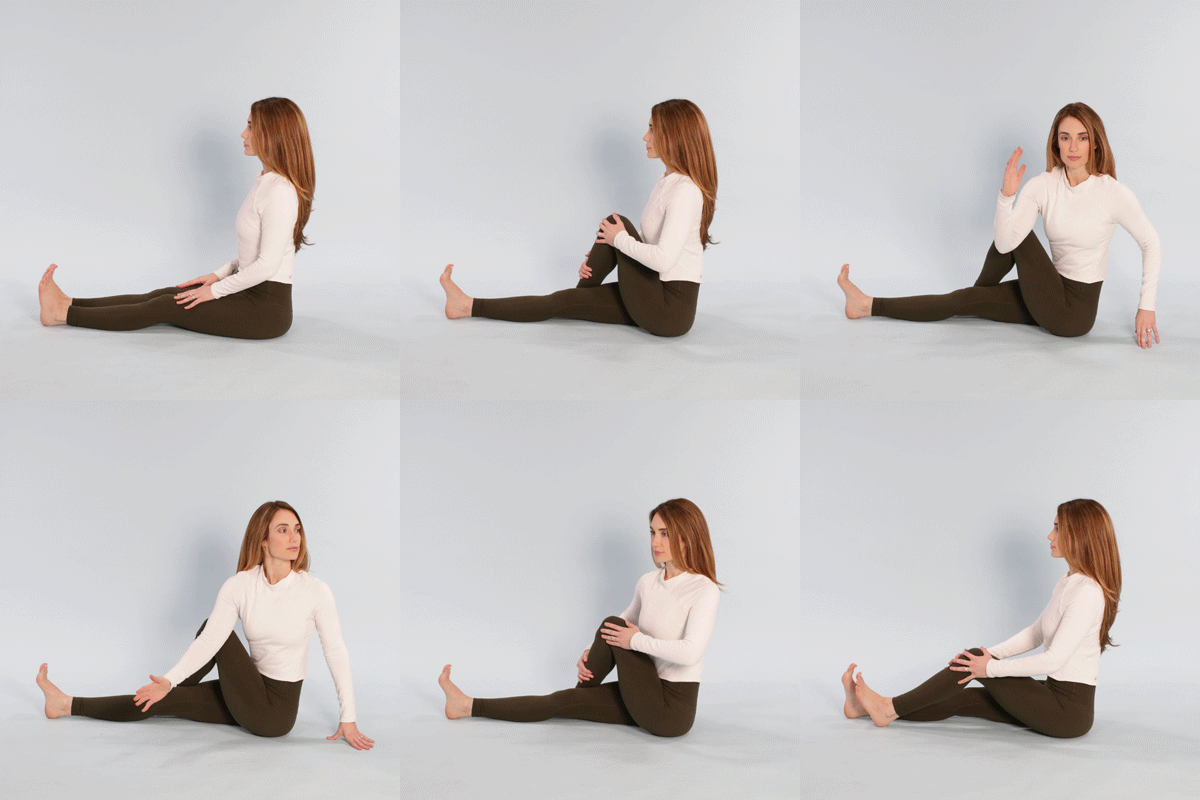
3. Pelvic Tilts for Core Stability
Pelvic tilts are foundational lower back pain relief exercises. Unlike deep stretches, these focus on micro-movements that engage the lower abdominals and help find a neutral spine position. This engagement is crucial for long-term core stability.
- Lie on your back with your knees bent and feet flat on the floor.
- Exhale and gently flatten your lower back against the floor by tilting your hips toward your face.
- Hold for 5 seconds, then relax.
- Perform 10-15 repetitions to help reset your postural alignment.
4. Sciatic Nerve Glides for Leg Pain Mobility
Nerve glides, or "nerve flossing," are unique because they aren't meant to stretch the nerve (which can cause irritation) but rather to slide it through the surrounding tissue. This is excellent for improving nerve mobility and reducing the "tugging" sensation in the leg.
- Sit on a chair with your feet flat on the ground.
- Extend one leg straight out while flexing your foot toward your shin.
- Simultaneously bend your head forward so your chin moves toward your chest.
- Hold this position for 10 to 15 seconds before resting for a few seconds.
- This low-impact movement helps improve mobility and reduces radiating leg pain caused by nerve compression or radiculopathy.
5. Cat-Cow Stretch
Common in yoga, the cat-cow is a gentle way to improve the range of motion of the entire spine. These sciatica exercises for lower back pain at home help hydrate the spinal discs and reduce muscular guarding.
- Start on your hands and knees in a tabletop position.
- Inhale, drop your belly toward the floor, and look up slightly (Cow).
- Exhale, tuck your chin, and round your back toward the ceiling (Cat).
- Flow between these two positions for 10 repetitions, moving slowly and mindfully.
Holistic Home Care: Thermal Therapy and Sleep Posture
Recovery is not just about what you do when you are moving; it is also about how you rest. Managing inflammation requires a strategic approach to thermal therapy. In the initial phase of a flare-up, the primary goal is inflammation reduction. Once the sharp pain subsides, the goal shifts to increasing blood flow and relaxing tight tissues.
| Feature | Ice Therapy (Cryotherapy) | Heat Therapy (Thermotherapy) |
|---|---|---|
| Best Timing | First 48 to 72 hours | After the acute phase (72+ hours) |
| Primary Goal | Reduce swelling and numb sharp pain | Relax tight muscles and improve blood flow |
| Application | 15 minutes on, 1 hour off | 20 minutes on as needed |
| Mechanism | Constricts blood vessels | Dilates blood vessels |
In addition to temperature therapy, pay close attention to your sleep biomechanics. If you are a side sleeper, place a pillow between your knees. This prevents the top leg from pulling your spine out of alignment and rotating your hips, which can pinch the nerve. If you sleep on your back, place a pillow under your knees to maintain the natural curve of your lumbar spine.
Safety First: When to Stop Stretching and See a Doctor
While gentle sciatica stretches for beginners are generally safe, you must listen to your body’s signals. Sciatica isn't a "no pain, no gain" situation. If a movement causes sharp, electric-like pain to shoot down your leg, stop immediately. Pushing through nerve pain can lead to increased inflammation and prolonged recovery times.
Red Flag Warning: Seek Emergency Care If...
- You experience a sudden loss of bowel or bladder control.
- You have "saddle anesthesia" (numbness in the groin or inner thighs).
- You develop foot drop (inability to lift the front of your foot while walking).
- Your leg weakness is so severe that you cannot stand or walk.
- The pain is the result of a significant trauma or accident.
Most acute sciatica episodes resolve within four to eight weeks when managed with conservative symptom therapy. However, if you have been diagnosed with a severe herniated disc or spinal stenosis, consult with a healthcare professional before attempting new sciatic nerve exercises. They can ensure your form is correct and that you aren't inadvertently increasing nerve compression.
FAQ
What are the best stretches for sciatica pain relief?
The most effective stretches for relieving sciatic pressure include the seated piriformis stretch, knee-to-chest, and sciatic nerve glides. These movements are designed to either create space in the lumbar spine or help the nerve slide more freely through the muscle tissue, reducing the irritation that causes radiating leg pain.
Can stretching make sciatica pain worse?
Yes, if performed incorrectly or too aggressively, stretching can aggravate the nerve. Aggressive "hamstring stretches" where you reach for your toes can put excessive tension on an already irritated sciatic nerve. Always move slowly and stop if you feel sharp, radiating pain rather than a dull muscle pull.
What exercises should be avoided with sciatica?
Avoid high-impact activities like running or jumping during a flare-up. You should also avoid heavy lifting, especially movements involving a bent-over position like deadlifts or rows. Traditional sit-ups and straight-leg raises can also increase the pressure on your discs and should be avoided until your symptoms resolve.
How long does it take for sciatica stretches to work?
While some people feel mild sciatica stretches for immediate relief working within a few sessions, significant improvement usually takes time. Most patients see a meaningful reduction in symptoms within four to eight weeks of consistent daily practice combined with proper rest and activity modification.
Is walking better than stretching for sciatica?
Walking is an excellent low-impact movement that helps maintain blood flow and spinal health. For many, a combination of short, frequent walks and gentle sciatica stretches provides the best results. Walking helps keep the muscles from seizing up, while stretching addresses specific points of compression.
How many times a day should I do sciatica stretches?
For the best results, aim to perform your routine 2 to 3 times per day. Consistency is more important than intensity. Performing a few minutes of gentle movement in the morning, at lunch, and before bed helps keep the lumbar spine mobile and prevents the nerve from becoming static and irritated.