
Quick Facts
- Preparation Timeline: A standard 12–16 week cycle is optimal for most athletes.
- Base Requirement: You should have a baseline of 90 minutes of running per week before starting a formal plan.
- The 10% Rule: Never increase your weekly mileage by more than 10% to ensure effective injury prevention.
- Fueling Target: Aim for approximately 125g of carbohydrates per hour during high-intensity efforts.
- Hydration Goal: Maintain electrolyte balance and avoid losing more than 2% of your body weight.
- Pacing Strategy: Targeting negative splits is the most effective way to manage energy and finish strong.
Effective half marathon preparation requires a structured training plan that gradually builds base mileage and aerobic endurance. Incorporate a mix of interval training, tempo runs, and long slow runs to improve running economy. A crucial part of this process is the tapering period during the final week, which allows for muscle recovery and peak performance on race day.
Phase 1: Building the Physical Foundation
Stepping up to the 13.1-mile distance is a significant milestone for any runner. Whether you are aiming for a personal best or just looking to cross the finish line for the first time, your half marathon preparation guide for 2026 starts with the physical foundation. You cannot rush the physiological adaptations required for distance running. Your body needs time to strengthen connective tissues, expand capillary density, and improve mitochondrial efficiency.
Pillar 1: Establishing a Base Mileage
Before you dive into speed work or hill repeats, you must establish a consistent base mileage. For most athletes, this means being able to run for at least 90 minutes across several sessions per week without significant fatigue. Research suggests that most recreational runners require at least 12 weeks of structured training to gradually build the necessary mileage and endurance for a half marathon while minimizing the risk of burnout or injury.
Starting from a zero-mileage base is a recipe for shin splints or stress fractures. If you are wondering how to prepare for your first half marathon, start by building a month of consistent, easy running. This phase is about frequency over intensity. You are teaching your body to handle the impact of the road.
Pillar 2: Developing Aerobic Endurance
The core of your training will be the long slow run. These sessions are designed to build aerobic endurance, allowing your body to become more efficient at utilizing fat as a fuel source at lower intensities. These runs should be performed at a conversational pace—meaning you can speak in full sentences.
Aerobic endurance is the engine that drives your race day performance. Without a solid engine, no amount of speed work will save you in the final three miles of the race. During these runs, you aren't just training your heart and lungs; you are training your mind to handle being on your feet for extended periods.
Pillar 3: Mastering Threshold Training
To improve your pace, you must incorporate threshold training into your weekly routine. These runs are typically performed at 80-90% of your maximum heart rate, often referred to as a comfortably hard effort. The goal is to increase your lactate threshold, which is the point at which your body produces lactic acid faster than it can clear it.
By pushing this threshold higher, you can maintain a faster pace for a longer duration without hitting the wall. These sessions improve your running economy, making you faster at the same level of exertion. For a half marathon, threshold runs are often more valuable than short, explosive sprints because they more closely mimic the sustained effort of the race.
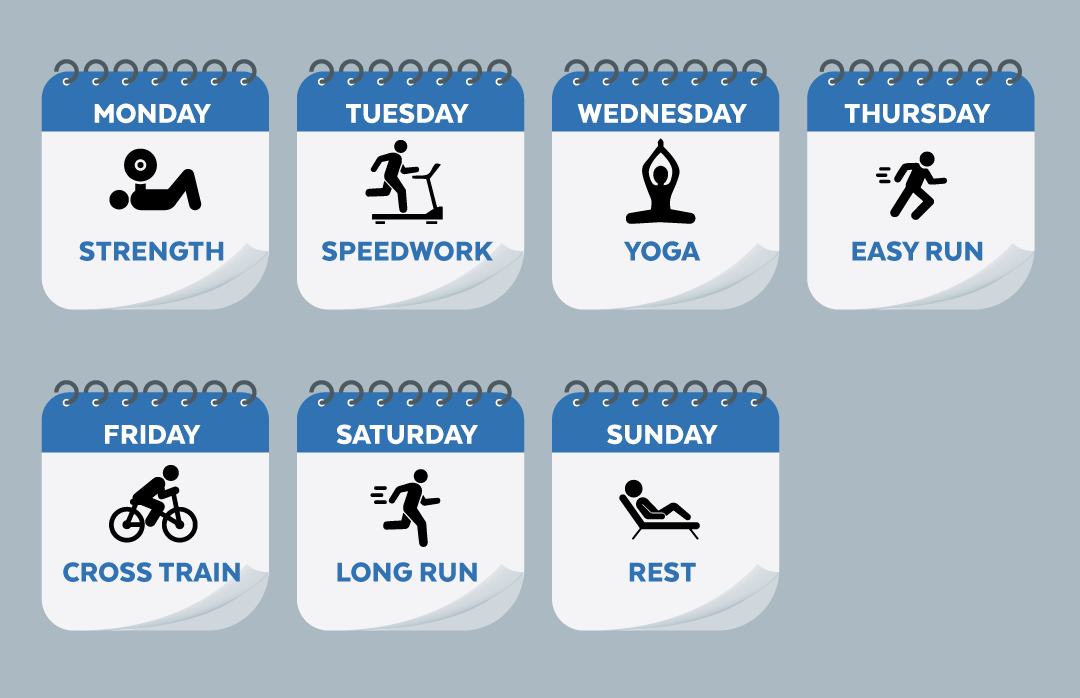
Phase 2: The Training Blueprint & Safety
A plan is only as good as its execution and its ability to keep you on the road. Many runners fail their half marathon preparation because they get greedy with their mileage or ignore the warning signs of overtraining.
Pillar 4: The 10% Rule for Progression
One of the most common mistakes is increasing volume too quickly. You should adhere strictly to the 10% rule: never increase your total weekly distance by more than 10% compared to the previous week. This conservative approach is vital for injury prevention.
The data is clear on this: increasing weekly running distance by 20% to 60% within a 21-day period significantly increases the risk of running-related injuries compared to a more conservative progression of less than 20%. Your cardiovascular system adapts faster than your bones and tendons; just because you feel like you can run further doesn't always mean your body is ready for it.
Pillar 5: Structured Periodization
Effective half marathon training advice usually follows a periodization model, such as three weeks of increasing load followed by one week of reduced volume. This recovery week is not a sign of weakness; it is when the actual physiological gains happen. During the down week, your muscles repair and your glycogen stores fully replenish, preventing the accumulation of chronic fatigue.
This rhythmic approach to training ensures you reach the starting line feeling fresh rather than overtrained. For intermediate runners, this might also include varying the terrain—incorporating trails or hills to build functional strength and reduce the repetitive stress of flat pavement.
Pillar 6: Injury Prevention and Recovery
Listen to your body. If you experience persistent pain that changes your gait, stop immediately. Utilizing a professional gait analysis can help identify biomechanical inefficiencies before they lead to injury. Common issues like delayed onset muscle soreness are normal, but sharp, localized pain is a red flag.
Incorporate active recovery into your schedule. This includes foam rolling, mobility work, and low-impact cross-training like cycling or swimming. These activities keep the blood flowing to tired muscles without the impact of running, further supporting your overall health throughout the training cycle.
Phase 3: Metabolic Optimization & Gear
As your mileage increases, your attention must shift toward what you put into your body and what you put on your feet. You cannot run a successful race on an empty tank or in the wrong shoes.
Pillar 7: Half Marathon Fueling Strategy
A successful fueling strategy involves practicing nutrition during long training runs to determine what works best for your digestive system. For most runners, a half marathon fueling strategy for beginners should involve consuming easily digestible carbohydrates like energy gels or chews every 45 to 60 minutes during the race.
Don't wait until race day to try a new gel. Use your long runs to test your stomach's tolerance. You are aiming for high efficiency; studies show that a weekly training volume exceeding 32 kilometers and a longest endurance run surpassing 21 kilometers are statistically associated with faster finish times. These longer runs are the perfect laboratory for your fueling experiments.

Pillar 8: Electrolyte Balance and Hydration
Prioritize electrolyte balance and consistent hydration in the days leading up to the event to avoid fatigue and muscle cramps. Hydration isn't just about water; it’s about maintaining the sodium and potassium levels necessary for muscle contraction. On race day, aim to sip fluids at every aid station rather than gulping them down all at once. If you lose more than 2% of your body weight in sweat, your performance will likely suffer a sharp decline.
Pillar 9: Essential Running Gear
Your kit is your armor. Ensure your gear includes moisture-wicking apparel that prevents chafing and manages sweat effectively. Your shoes are the most critical piece of essential running gear for half marathon race day. They should have enough mileage on them to be broken in, but not so much that the cushioning is compromised.
Don't forget the small details: high-quality socks to prevent blisters and anti-chafe balm for high-friction areas. Your dress rehearsal long run—typically two weeks before the race—should be done in the exact kit you plan to wear on race day.

Phase 4: Race Day Logistics & Execution
The final phase of half marathon preparation is all about the details. You've done the work; now you need to execute the plan without getting tripped up by logistics.
Pillar 10: Master Your Race Day Logistics
Mastering race day logistics involves arriving at the venue early to navigate bag drops, start corrals, and transport delays. Nothing ruins a race faster than the stress of missing your start time because you couldn't find a parking spot or the line for the portable toilets was too long.
Map out your race day morning routine and logistics. Know exactly what you will eat for breakfast, when you will leave the house, and how you will get to your specific start corral. Arriving 60 to 90 minutes early gives you time to warm up properly and settle your nerves.

Pillar 11: Pacing for Negative Splits
Research the course elevation and plan a pacing strategy, such as targeting negative splits, to manage your energy effectively from start to finish. A negative split means running the second half of the race faster than the first. Most runners go out too fast due to the adrenaline of the start, only to struggle in the final miles.
If you are trying to figure out how to pace a half marathon for a specific time goal, start at a pace 5-10 seconds slower than your target for the first few miles. This allows your body to warm up and ensures you have the metabolic reserves to finish strong.

Pillar 12: Mental Fortitude and the Taper
The week before a half marathon is the tapering period. You must trust your training and resist the urge to do extra miles. This is also when you develop the mental fortitude required for the psychological pivot at the 10km mark. The middle miles of a half marathon are often the hardest; your body is tired, but the finish line still feels far away.
Visualize the finish line. Remind yourself of the 12 weeks of hard work you have put in. Mental resilience is what separates those who fade from those who finish strong.

FAQ
How long does it take to prepare for a half marathon?
Most runners find that a 12 to 16-week window provides the ideal balance of mileage progression and recovery. This timeframe allows your musculoskeletal system to adapt to the increased load without overwhelming your recovery capacity.
Can a beginner train for a half marathon in 12 weeks?
Yes, provided the beginner has a basic level of fitness and no underlying injuries. A 12-week block is sufficient to build from a 3-mile base to the full 13.1-mile distance, assuming the runner follows a structured plan and adheres to the 10% rule for mileage increases.
How many miles a week should I run for half marathon training?
Weekly volume varies by goal, but recreational runners should aim for a peak of 20 to 30 miles per week. Advanced runners often exceed 40 miles. Consistency is more important than a single high-mileage week; staying above a 20-mile weekly average is highly correlated with better race performance.
What should I eat while preparing for a half marathon?
Focus on a high-carbohydrate diet during heavy training weeks to keep glycogen stores full. During the race itself, prioritize simple sugars like gels or sports drinks. You should also practice carbohydrate loading in the 48 hours leading up to the race to ensure your muscles are primed for the effort.
Do I need to run the full 13.1 miles before the race?
No, it is not strictly necessary. Most training plans set the longest run at 10 to 12 miles. The adrenaline and the tapering period will carry you through the final 1.1 miles. Running the full distance in training can sometimes lead to excessive fatigue or injury right before race day.
What gear do I need for half marathon preparation?
At a minimum, you need a pair of high-quality running shoes fitted to your gait, moisture-wicking apparel to manage sweat and chafing, and a way to track your distance and pace, such as a GPS watch. Additionally, consider hydration vests or belts for longer training runs.