Quick Facts
- Safety Protocol: Mandatory professional spotter and 5–7 minutes of rest between maximal attempts.
- Testing Frequency: Recommended once every 4–6 weeks to track progress without overtraining.
- Elite Standards: Target bar velocity of approximately 0.20 m/s for a true 1RM squat.
- Primary Formula: Use the Brzycki equation for safe estimation with submaximal weights.
- Modern Shift: The 2025 ACSM guidelines emphasize integrating Rate of Perceived Exertion with percentage-based loads.
- Performance Gain: Using 1RM percentages yields 4.6% greater improvements in maximal strength compared to repetition maximum targets.
1 rep max testing involves a systematic warm-up and gradual load increase to identify the maximum weight an athlete can lift for one repetition with perfect form, serving as the baseline for precise training load prescription. To perform a 1 rep max test, start with a light warm-up of 5–10 repetitions at 40–60% of the perceived maximum. Gradually increase the load to 70–80% for 2–3 repetitions. Finally, attempt the maximal lift with a proficient spotter, allowing for 3–5 minutes of metabolic recovery between sets until the absolute maximum weight for one full repetition is recorded.
The Physiology of Peak Performance: Why 1RM Matters
In high-performance sports, data is the foundation of every championship-level program. As a training editor, I often see athletes guessing their intensity, which leads to either undertraining or burnout. This is why 1 rep max testing remains the gold standard for strength assessment for athletes. It is not just about bragging rights; it is a diagnostic tool that measures neuromuscular adaptation and the ability of the central nervous system to recruit high-threshold motor units.
When we talk about peak force production, we are looking at the maximum amount of tension a muscle or muscle group can generate. For elite athletes, 1RM data serves as the anchor for the entire training year. By understanding an athlete's relative strength—their 1RM divided by their body weight—coaches can determine if a player needs more absolute strength or if they should shift focus toward power and speed. This specificity ensures that every rep in the gym translates to better performance on the field or court.
Gold Standard: Direct 1 Rep Max Testing Protocols
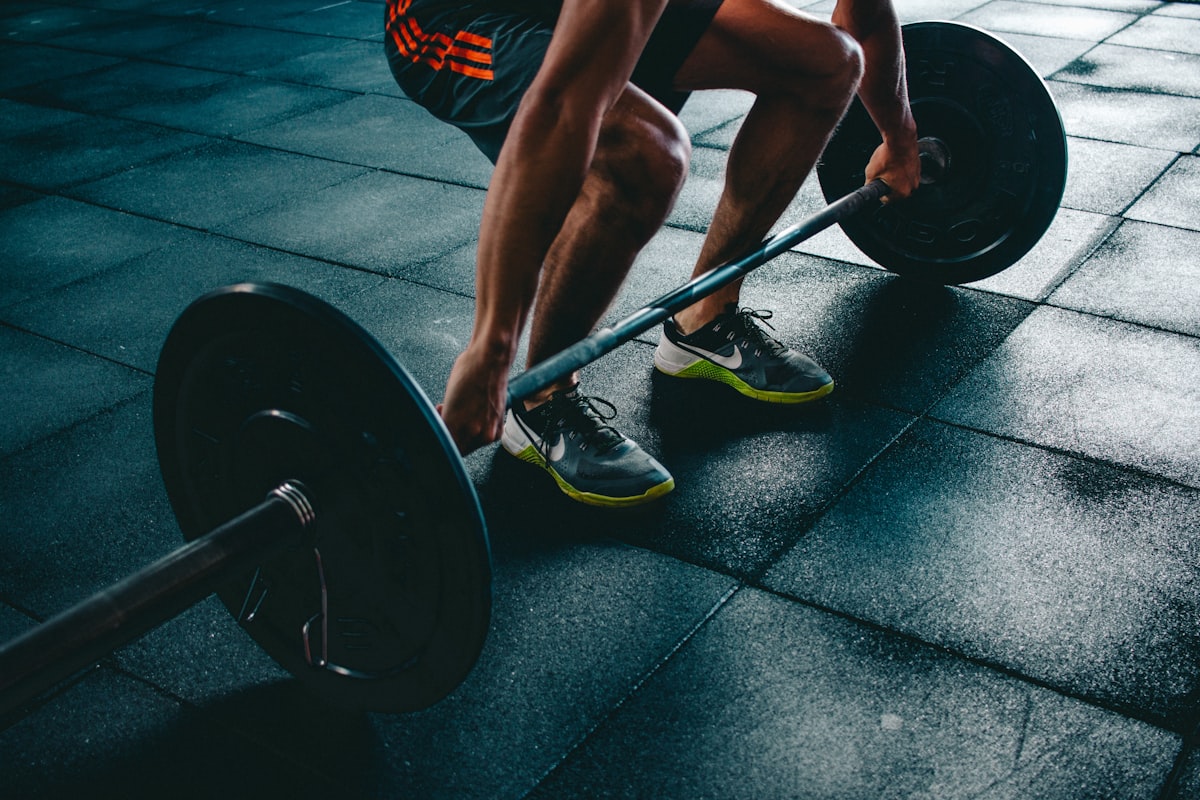
Directly testing a one repetition maximum requires more than just piling weight on a bar. It demands a structured approach to ensure safety and accuracy. Professional powerlifting standards dictate that a lift must be completed through a full range of motion without assistance to count as a true maximum.
Step 1: Specific Warm Up Protocols for Maximal Strength Assessment
The goal of a warm-up is to prime the nervous system without inducing premature fatigue. Start with 5–10 repetitions at 40% to 60% of your estimated maximum. Follow this with a brief rest, then perform 3–5 repetitions at 70%. Your final warm-up set should be 2 repetitions at 80%. This progressive ramp-up signals the brain to prepare for heavy loading.
Step 2: Signs of Athlete Readiness for Maximal Strength Testing
Before moving to the actual 1RM attempts, evaluate your mental focus and physical snap. If the 80% load feels exceptionally heavy or bar speed is noticeably slow, it may indicate lingering central nervous system fatigue. In a professional setting, we look for high levels of arousal and technical proficiency. If the form breaks down at submaximal levels, the test should be aborted to prevent injury.
Step 3: The Maximal Attempts
Once the warm-up is complete, move to your first attempt at roughly 90–95% of your predicted max. If successful, rest for at least 5 to 7 minutes. This window is critical for metabolic recovery, specifically the restoration of the ATP-PC system. You typically have three to four attempts to find the absolute maximum. A professional spotter is non-negotiable here to manage the risk of failure at the sticking point of the lift.
The Mathematics of Strength: Estimating 1RM Safely
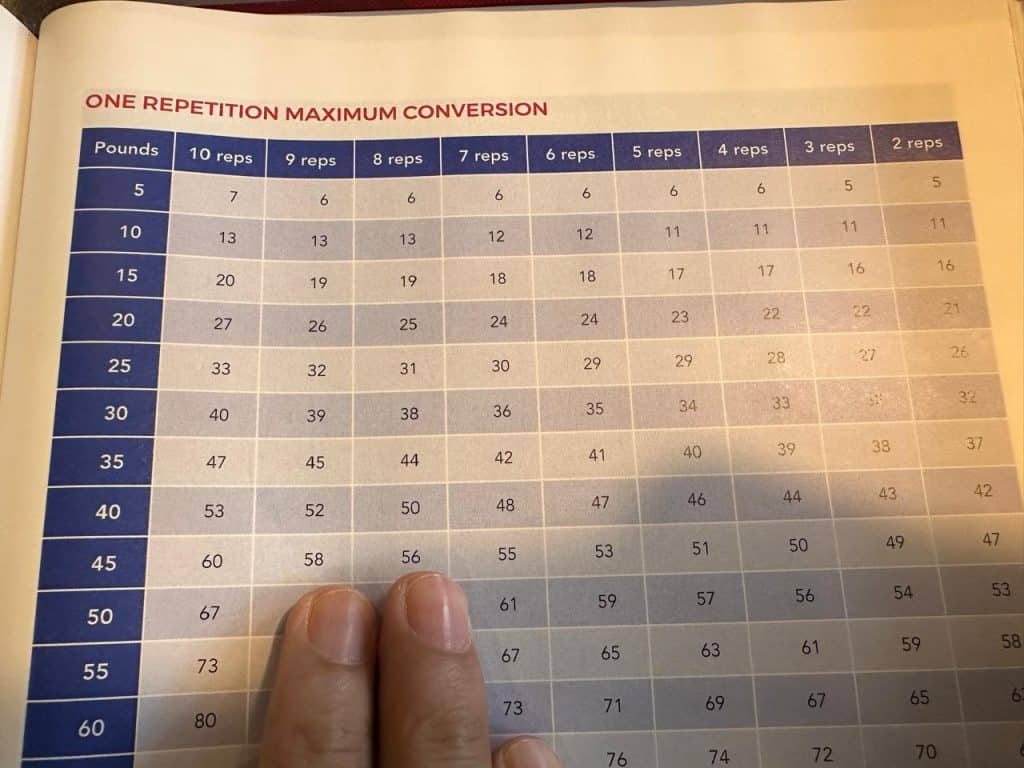
Not every athlete needs to put a maximal load on their spine to find their training numbers. For those in a high-fatigue in-season phase or beginners still mastering lift execution, submaximal testing is a superior alternative. This is where we learn how to estimate 1rm using submaximal weights to calculate a predicted maximum.
The most reliable method involves performing a set to failure—or near failure—with a weight you can handle for 3 to 5 repetitions. This significantly reduces the risk of injury while providing a mathematically sound metric for training load prescription. By using a weight that allows for a 3RM or 5RM, coaches can use standardized equations to find the theoretical 1RM.
Formula Box: Calculating Your Strength
Brzycki Formula: 1RM = Weight / (1.0278 – (0.0278 × Reps)) Example: If you lift 225 lbs for 5 reps, your estimated 1RM is ~253 lbs.
Epley Formula: 1RM = Weight × (1 + (Reps / 30)) Example: If you lift 225 lbs for 5 reps, your estimated 1RM is ~262 lbs.
The Brzycki formula is generally considered more accurate for repetitions under 10, making it a staple in elite training environments. Using these formulas allows for consistent tracking without the systemic tax of a true maximal effort.
Strategic Integration: 1RM and Periodized Training
Once you have recorded your 1RM, the real work begins. The primary value of this number is in integrating 1rm data into periodized strength programs. Periodization is the systematic planning of athletic training to reach the best possible performance in the most important competition of the year.
Without 1RM data, progressive overload is just guesswork. By using percentages of your maximum, you can dictate exactly what physiological adaptation you are targeting:
- Hypertrophy: 65% to 75% of 1RM for 8–12 repetitions.
- Maximal Strength: 85% to 95% of 1RM for 1–5 repetitions.
- Power/Explosiveness: 50% to 70% of 1RM moved at maximum velocity.
In a periodized macrocycle, 1RM testing usually occurs at the end of a block or after a tapering phase. This ensures the athlete is fresh enough to demonstrate their true capacity. Data-driven programs that utilize these percentages have shown significant advantages. Research comparing load prescription methods found that using percentages of 1RM elicited 4.6% greater improvements in maximal strength than using repetition maximum targets.
| Training Goal | Intensity (% of 1RM) | Repetitions | Rest Interval |
|---|---|---|---|
| Strength | > 85% | 1–5 | 2–5 Minutes |
| Hypertrophy | 67–85% | 6–12 | 30–90 Seconds |
| Endurance | < 67% | > 12 | < 30 Seconds |

The 2026 Shift: Autoregulation and Velocity-Based Training
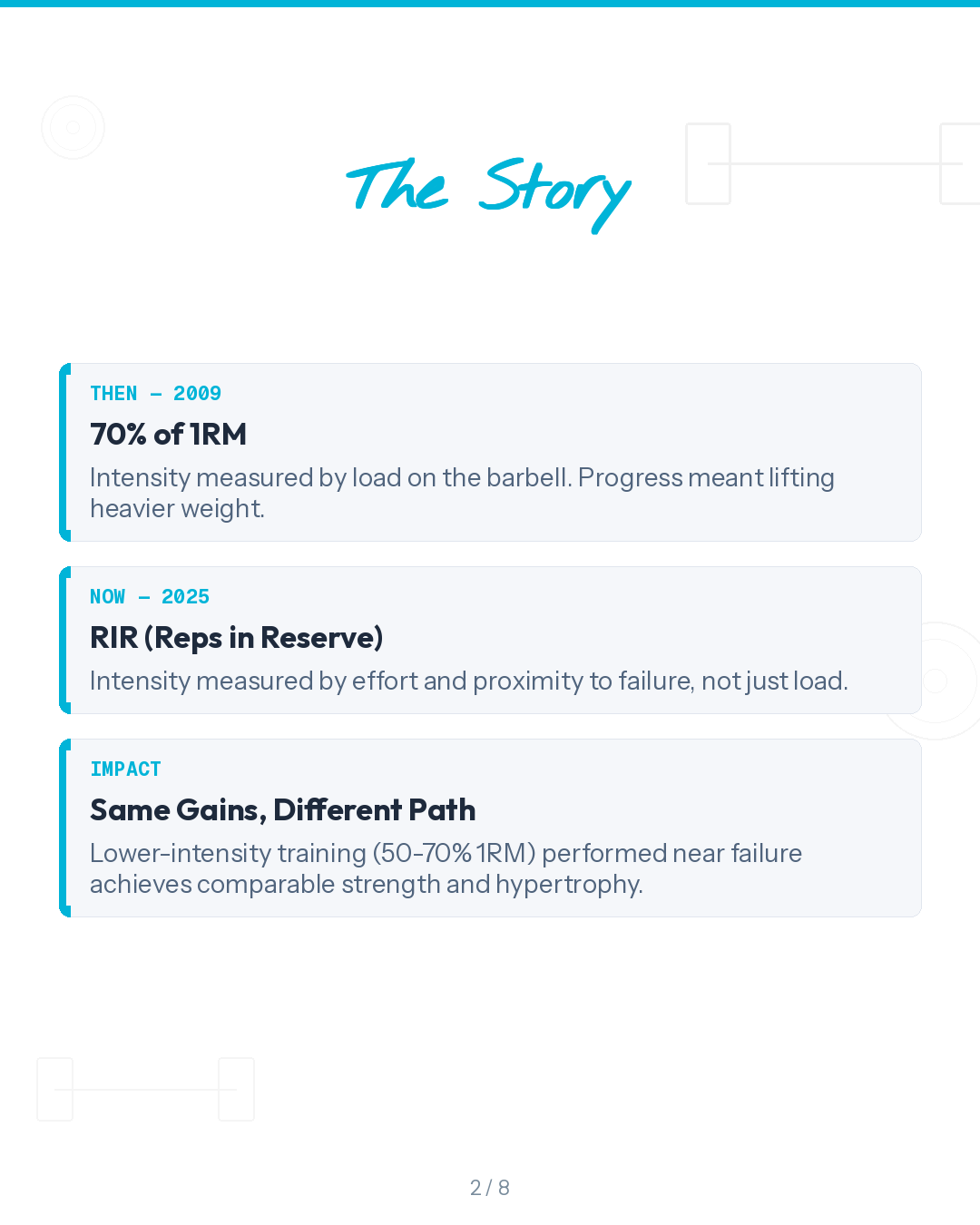
As we look toward the future of elite sports, we are moving beyond static 1RM testing. The latest protocols in 2025 and 2026 involve autoregulation—adjusting the daily training load based on how the athlete feels and performs in real-time. This is crucial because an athlete's 1RM can fluctuate by as much as 10% to 15% on any given day due to sleep, nutrition, or stress.
Velocity-based training is the cutting edge of this shift. By using sensors to track bar speed, coaches can determine exactly how much weight an athlete should use. For example, in a squat, a bar speed of 0.15 m/s to 0.20 m/s typically correlates with a 1RM. If an athlete moves 300 lbs at 0.40 m/s, we know they are not at their limit, even if they feel tired.
Furthermore, integrating Rate of Perceived Exertion or Reps in Reserve (RIR) allows athletes to adjust their training load prescription on the fly. If the program calls for 80% of 1RM but the athlete's RPE is a 10 (maximal effort) on the first set, the weight should be reduced to stay within the intended training zone. This 2% Load Rule—adjusting weight by small increments based on performance—prevents overtraining while ensuring the athlete always works at the optimal intensity relative to their current neuromuscular capacity.
Pro Tip: Velocity Thresholds
- Max Strength (1RM): 0.15 – 0.30 m/s
- Accelerative Strength: 0.45 – 0.75 m/s
- Starting Strength: > 1.30 m/s
FAQ
How do you safely test your 1 rep max?
To safely test your maximum, you must use a professional spotter and high-quality equipment. Follow a rigorous warm-up protocol that builds from 40% to 80% of your expected max. Ensure you allow for 5 to 7 minutes of metabolic recovery between maximal attempts to ensure the ATP-PC system is fully restored.
How often should you test your 1RM?
For most elite athletes, testing every 4 to 6 weeks is ideal. This aligns with the end of a typical training block. Testing too frequently can lead to central nervous system fatigue, while testing too rarely makes your percentage-based training data obsolete as you get stronger.
Can you estimate a 1 rep max without actually testing it?
Yes, you can use submaximal weights to calculate your strength. By performing a set of 3 to 5 repetitions to near-failure, you can apply the Brzycki formula to find a predicted 1RM. This method is often safer for athletes who are in-season or those with limited technical experience under maximal loads.
What is the best protocol for 1 rep max testing?
The gold standard is the NSCA-style protocol: a general warm-up, followed by specific warm up protocols for maximal strength assessment, and then 3 to 4 attempts at a 1RM with substantial rest periods. The focus must always be on perfect form and full range of motion.
How many warm-up sets should I do before a 1RM test?
You should typically perform 3 to 5 specific warm-up sets. Start with a very light set of 10 reps, move to a moderate set of 5, then 2 to 3 "acclimation" sets of 1 to 3 reps as you approach 80–90% of your target weight.
The transition from a casual lifter to an elite athlete is marked by the move from guesswork to data. By mastering 1 rep max testing and the subsequent integration of that data into your programming, you ensure that every drop of sweat in the gym is directed toward a specific, measurable goal. Test safely, track your metrics, and use the science of strength to drive your performance to new heights.